
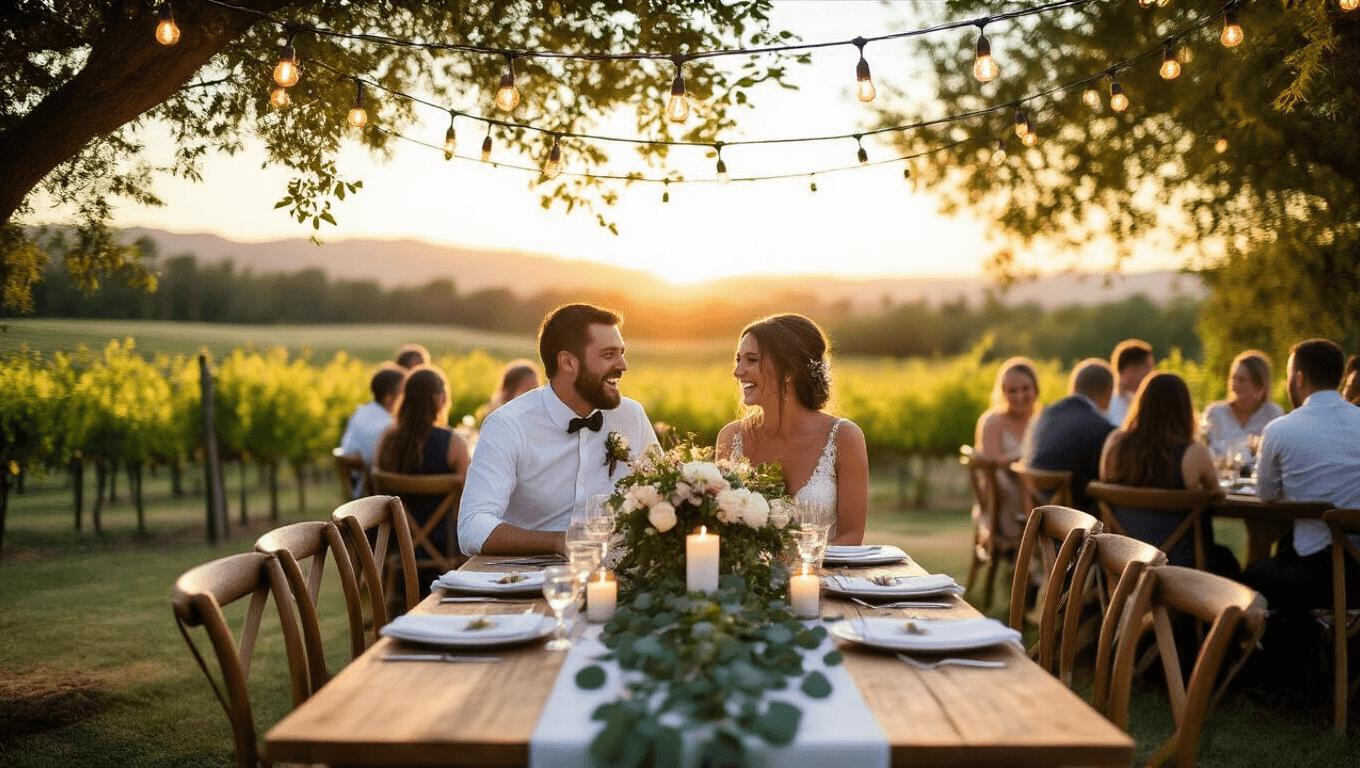
If you’ve started looking into micro wedding ideas, I’m guessing you’ve hit the same wall most couples do: a hundred Pinterest boards telling you it’s either a barefoot elopement with two witnesses or a 150-person marquee do, and nothing sensible in between. That gap is exactly where the micro wedding sits, and it’s worth understanding properly before you start booking anything.
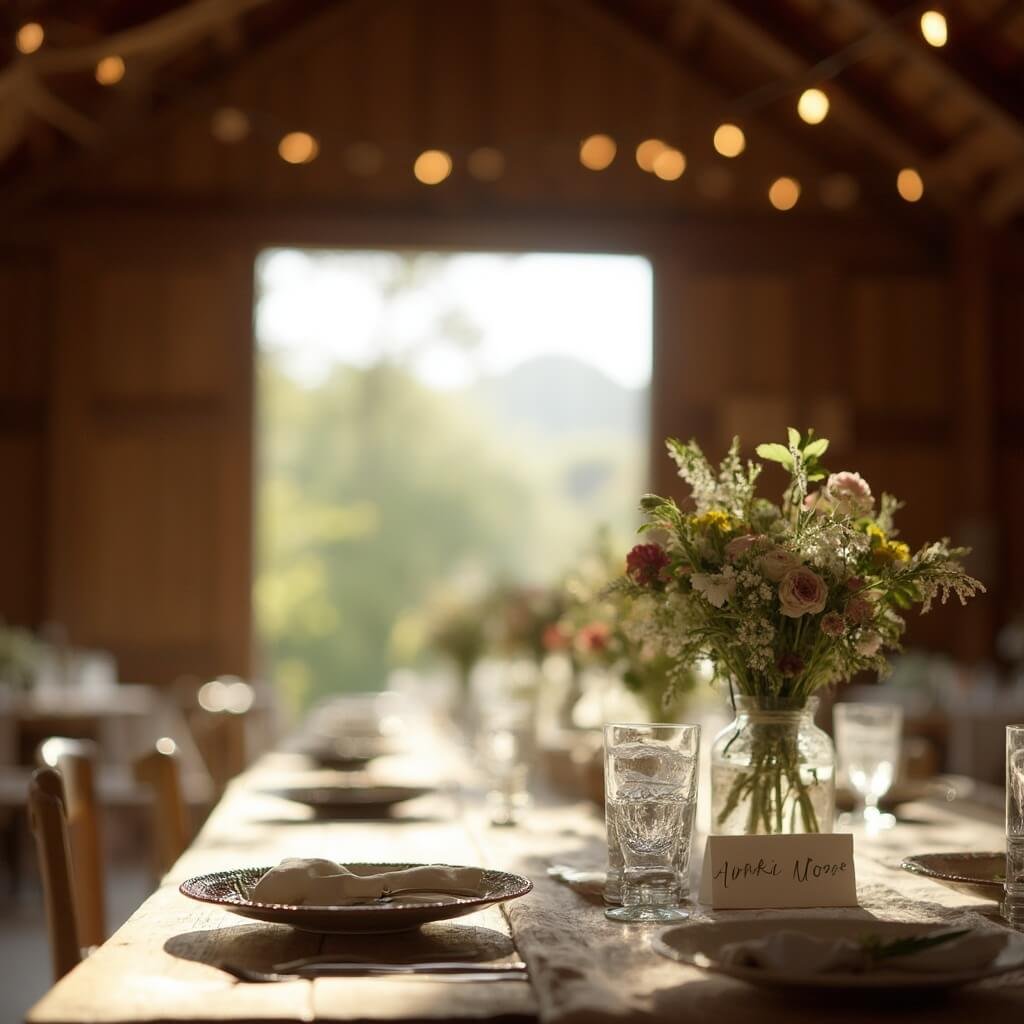
A micro wedding is, at its simplest, a full wedding — ceremony and reception both — with a guest list you’ve deliberately kept small, usually somewhere between 10 and 50 people. That’s the bit people get wrong most often. It’s not a stripped-back, lesser version of a wedding. It’s a different shape of the same thing, built around the idea that fewer guests means more of everything else: more food per head, more time with your photographer, more actual conversation with the people you love instead of a thirty-second hello as they’re herded toward the bar.
What Actually Makes a Wedding “Micro”
The word gets thrown around loosely, so let’s separate it from its cousins, because the differences matter when you’re briefing suppliers.
An elopement is just the couple, maybe a celebrant, maybe one or two witnesses. No reception to speak of, though plenty of elopements now include a nice dinner afterwards. A minimony is a small, often legally minimal ceremony — sometimes a placeholder before a bigger party happens later, which was very popular when people’s 2020 weddings got postponed twice. A micro wedding is the full day: proper ceremony, proper reception, just with a guest list capped deliberately low. And an intimate wedding is a vaguer term that a lot of venues use to mean anything under 100 guests, which isn’t terribly useful when you’re trying to plan around a specific number.
Here’s the thing a lot of couples assume, wrongly: that a smaller guest list automatically means a cheaper wedding. Sometimes it does. Often it doesn’t. Your photographer still charges roughly the same whether she’s photographing 12 people or 120. Your officiant’s fee doesn’t shrink. Hair and makeup, your dress, the band you’ve had your eye on — none of that scales down neatly with headcount. What usually happens is couples take the money they’d have spent on guest number 80 through 150 and pour it into better food, a more interesting venue, or a photographer who actually has a waiting list. The total might come down. The per-guest spend almost always goes up.
Why Couples Are Choosing Smaller Weddings
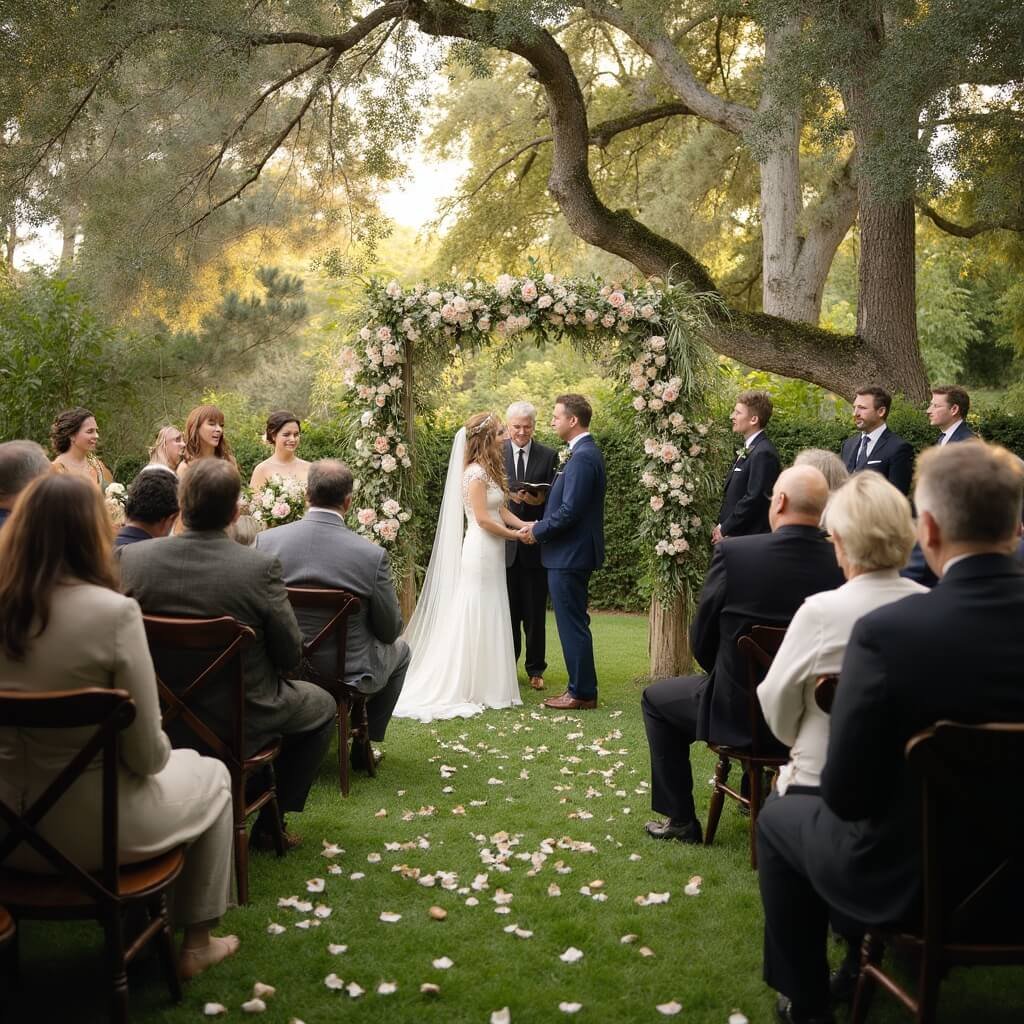
The appeal isn’t really about saving money, even though that’s the headline reason people assume. It’s about time. At a 150-person wedding you get, what, two minutes with each table if you’re lucky and the DJ isn’t rushing you back for the bouquet toss? At a 30-person wedding you can sit down and actually eat with your guests. You can hear what your grandmother is saying. That’s the whole pitch.
It also opens up venues that would never work for a big crowd — a restaurant’s private room, a friend’s garden, a boutique hotel with eight bedrooms and no function space big enough for a marquee. You get more freedom on timing too: a Tuesday afternoon ceremony, a destination weekend, an off-season date in February that would feel bleak with 150 guests but feels cosy and deliberate with 25. And because there’s less to coordinate — fewer RSVPs to chase, fewer seating charts to wrestle with, fewer transport logistics — the planning itself tends to be less stressful, even if the emotional decisions (who’s on the list, who isn’t) can be harder.
There are real downsides too, and I don’t think enough articles admit this. Trimming a guest list means someone gets left off it, and that’s rarely painless. Small venues sometimes come with food-and-beverage minimums that catch couples out — I’ve heard of restaurants quoting a minimum spend that works out higher per head than a full wedding breakfast for 100 would have cost at a hotel. Some vendors, florists especially, have a baseline fee regardless of whether they’re doing six centrepieces or sixty. And guests at smaller weddings sometimes expect more personal treatment — a seat at the top table, an invitation extended to their partner, a long chat with the happy couple — which is lovely in theory but can pile pressure onto a day that was meant to be low-key.
Deciding What the Day Should Actually Feel Like
Before you touch a venue website, sit down together and talk about what you actually want this to feel like. Not look like — feel like. A relaxed dinner party where everyone’s a bit tipsy by dessert? A quiet, romantic garden gathering? A weekend away with your closest people in a cottage somewhere? These aren’t just aesthetic choices, they dictate venue, catering style, even what time of day you get married.
Then pick three to five things that genuinely matter to you both — food, photography, the location itself, live music, getting proper time with guests, what you’re wearing, a cultural tradition you want to honour — and let everything else be negotiable. I’d go further and say write this down as an actual “must-have” and “nice-to-have” list, because six weeks into planning, when you’re arguing about whether to invite a second cousin or spend that money on a jazz trio instead, this list is what settles it. Without it, every decision becomes a fresh argument with no reference point.
Explore more Small Intimate Wedding Ideas
Picking Your Guest Number Before You Pick Anything Else
Guest count isn’t just a detail to firm up later — it’s the number that everything else hangs off, so nail it down early and mean it.
- Under 15 guests — about as intimate as it gets without calling it an elopement. Works beautifully for a private home, one restaurant table, or a tiny destination ceremony.
- 15–30 guests — my favourite range, honestly. Small enough that you can genuinely speak to everyone, big enough that it doesn’t feel like a dinner party that accidentally has a ceremony in it.
- 31–40 guests — a nice middle ground, enough people for a proper reception atmosphere without losing intimacy entirely.
- 41–50 guests — room for both families, close friends, maybe a few colleagues, while still staying well clear of “big wedding” territory.
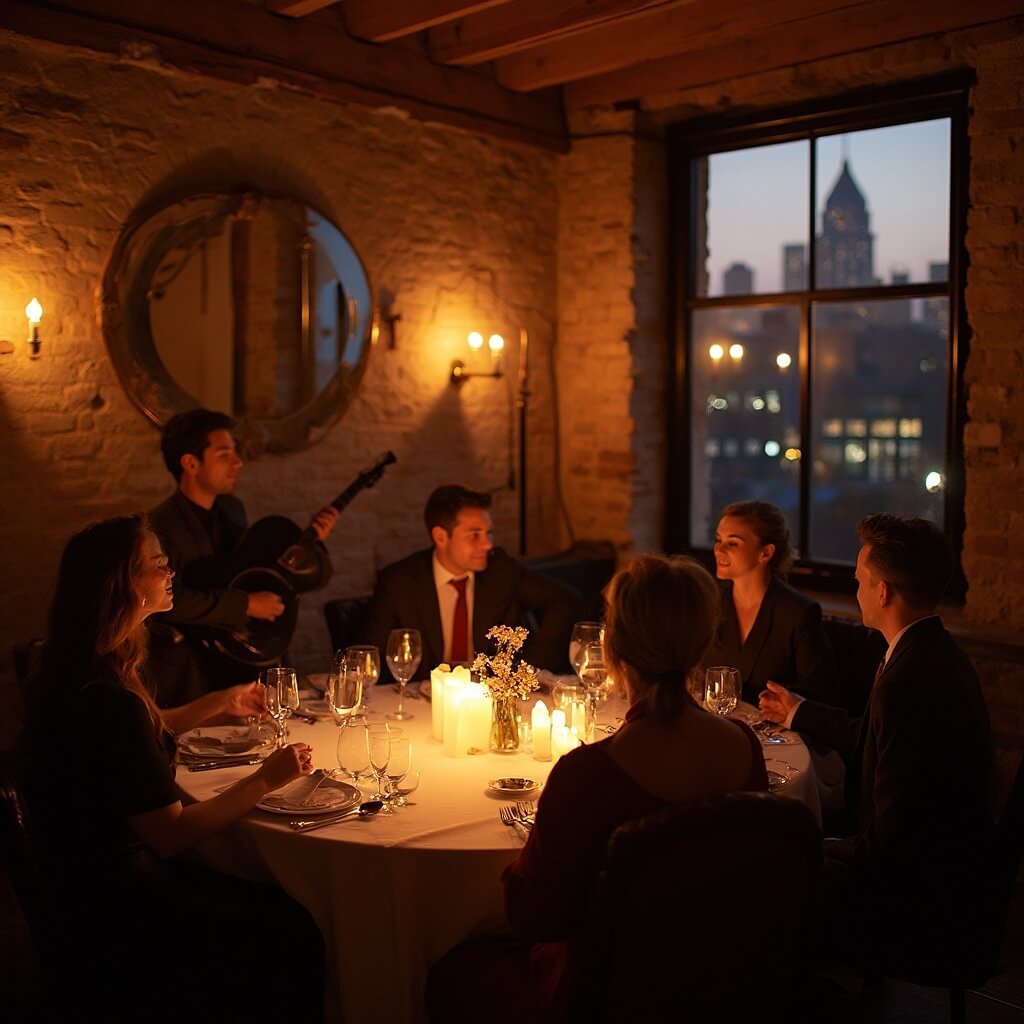
Set a hard ceiling before you go venue shopping, not after. I made the mistake once — admittedly for a friend’s 40th, not a wedding, but the lesson transfers — of falling in love with a converted barn that technically sat 35 on paper, then discovering mid-planning that our list had crept to 44 because nobody wanted to say no to the extra cousins. We ended up paying for an overflow marquee we hadn’t budgeted for, at a cost that genuinely could have covered a long weekend away. Decide the number first. Let it be slightly uncomfortable to stick to. Book the venue around it, not the other way round.
It’s also worth deciding early whether your number includes children, plus-ones, vendors who’ll be eating onsite (your photographer and planner usually need feeding, and caterers will ask), or whether you’re counting separately for a ceremony-only crowd versus a full destination weekend guest list. These sound like fine print, but they change your catering order by a meaningful margin.
Discover Backyard Wedding Ideas
👇Shop the Look Here👇
Finding a Theme That Doesn’t Feel Forced
Once you know roughly how many people you’re having and what the day should feel like, a theme — or more accurately, a design direction — tends to suggest itself. I’d resist anything too literal. You don’t need a “woodland fairy-tale” micro wedding with a prop toadstool. What you need is a consistent idea that guides your choices: a minimalist city hall ceremony followed by dinner at your favourite restaurant, a European-style garden lunch with long tables and simple linen, a coastal celebration built entirely around a seafood feast, a mountain lodge weekend where the wedding is really just the centrepiece of three days together.

Other directions worth considering: a backyard harvest dinner that leans into whatever’s in season, a cocktail reception in an art gallery for couples who’d rather stand and mingle than sit through speeches, a vineyard tasting experience that doubles as entertainment, even a bookstore or library wedding if you’re both the sort of people who’d rather be surrounded by novels than roses. None of these need a big budget. They need a clear idea, repeated consistently through the venue, the food, and the small details, rather than scattered across twelve different Pinterest aesthetics.
Building the Guest List Without Losing Friends
This is the part nobody enjoys, so let’s be practical about it rather than sentimental. Start with your ceiling number, not a list of names — if you start with names, the list balloons before you’ve noticed, because everyone feels like a “yes” in isolation.
Then sort people into three tiers. Tier one: the people you genuinely cannot imagine getting married without — this is usually smaller than you think once you’re honest with yourselves. Tier two: close friends and family you’d love to include if the numbers allow. Tier three: everyone else — colleagues, second cousins, your mum’s old neighbour who’s always been “like family.” Fill tier one first, then work down, and stop when you hit your ceiling, even if tier three has people you feel guilty about.
Apply the same rule to everyone in a similar position. If one sibling’s partner of six months is invited, the same logic should apply to all siblings’ partners, otherwise you’ll spend the next decade explaining yourself at family gatherings. Decide on children and plus-ones before a single invitation goes out, not guest by guest as requests come in — that way it’s a policy, not a judgement call that looks like favouritism.
- Offer plus-ones to married couples and long-term partners as standard, but think carefully before extending that to casual relationships — it’s reasonable to draw the line at people who’d otherwise know absolutely nobody at the wedding.
- Put the guest’s name directly on the invitation when there’s no plus-one included. Don’t leave it ambiguous.
- Decide whether the day is adults-only, fully family-friendly, or limited to immediate family’s children, and apply it consistently rather than making quiet exceptions that get noticed.
And leave the list alone for a few days once it’s “done.” You’ll want to adjust it. Everyone does.
Telling People They’re Not Invited
However carefully you build the list, someone will be hurt by it. The way to minimise damage is to be upfront and early, not silent and hopeful. Tell close family and friends who aren’t invited before you tell the internet — before the save-the-dates go out, before anyone posts a single photo of a dress fitting. Nothing stings more than finding out about a wedding you weren’t invited to through someone else’s Instagram story.
A simple, honest line does more work than a paragraph of justification: “We’re keeping the ceremony to immediate family only” or “We’re having a 30-person day and just can’t extend the list further.” People generally respect boundaries stated plainly. What they don’t respect is vagueness that later turns out to be a lie, so don’t promise a bigger party “to make up for it” unless you actually intend to throw one — and if you do plan a second celebration, be honest that it’s a different thing, not a consolation invitation dressed up as inclusion.
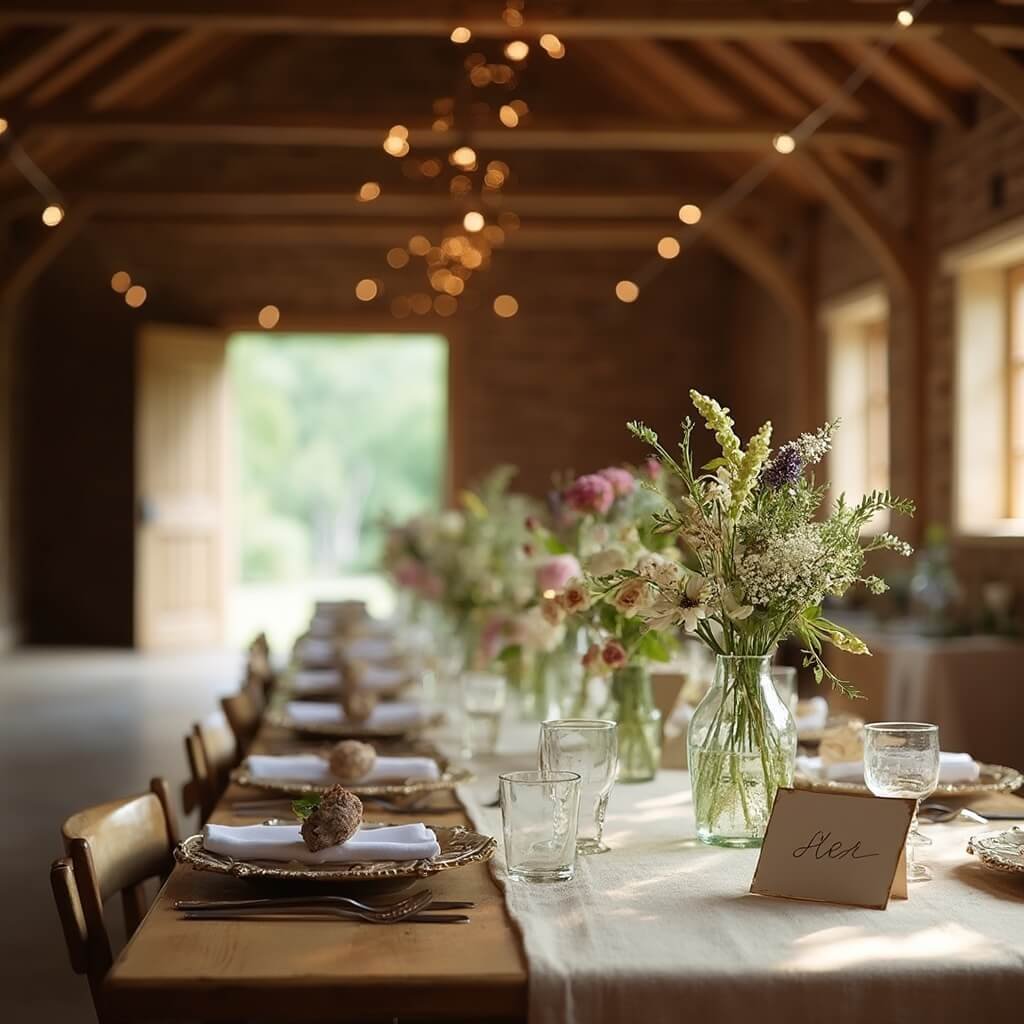
What a Micro Wedding Actually Costs
I’ll be straight with you: anyone who tells you a precise, universal micro wedding budget is guessing. Published estimates swing enormously depending on where you live, how formal you want things, and which vendors you choose, but most current planning guidance puts a realistic US micro wedding somewhere between $5,000 and $20,000, with a lot of couples landing around $10,000–$15,000 once catering, photography and a decent venue are all accounted for. Treat any number you read online, including that one, as a rough planning range rather than a promise.
The uncomfortable truth is that a 30-person wedding can still carry a high per-guest cost, because venue hire, photography, the officiant, and entertainment are largely fixed costs that don’t shrink just because fewer chairs are needed. Budget around categories rather than guest count alone: venue and rentals, food and drink, photography, attire, florals and décor, hair and makeup, officiant and marriage licence, stationery, transport and accommodation, entertainment, a planner or day-of coordinator if you want one, favours, and — always — a contingency fund of five to ten per cent for the things you didn’t see coming.
Saving money without it feeling like you’ve cut corners usually comes down to choosing smart fixed costs rather than trimming the things guests will actually notice. A weekday or off-season date can knock a serious amount off venue hire. A restaurant buyout or private dining room already comes with tables, chairs, linen and staff, which saves you the entire rental category in one booking. One strong, photogenic venue beats two mediocre ones you’ve had to decorate from scratch. Where I’d happily spend more: a photographer who shoots documentary-style rather than endless posed shots, a proper tasting menu, live music for the ceremony rather than a bluetooth speaker, and genuinely comfortable seating — your guests are sitting at one table for three hours, not drifting between a ceremony room and a separate reception hall, so the chairs matter more than you’d think.
Where to Actually Hold It
Small guest numbers open doors that would be shut to a 150-person wedding, and this is where micro weddings get genuinely exciting to plan rather than just a scaled-down compromise. A full restaurant buyout gives you catering, furniture and atmosphere in one booking. A boutique hotel or historic inn can host ceremony, reception and overnight stays for everyone under one roof. Art galleries, small museums, even a bookshop after hours, all work when you’re not trying to fit in a marquee’s worth of people. Wineries, breweries and cideries tend to have tasting rooms built for exactly this scale, often with the drinks sorted as part of the package.
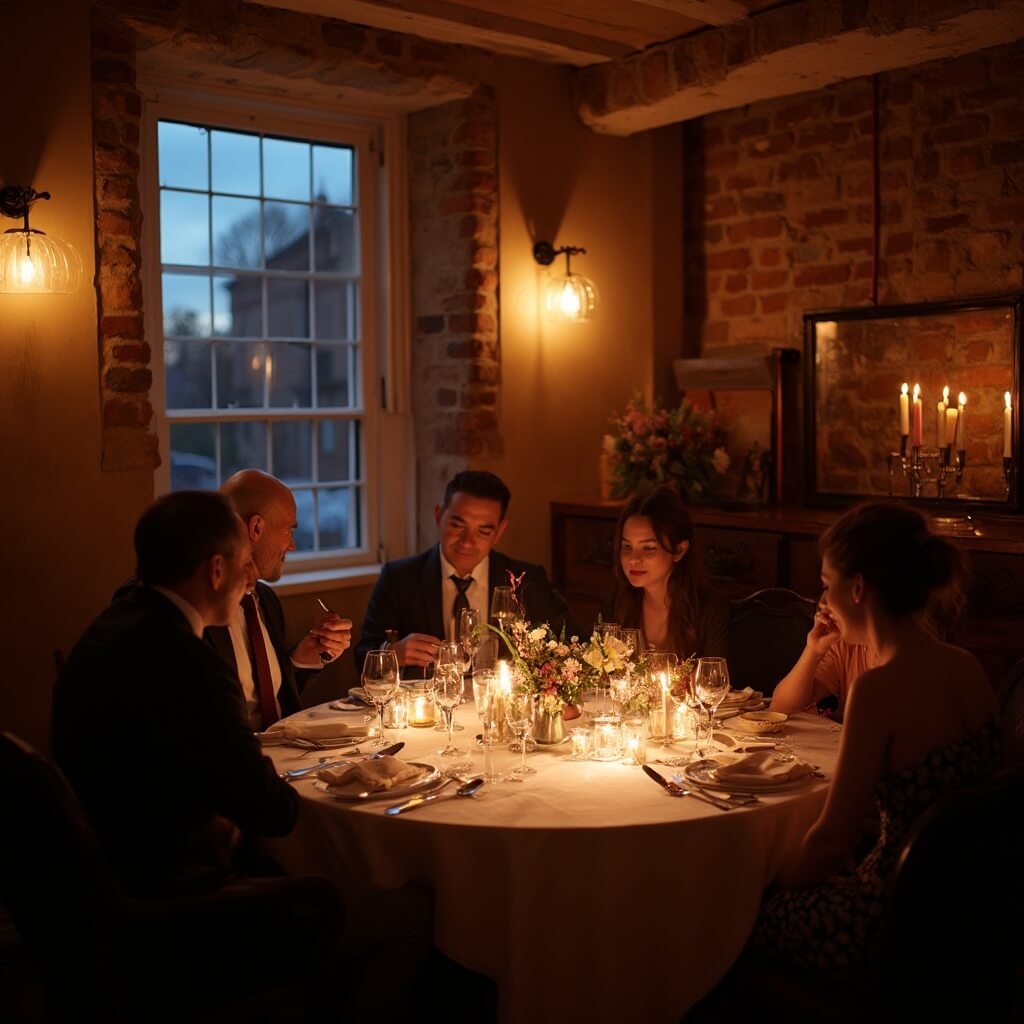
Outdoors, think beyond the standard marquee-in-a-field: a private garden, a family backyard, a working farm or orchard, a stretch of beach or lakeside, even a clearing in a state park if you’re happy navigating the permit process. For couples who want to turn the wedding into an actual trip, a European villa, a coastal resort, or a family property with real sentimental weight can work far better at 25 guests than they ever could at 150, simply because the logistics of getting everyone fed, housed and transported become manageable rather than nightmarish.
Whatever you’re drawn to, go through a proper checklist before you sign anything: confirmed capacity, food and beverage minimums, whether ceremony and reception can both happen onsite, what’s included in the rental fee, noise restrictions and curfews, wet-weather backup, parking and nearby accommodation, and — this one catches people out constantly — whether outside caterers, your own alcohol, candles, or amplified music are actually permitted. And resist the big ballroom “just because it was available.” A beautiful, right-sized room full of 30 people reads as intentional. A grand hall with 30 people rattling around in it reads as a wedding nobody quite managed to fill, and no amount of uplighting fixes that feeling.
That’s really the whole argument for micro wedding ideas in one sentence: choose the size deliberately, spend where it counts, and pick a room that fits the people you actually want there. If you’re only taking one piece of practical advice away from all this, make it the guest list ceiling — set it stupidly early, write it down, and resist every single attempt (including your own) to quietly add four more people in week six.
👇Shop the Look here 👇