Party decorations are the bit people fret about most and often overthink completely. You’ve picked a date, maybe booked a venue, and now you’re staring at a Pinterest board wondering how on earth to make a village hall look like it belongs in a magazine — on a budget that also has to cover food and a cake. Take a breath. Decorating well is less about spending big and more about making a few clear decisions early, then repeating them everywhere.
At its heart, party decoration is just the visual and spatial stuff you add to a room to make it feel like an occasion rather than a Tuesday. Balloons, banners, tablecloths, centrepieces, a bit of lighting. The job of all of it is threefold, really: to set the mood, to guide people around the space so they know where the drinks and the photo corner are, and — let’s be honest — to look decent in photographs, because half your guests will be holding up their phones within ten minutes of arriving.
Start With a Theme (Even a Loose One)
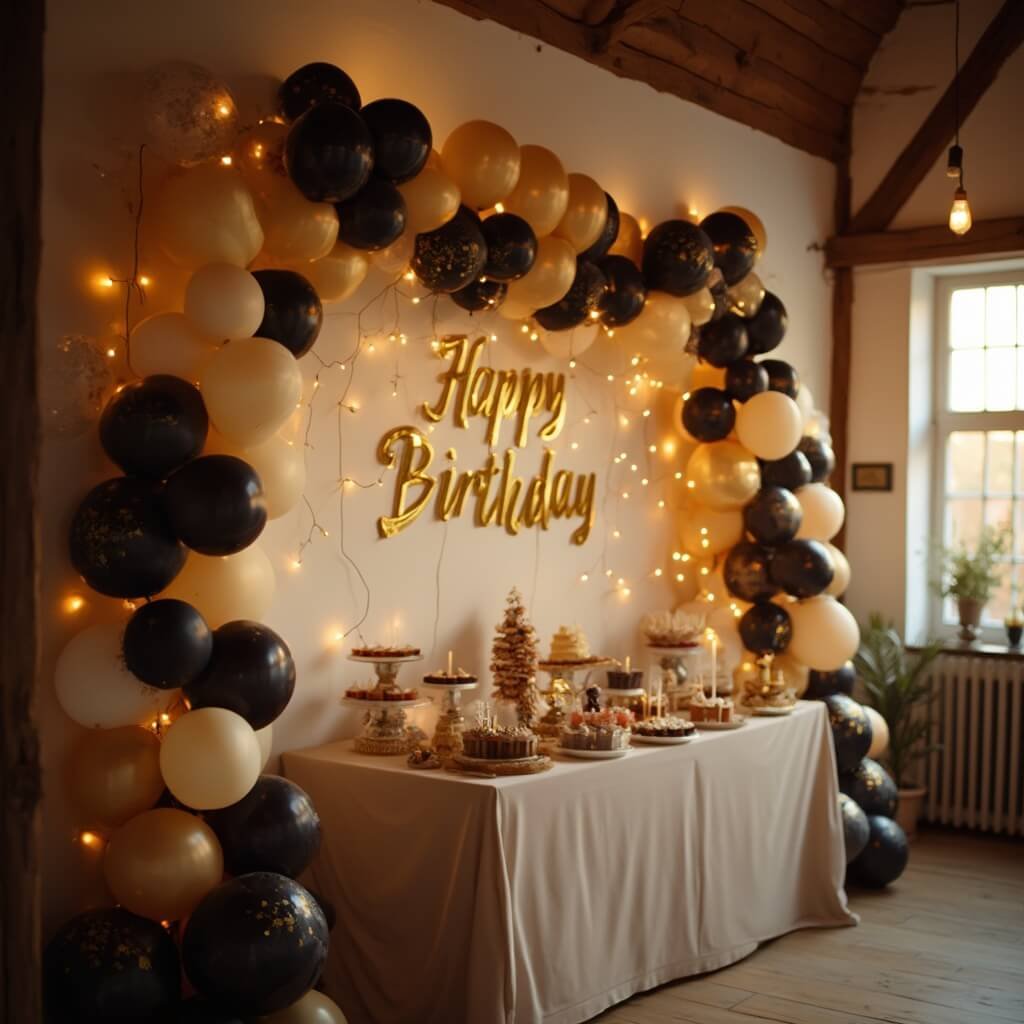
I know “theme” sounds like something reserved for kids’ parties with dinosaurs and unicorns, but every celebration benefits from a governing idea, however quiet. It doesn’t have to be a full costume-and-character affair. For an adult’s 40th it might just be “black, gold, and a bit grown-up.” For a christening it might be “sage green and cream.” The theme is really just a set of rules you give yourself so you stop making twenty separate decisions and start making one.
The single most useful thing you can do is pick a colour palette and stick to it ruthlessly. Two main colours, maybe a third accent, and that’s your lot. Coordinate your balloons, your banners, your tablecloths, and your napkins around those, and the room will look pulled-together even if half the items came from a pound shop. It’s the mismatch that reads as chaotic — six clashing shades of pink dumped on one table — not the price tag.
Match the decor to who’s coming and where you are, too. Bright cartoon tableware is joyful at a six-year-old’s party and faintly tragic at a retirement do. A dim, candlelit look that works beautifully in a low-ceilinged pub function room will vanish entirely in a bright sports hall with strip lighting overhead. Which brings me to the practical stuff that actually determines what you can pull off.
The Three Things That Decide Everything
Before you buy a single balloon, three factors quietly set the boundaries of what’s possible.
- Budget. Decide roughly what proportion of the total you’re willing to spend here. Decorations are the easiest place to blow money and the easiest place to save it, because DIY and store-bought can look almost identical in a photo.
- Venue and space. Indoors or out? A garden party has wind, unpredictable weather, and fading light to contend with. A large hall needs big, high-visibility pieces — small delicate touches get lost the moment you’re in a room the size of a basketball court.
- Occasion and duration. An afternoon children’s party lasting two hours needs very little that has to last. A wedding reception running from three in the afternoon until midnight needs lighting that shifts with the room and decor that won’t wilt or sag by the time the speeches start.
Birthday Decoration Without Balloons
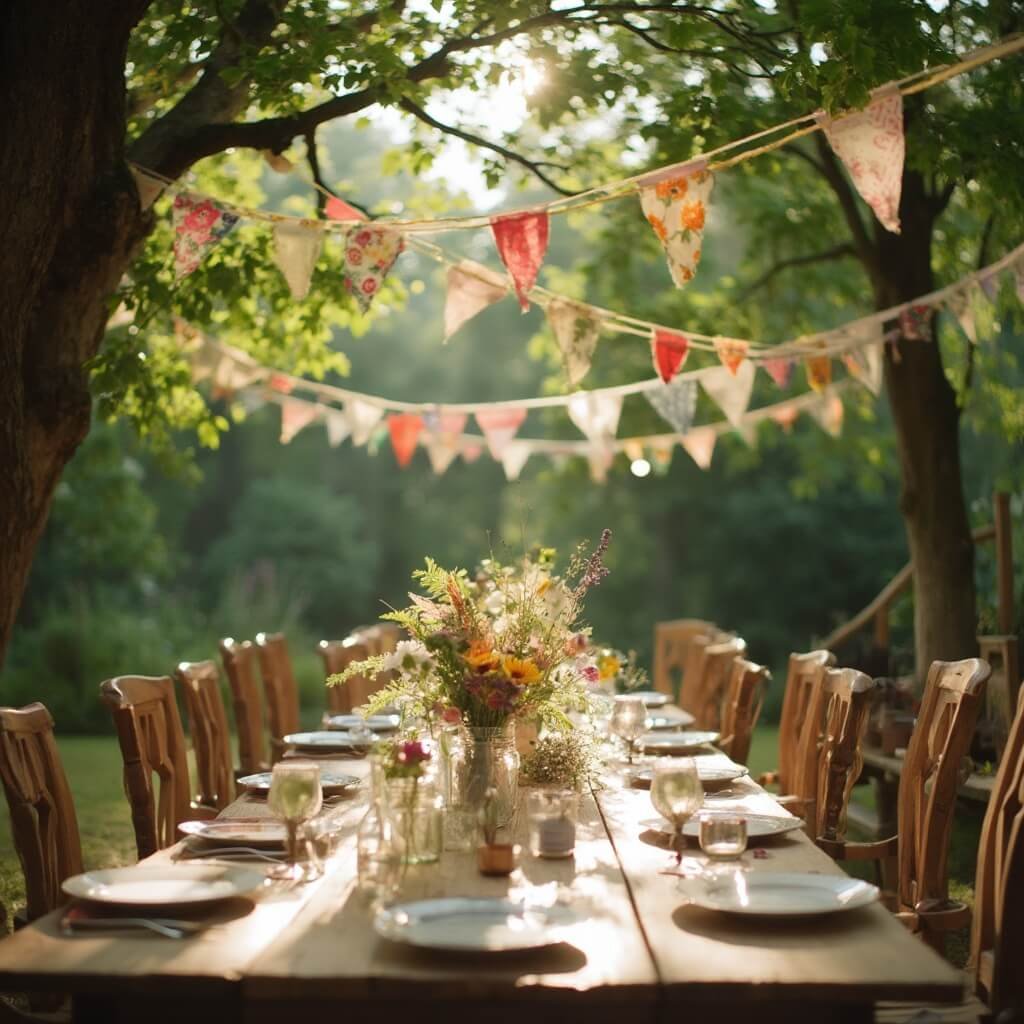
Outdoor is the one that catches people out. I helped set up a garden 30th one June, arrived at ten in the morning with a car full of bunting and paper lanterns, and by half eleven a breeze had picked up and shredded two of the tissue pom-poms we’d strung between the trees. The lanterns spun themselves into knots. We ended up weighing everything down with more fishing wire than I’d planned to buy, and I learned that “gentle summer breeze” and “delicate paper decorations” are not friends. Fabric bunting survived. Paper did not.
Balloons: High Impact, Slightly Overrated
Balloons are the default, and for good reason — they’re cheap, versatile, and genuinely eye-catching. Plain latex and foil balloons work as bouquets, floor scatter, table accents, or a big cluster by the entrance so people know they’ve come to the right door. Nothing wrong with any of that.
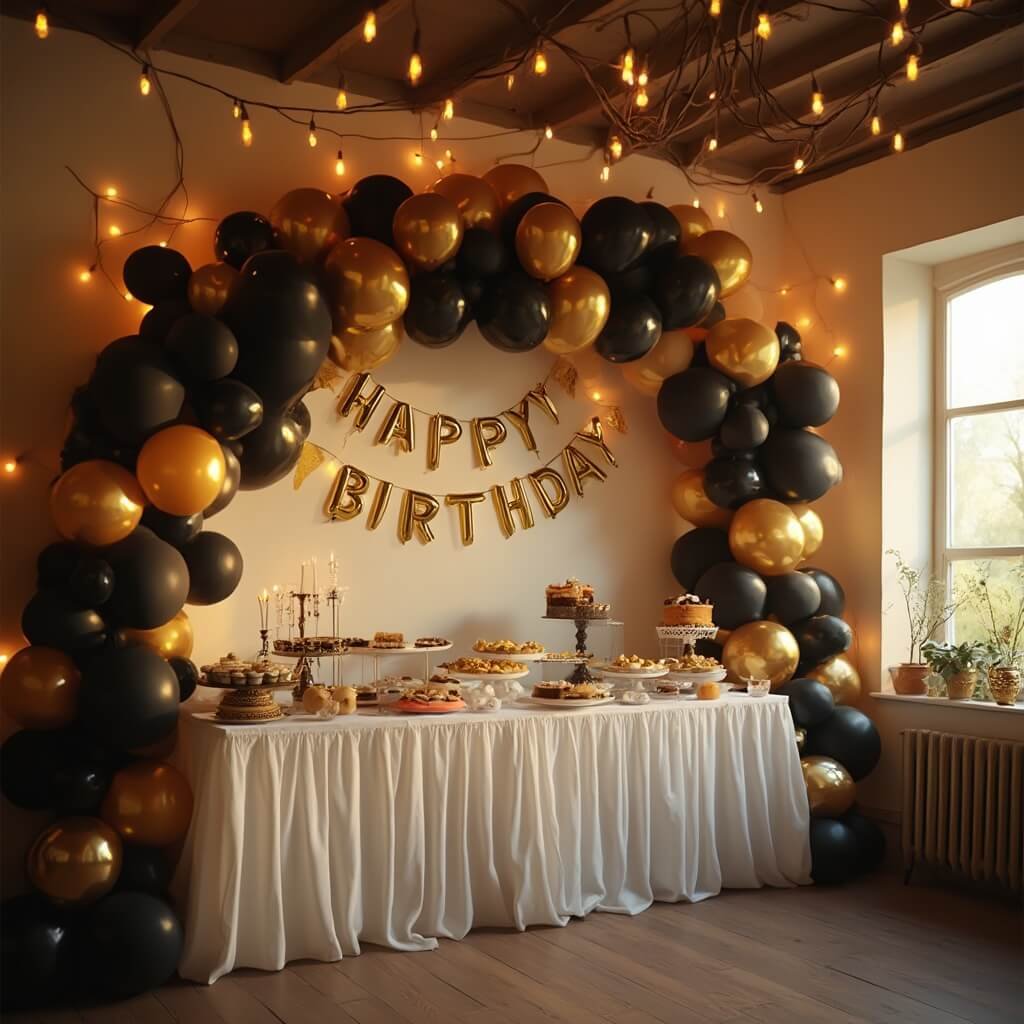
The two things worth actual effort are balloon garlands and arches. An organic garland — those asymmetric ones with mixed balloon sizes and a few colours blended together — draped along the front of a dessert table or up a wall does an enormous amount of work for the money. An arch makes a ready-made photo backdrop or a dramatic entrance. Large inflatables have their place too, mainly at school fairs and community events where you need something visible from across a field.
Now the honest bit. Balloons are a faff and they’re not especially green. Helium is expensive and increasingly hard to get hold of, and a helium balloon looks sad and saggy within a day, so there’s no point inflating anything the night before. Air-filled garlands last far better and skip the gas entirely. And there’s the waste question — a pile of popped latex in a bin bag at the end of the night isn’t a great look if you’ve been trying to keep the whole thing low-impact. I’d use them, but I wouldn’t build the entire scheme around them.
Banners, Bunting, and Things That Hang
Printed banners are the fastest way to announce what you’re celebrating. “Happy Birthday,” “Congratulations,” a name spelled out in gold card — you can buy them pre-printed for a couple of pounds or order custom ones if you want a specific name or date. They do the job of telling the room what it’s for so nothing else has to.
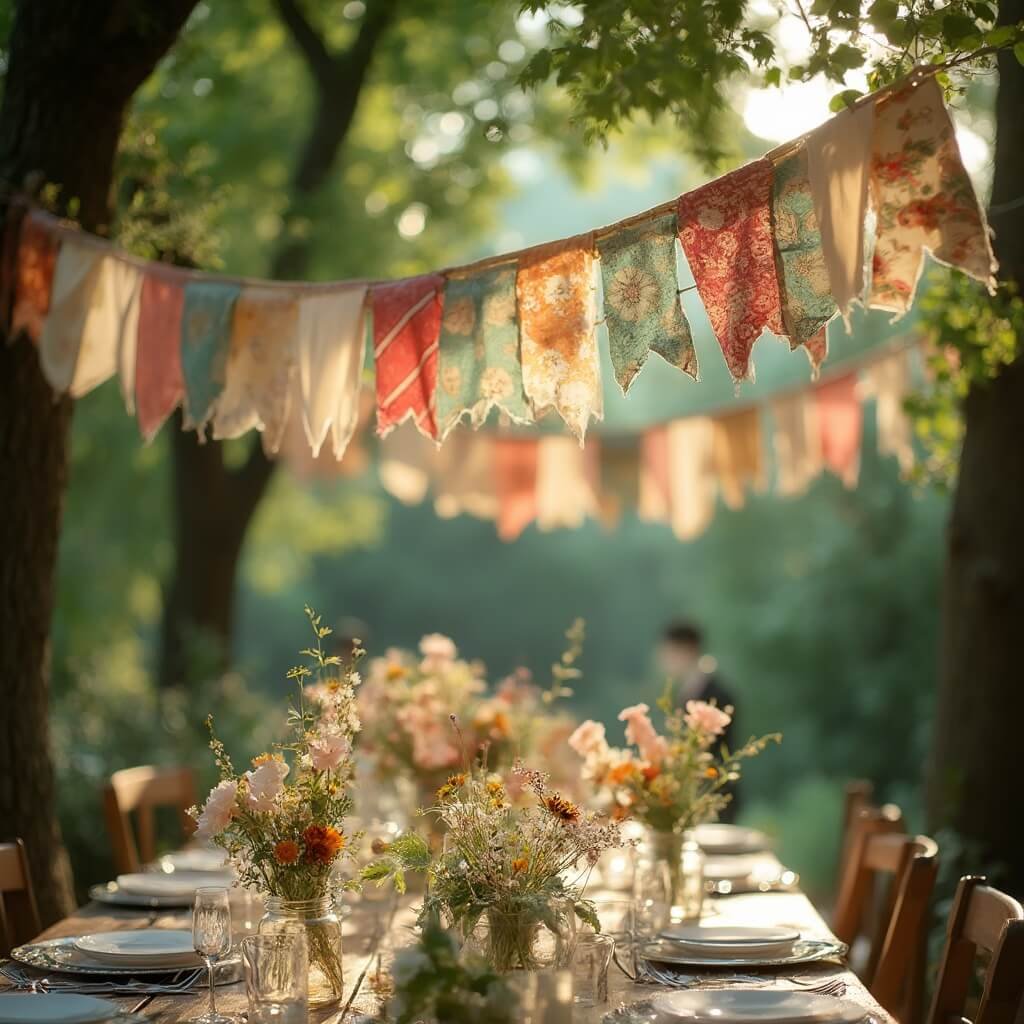
Streamers and paper garlands add colour and a bit of movement across a ceiling or over a table, though I find crepe streamers look best when there’s a lot of them and worst when there are three lonely strips gaffer-taped to a wall. Go big or leave them out. Fabric bunting is the quiet hero here — it’s cheap to make from offcuts, it survives weather far better than paper, and crucially you can fold it up and use it again at the next three parties. I’ve got a set of triangular bunting I made years ago from charity-shop shirts that’s been to two birthdays, a barbecue, and a wedding.
Backdrop Ideas Without Balloons
If you’re crafty, paper-circle garlands and pennant banners are a nice evening’s work in front of the telly. Cut circles, run them through the sewing machine or glue them to string, and you’ve a garland for pennies. Pennant banners are just triangles of card with letters glued on and holes punched to thread through — dead simple, and personal in a way shop-bought rarely is.
Table Decor and Centrepieces
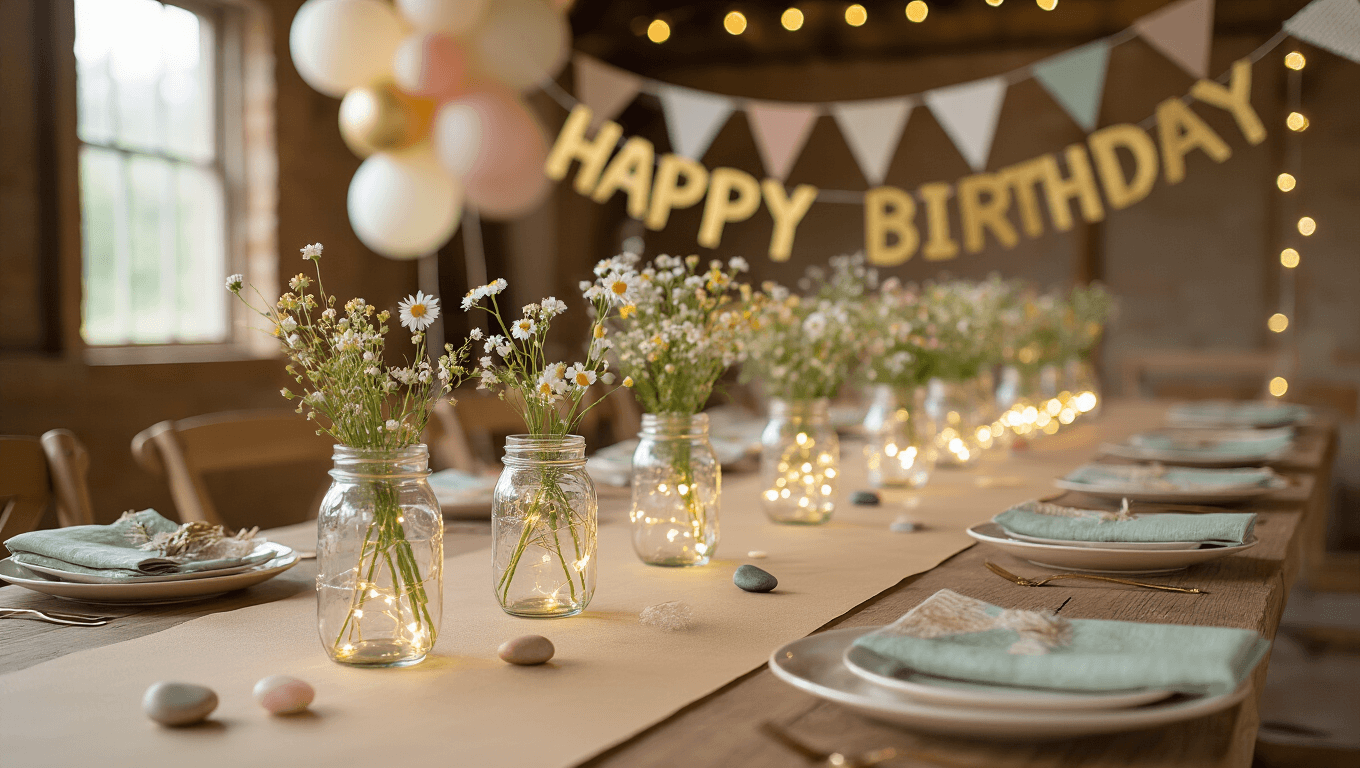
The table is where guests spend most of their time actually looking, so it earns a bit of thought. Start with a table cover or runner — covers protect the surface and reinforce your colours, and a length of kraft paper or burlap as a runner can be customised with a bit of paint, a message, or just left plain for a rustic look.
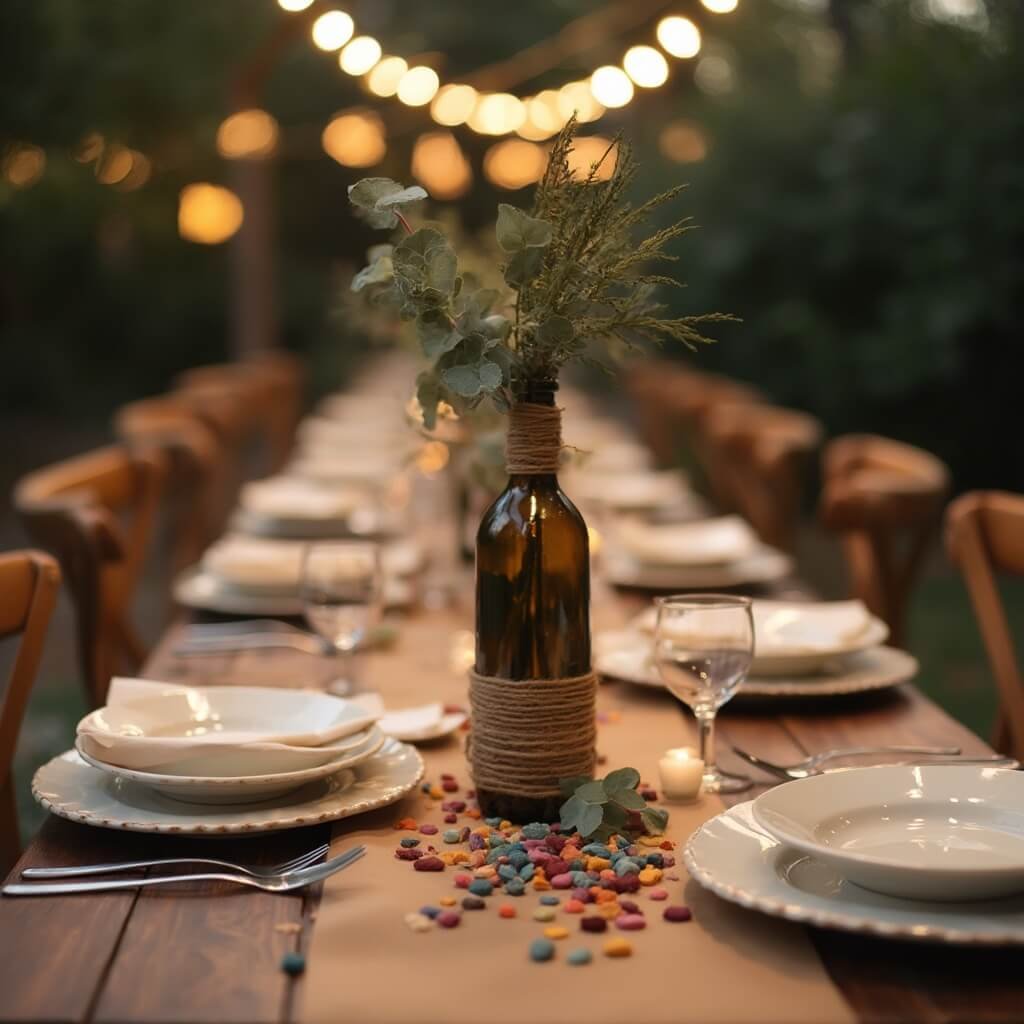
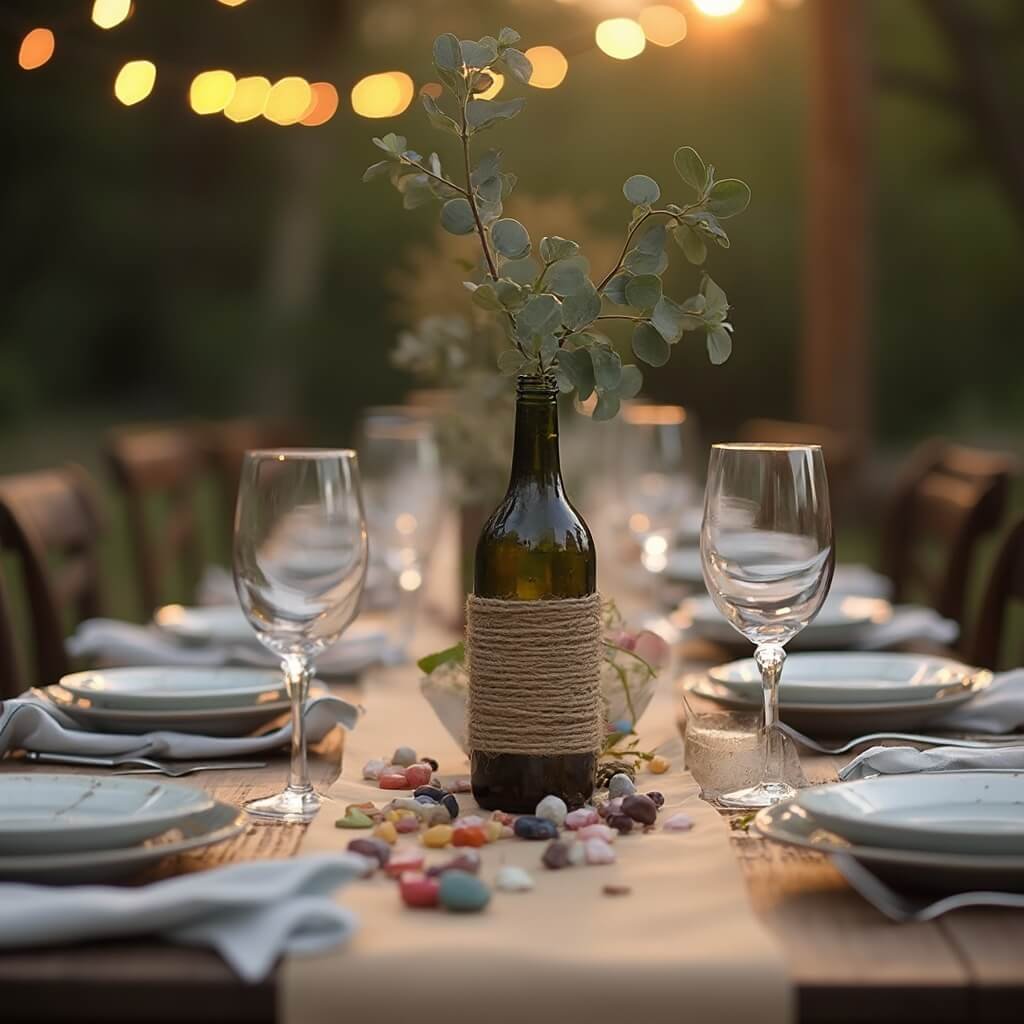
Centrepieces are where people either overspend or under-deliver. You don’t need a florist. Mason jars filled with fairy lights, a few stems of whatever’s cheap at the supermarket, or coloured stones look genuinely lovely and cost almost nothing. Upcycled wine bottles — painted, or wrapped in twine — make perfectly good vases, and if you drink wine you’ve got the raw materials for free. Confetti and a bit of table scatter add texture around the plates, though go easy: too much and you’ll be finding it in the carpet for a fortnight.
Finally, tie your practical items into the scheme. Coordinated plates, napkins, and cutlery aren’t really decorations, but they’re on every table and they photograph, so they may as well match your two colours rather than fight them.
👇Shop the Look Here👇
Making the Most of Walls, Ceilings, and Empty Space
A room decorated only at table height always feels a bit flat, and the fix is usually cheaper than people expect. Paper lanterns hung at different heights, whether over the food table or strung between trees at a garden do, do a huge amount to make a space feel considered rather than just tidied up. Hanging swirls add movement above head height where nobody’s furniture or elbows can get in the way. If you’re renting a venue and can’t so much as put a drawing pin in the wall, removable decals and stickers earn their keep — you get a big visual statement without annoying the landlord or the hotel events manager.
Paper fans and medallions deserve a mention too, mostly because they’re absurdly cheap for the impact they give. Accordion-fold some paper, glue the ends together into a circle, and cluster a dozen of different sizes behind a cake table or a sweetheart table at a wedding. It looks like you’ve spent considerably more than you have, which is precisely the trick worth learning early.
Photo Spots Are Not Optional Anymore
Whether you like it or not, a chunk of your guests will want somewhere to take a photo, so give them one rather than leaving them to awkwardly pose against a fridge. A DIY backdrop made of streamers or a length of fabric pinned to a frame does the job perfectly well, and if you want something with a bit more polish, a store-bought backdrop or a character standup will do the heavy lifting for you.
Add a prop or two — a chalkboard sign with a hashtag, a few handheld glasses and speech bubbles on sticks — and you’ll find the corner becomes the busiest bit of the room without you having to hover there directing traffic. I set up a fairly basic fabric backdrop with a chalkboard sign at a friend’s engagement party, spent about twenty minutes on the whole thing, and it ended up in more of her guests’ photos than the actual cake did.
The Cake Table Deserves Its Own Moment
Cake and dessert decor gets treated as an afterthought, which is a mistake given it’s usually the visual centre of the whole event. Toppers and picks personalise things without any real effort — a simple wooden “Happy 30th” pick costs next to nothing and instantly looks intentional. Themed cupcake liners and a tiered stand turn a plate of shop-bought fairy cakes into something that looks styled.
The trick with a dessert table specifically is treating it as its own little scene: a backdrop behind it, a tablecloth that matches the rest of the room, a couple of risers (upturned boxes under a cloth work fine) so everything isn’t sitting flat and samey. Height is doing a lot of the work here, and it costs nothing beyond a bit of thought.
Entrances, Aisles, and the Odd Piñata
A few decorations exist purely to mark a transition — an aisle runner at a wedding, for instance, defines the path and adds drama for the price of a length of fabric or paper. Piñatas are the rare decoration that also doubles as entertainment, which makes them good value even before anyone’s swung a stick at one.
And if all of this sounds like more admin than you fancy, pre-assembled party kits exist precisely for that reason — a box containing coordinated banners, balloons, and table decor bundled around one theme. They’re not always the cheapest option gram for gram, but they solve the “does this all actually go together” problem in one purchase, which on a busy week might be worth the premium.
DIY Versus Buying It Ready-Made
Neither approach is inherently better, and I’d resist anyone who tells you otherwise.
- DIY wins on cost and personality — you can make garlands, bunting, and signage for a fraction of retail price, and it looks distinctly yours rather than off a shelf. The cost is time, and sometimes a slightly wonkier finish than you’d hoped for.
- Store-bought wins on speed and polish — a coordinated set from a party supply shop takes the guesswork out entirely and looks professional within minutes of opening the box. The cost is money, and a slightly higher chance it looks like everyone else’s Pinterest board.
Most of the parties I’ve helped with land somewhere in the middle: a few statement pieces bought in, padded out with an evening of paper-cutting for the rest. That mix tends to look the most considered of all, oddly enough, because it avoids both the sterile “matching set” look and the slightly ragged look of an entirely handmade room.
Planning It So You’re Not Doing It All at 6pm
Once you know your theme and colours, think in zones rather than a single big scheme. A party has an entrance, a food and drink area, a dessert table, somewhere to sit, and usually a photo spot — each one needs a small decision, not a grand plan. Put your best visual moment (an arch, a big backdrop, a cluster of balloons) somewhere guests naturally walk past, and the rest of the room will feel guided rather than empty.
Source things from wherever suits the job: online party shops for curated, coordinated themes; craft stores and big-box retailers for raw materials and the odd bargain; and handmade marketplaces if you want a custom sign or backdrop that nobody else will have. Order earlier than feels necessary — balloon arches and photo walls both take longer to assemble than you think, and you don’t want to be gluing paper medallions together as guests arrive.
A quick word on safety, because it’s boring until it isn’t: keep real candles well away from anything paper or fabric, and if you’re not entirely confident in your fire safety, LED candles do the same job without the risk. At children’s parties, watch for small decorative bits that double as choking hazards, and keep glass centrepieces out of reach of anyone under the age of “no longer puts things in their mouth.”
My honest recommendation, after however many of these I’ve helped put together: pick your two colours, choose one or two statement pieces to spend properly on, and fill in everything else with cheap, repeatable ideas — bunting you can reuse, jars you already own, banners that cost a couple of pounds. Good party decorations aren’t about how much you spend; they’re about how few inconsistent decisions you let into the room.
Explore more Birthday Table Decorations and creative ideas for your events at 10 Unique and Budget-Friendly Party Decor Ideas.
👇Shop the Look here 👇