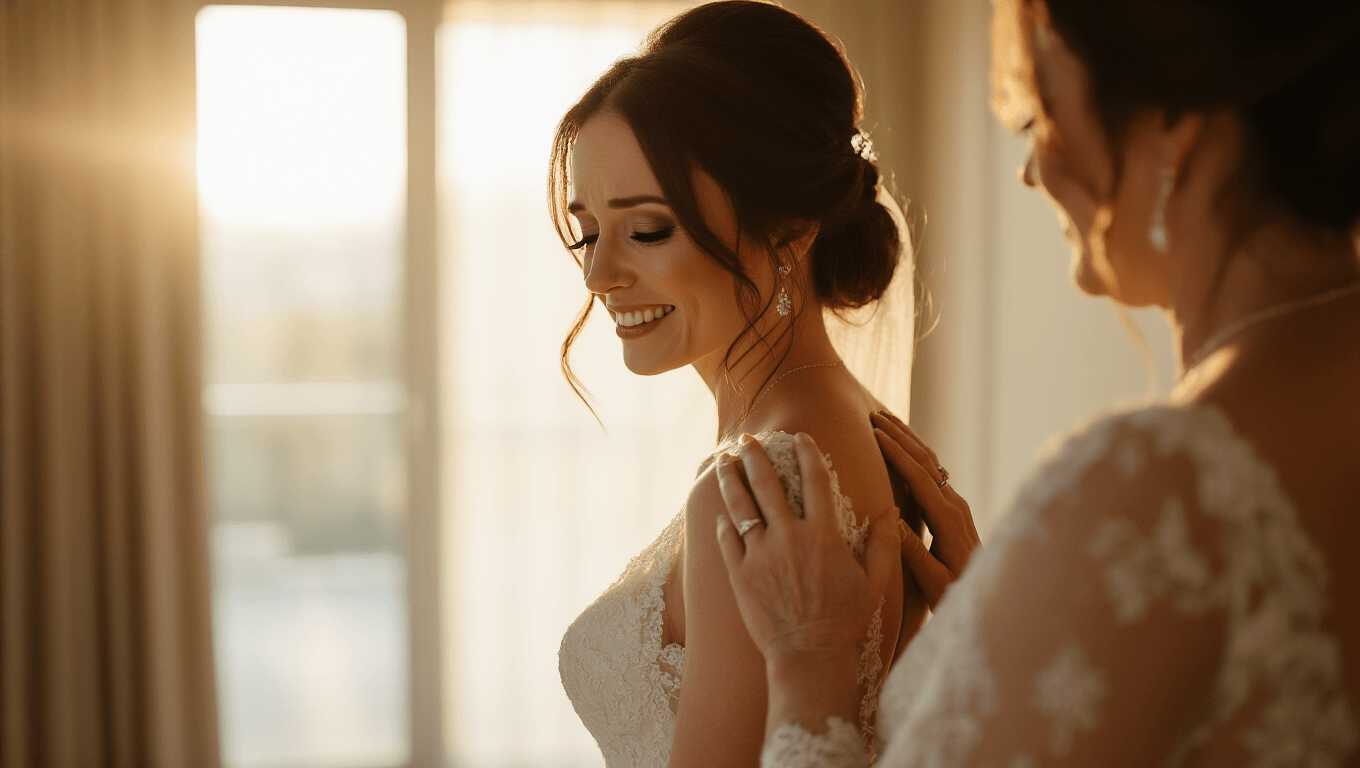
Wedding photo ideas are easy to find and surprisingly hard to plan properly. You can scroll Pinterest for three hours and end up with forty saved images, no shot list, and a nagging feeling you’ve missed something important. I’ve been the friend holding the “unofficial coordinator” clipboard at enough weddings now to know the gap between a lovely photo idea and a photo that actually gets taken on the day is usually about organisation, not creativity.
So let’s start where most couples skip to their cost: working out what kind of photography you actually want, before you start collecting pretty examples.
Working Out Your Photography Style First
There are, broadly, four ways a wedding gets photographed, and most photographers lean toward one even if they claim to do it all.
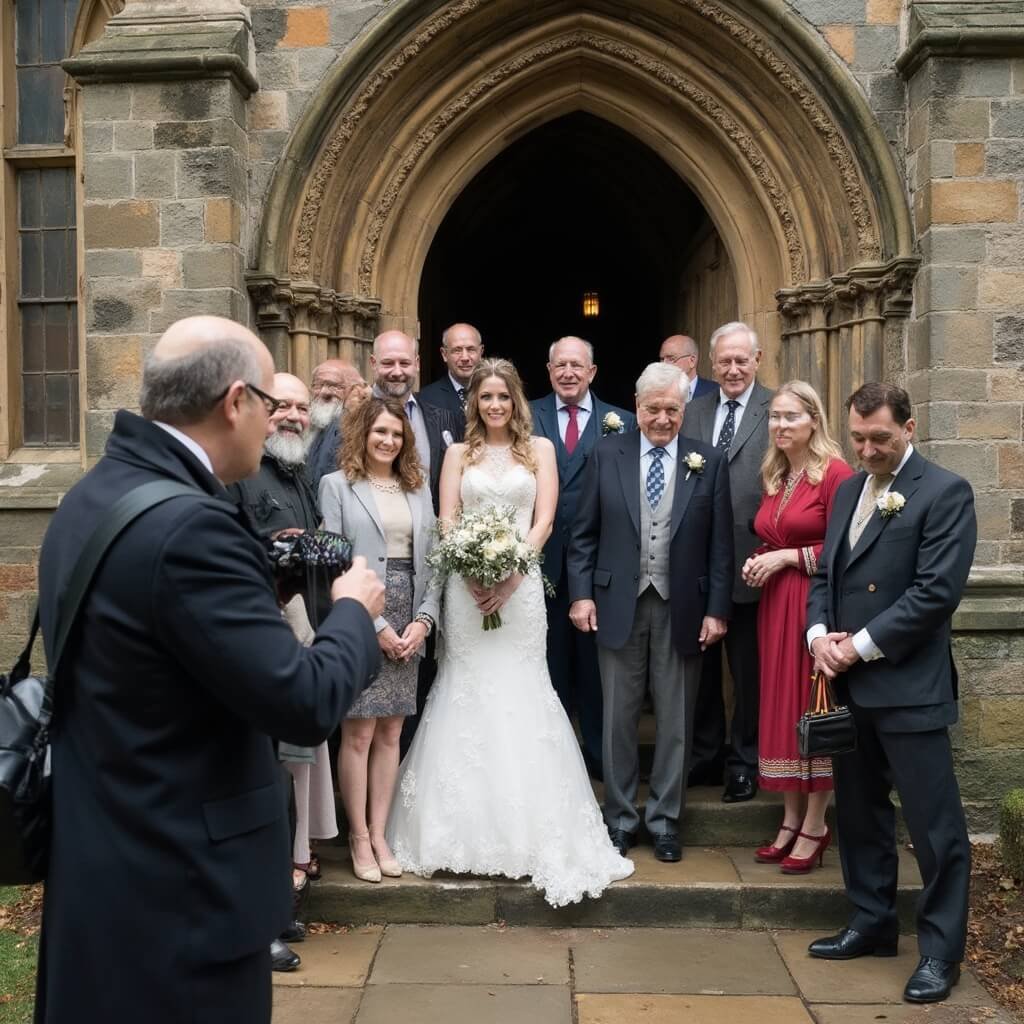
Traditional and posed is your classic formal portraits — couple facing camera, family lineups, the altar shot with everyone smiling on cue. It’s timeless because it ages well; nobody looks at a 1990s formal family photo and thinks it’s dated in the way they might think a heavily filtered candid looks dated. The downside is obvious to anyone who’s stood in a cold churchyard for twenty-five minutes while an increasingly irritable photographer tries to locate Great Uncle Barry for the extended family shot.
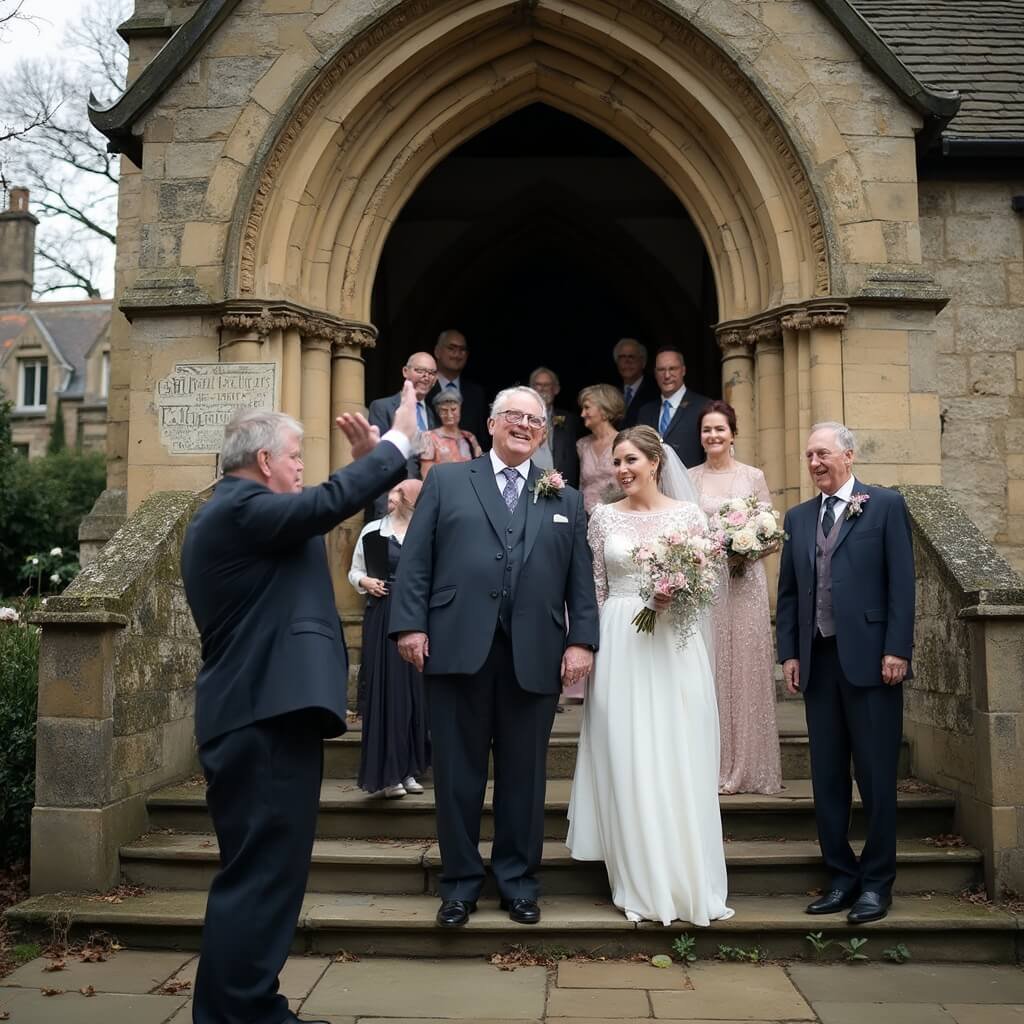
Candid or photojournalistic coverage is the opposite instinct — capturing real moments as they happen, minimal direction, minimal interruption. This is where you get the shot of your dad’s face crumpling slightly during the vows, or your niece falling asleep face-down on a chair by 9pm. The risk is that if nobody’s planned for the important posed combinations, you can end up without a single decent shot of you with both sets of parents together.
Editorial or fine-art style borrows from fashion photography — dramatic lighting, considered composition, sometimes a slightly moody or cinematic colour grade. It photographs beautifully in an album but takes longer to set up, and it works best with couples who don’t mind being directed quite specifically (“chin down a touch, now look past me, not at me”).
Most couples I know end up wanting a hybrid — and most decent photographers will offer this without you having to ask, but it’s still worth saying explicitly what balance you want. “Mostly candid with a few key posed shots” is a completely different brief to “mostly posed with some candid moments woven in,” even though they sound similar.
Building Your Shot List Without Making It a Chore
The single most useful thing I did for my own wedding was sit down with my now-husband on a Tuesday evening, order a takeaway, and write down every person combination we genuinely wanted a photo of. Not “family photos” as a vague line item — actual names. My gran with just me. Both sets of parents together. His three brothers, no partners, because that configuration doesn’t exist often and probably never will again once someone inevitably has kids.
It took about forty minutes and it was the best forty minutes I spent on the whole day, because on the actual afternoon, someone (my sister, bless her) had the list on her phone and physically went and found people. Without that, I guarantee half those combinations wouldn’t have happened — everyone was three drinks into the reception and vaguely reluctant to be herded anywhere.
A few things worth deciding early:
- Which person combinations are non-negotiable versus nice-to-have (parents, siblings, wedding party, specific relatives who’ve travelled a long way)
- Whether you want the traditional aisle reveal or a first look beforehand
- How your venue and timeline constrain things — some churches don’t allow photography during the ceremony at all, some venues lose all their good light by 4pm in winter
None of this needs to be rigid. But going into the day with a plan means you spend less time standing around working out who’s missing, and more time actually enjoying it.
What’s Trending in Wedding Photography Right Now
A few things keep showing up in current wedding albums, for good reason.
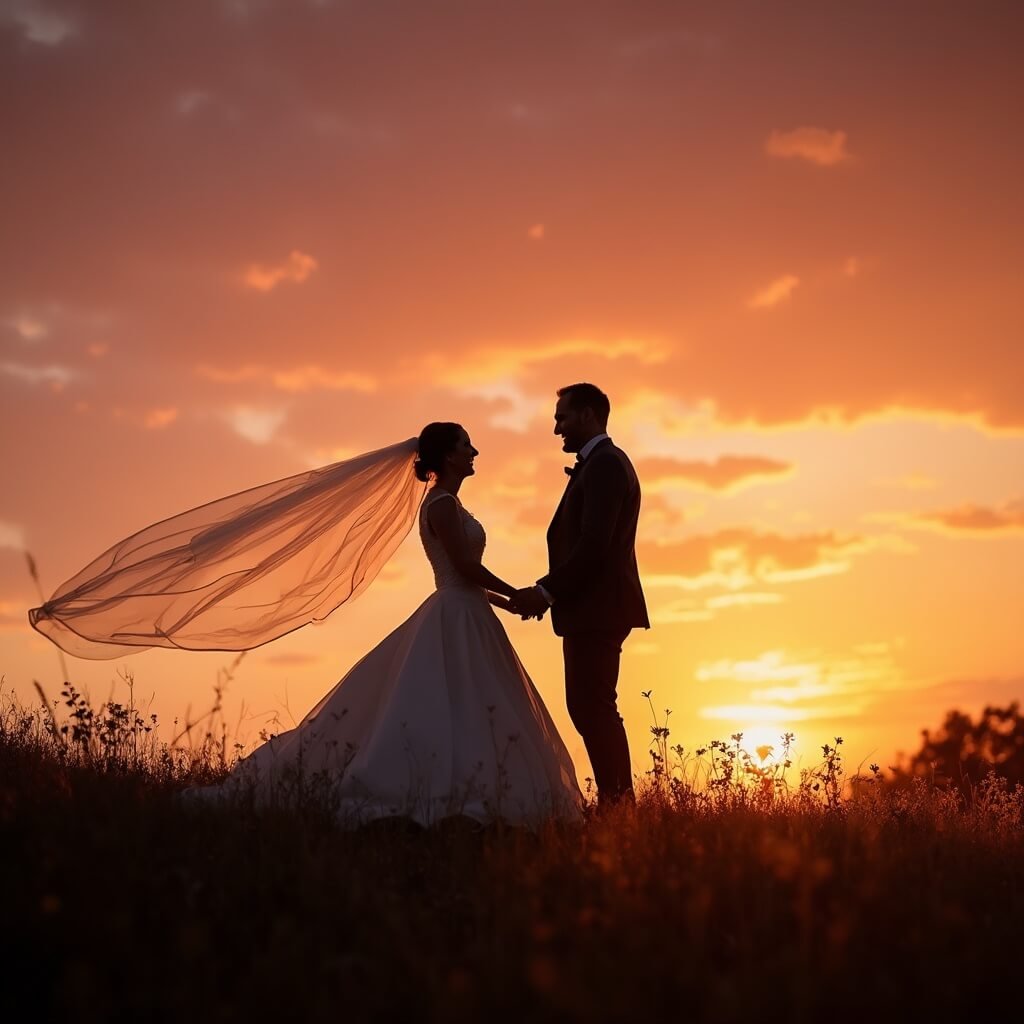
Golden hour couple sessions remain popular because the light genuinely does the work for you — warm, soft, forgiving on everyone’s skin tone, and it makes silhouette shots against a sunset look effortless even if the couple has never been remotely photogenic in daylight. If your ceremony is in the evening, ask your photographer to build in fifteen minutes around sunset specifically for this, rather than assuming it’ll happen naturally.
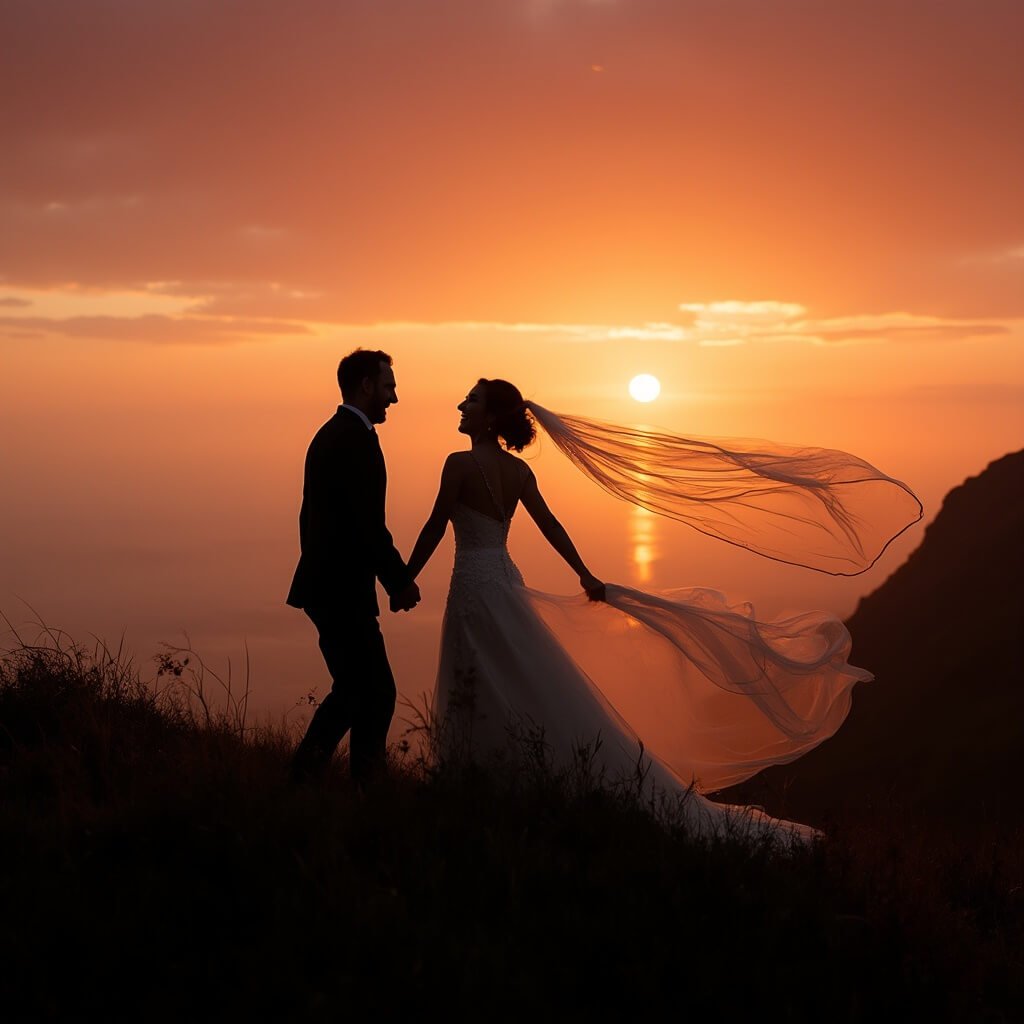
Minimalist compositions using negative space — a couple small in the frame against a plain wall, a wide sky, or clean architecture — have become a nice counterpoint to the maximalist décor trend. It’s a good option if your venue itself isn’t particularly photogenic close-up but has interesting lines or scale from a distance.
Movement-focused shots — veils caught mid-air, confetti frozen in flight, a deliberately blurred dance move — add energy that fully static posed shots can lack. Interactive wedding party photos, like running through a tunnel of sparklers or a circle of bridesmaids closing in around the bride, have largely replaced the stiff lineup shot as the “group fun” photo of choice.
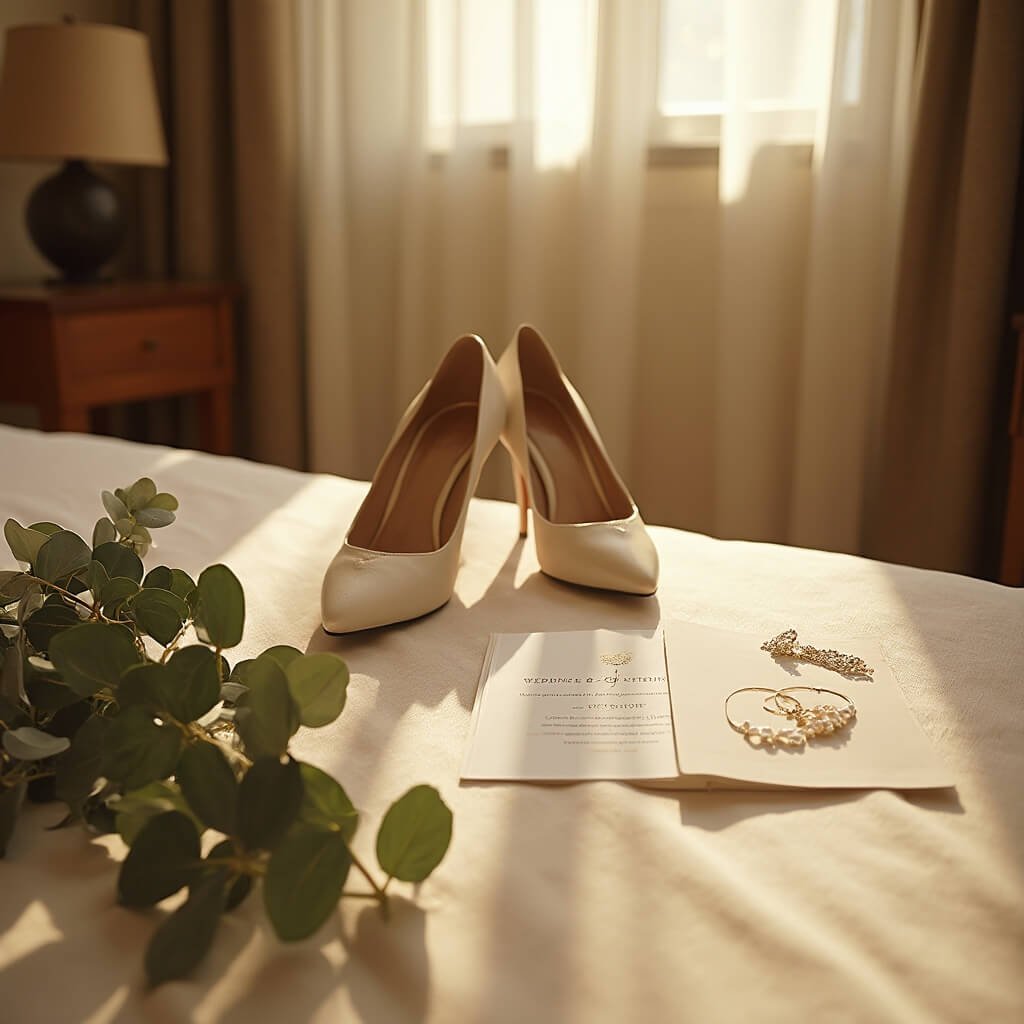
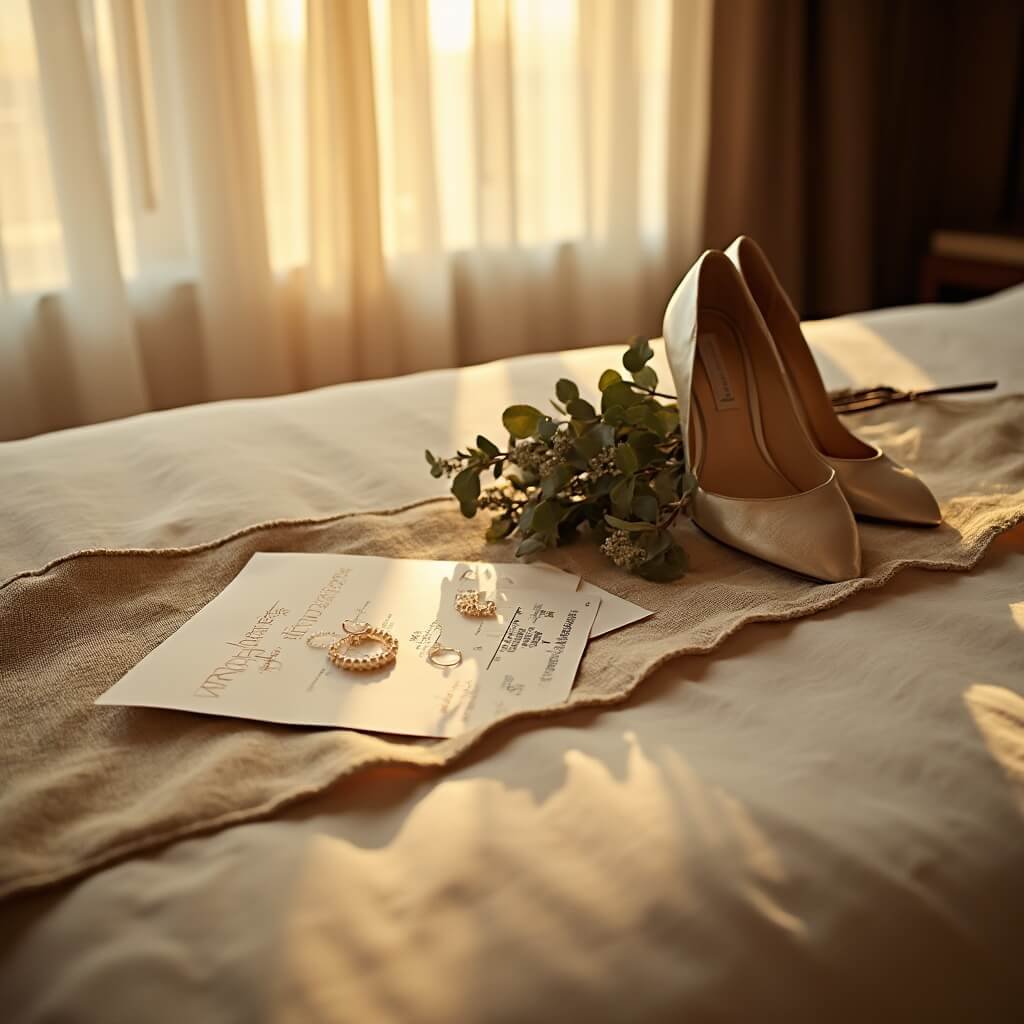
And detail-driven storytelling — flat lays of the invitation suite, the rings on a piece of fabric, shoes lined up by the window — remains a staple because it’s an easy, low-stress way to fill the first hour of coverage before anyone’s actually got dressed.
Getting-Ready Photos Worth Actually Planning For
This part of the day gets photographed on autopilot a lot, and it shows. The difference between a great getting-ready sequence and a forgettable one usually comes down to whether someone thought about it in advance.
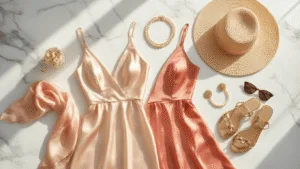
Flat lays are the obvious starting point — invitations, rings, shoes, perfume, something borrowed, arranged on a bed or table, ideally near a window for decent natural light. It sounds fussy, but it takes five minutes and gives your photographer something to shoot before there’s any actual action happening in the room. I’d skip the elaborate styling boards some photographers suggest, though — a nice piece of fabric or a few loose stems is plenty. Overproduced flat lays start to look like a stock photo rather than your wedding.
The candids matter more than people think. Hair and makeup mid-process, someone doing up the last button on a dress, bridesmaids in matching robes laughing about something nobody outside the room will ever know the context of — these are the photos people actually well up over years later, more than the posed portraits. If you’re getting ready with a big group, ask your photographer to arrive a bit earlier than feels necessary. The quiet, slightly chaotic hour before anyone’s fully dressed is usually more interesting than the finished, styled moment.
For a genuinely emotional shot, consider a first look with a parent — someone seeing you fully dressed for the first time, alone, before the wider first look or the ceremony. I’ve seen this done in a hotel corridor with zero styling and it’s still one of the photos guests talk about months later, because the reaction is completely unguarded.
Then there’s the bigger decision: whether to do a partner first look before the ceremony at all.
For more tips on styling your wedding day, explore Wedding Hair and Makeup Ideas or check out Curly Hair Wedding Styles.
👇Shop the Look Here👇
The Ceremony Itself
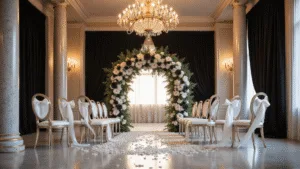
Once the ceremony starts, most of the photography decisions are out of your hands and into your photographer’s — which is exactly why the earlier conversations matter. A good photographer will already be capturing the venue itself before guests arrive, the empty seats and the altar flowers and the order-of-service cards fanned out on a table, because once people start arriving there’s no clean version of that shot again.
The processional is where a lot of genuinely good, unrepeatable images happen and where couples tend to under-think things. Your photographer should be getting the groom (or waiting partner) before you appear — that stretch of anticipation on someone’s face is one of the shots people don’t ask for and then love most. The bridal party entering, the flower girl who may or may not cooperate, the moment whoever’s walking you down the aisle registers your face for the first time — all of it happens fast, and none of it can be restaged. If your venue restricts photography during the ceremony itself (some churches genuinely do, worth checking well in advance), this is the section that gets hit hardest, so find out early.
The moments people specifically ask for — vows, ring exchange, first kiss — are fairly reliably captured by anyone competent, but the detail that separates a good photographer from a great one is whether they’re also getting the guests. Your mum’s face during the vows. Your best friend’s completely undignified sobbing. The kid in row four who’s lost interest entirely and is doing something with a hymn book. Ask, specifically, whether your photographer plans to get reaction shots during the ceremony and not just shots of you two. It’s an easy thing to assume and an easy thing to miss.
Couple Portraits That Don’t Look Like Everyone Else’s
Once you’re through the ceremony and the immediate scrum of congratulations, you’ll usually get a window — sometimes fifteen minutes, sometimes an hour — for portraits of just the two of you. This is where wedding photo ideas start to genuinely diverge based on personality, and where I’d actively push back against just copying whatever’s trending.
Classic portraits — facing camera, embracing, the standard smiling shot — exist because they work, and you’ll want at least a handful of them regardless of how camera-shy you are. But the more memorable images tend to come from doing something with the location rather than just standing in it. A doorway or archway gives you a natural frame. A staircase gives you levels and a reason to look at each other rather than the lens. If your venue has any interesting architecture at all — exposed beams, an odd window, a corridor with good light — use it, rather than defaulting to “outside, in front of a hedge,” which is where an enormous number of wedding portraits end up by default.
Golden hour remains the single best return on time invested. Fifteen minutes at the right point in the evening, ideally with some direction to just walk, talk, and largely ignore the camera for a minute, will usually outperform an hour of posed portraits taken at 2pm in flat midday light. If your ceremony’s early in the day, it’s worth building a second, shorter session into the evening specifically for this — most photographers are happy to do it, and it’s the difference between a nice photo and the one you actually print and frame.
A word on length: longer portrait sessions genuinely do produce more variety, but they also eat into cocktail hour, and I’ve been to enough weddings where the couple missed their own drinks reception entirely because portraits overran. Twenty to forty-five minutes with a photographer who knows what they’re doing and has a clear sense of priority shots will usually beat ninety unstructured minutes. Ask for a rough time estimate in advance and hold them to it, kindly.
Group Photos Without Everyone Losing the Will to Live
Large group photos are where good planning pays off most obviously, because they’re the part of the day guests actively resent if it drags. The fix is almost entirely logistical: agree your list of combinations in advance, give a printed or phone copy to both your photographer and one organised friend or relative, and — genuinely underrated tip — keep drinks and canapés close to wherever the photos are happening. People wander the second they think there’s a bar thirty feet away, and every wander costs you five minutes of someone going to retrieve them.
For the wedding party specifically, ditch the flat lineup where possible. A tunnel of hands or sparklers for you to run through, bridesmaids forming a loose circle with bouquets angled toward the centre, or just a genuine group cheer rather than a held smile — these photograph better and feel less like herding cats. The stiff, evenly-spaced lineup shot still has its place for one formal version, but you don’t need six variations of it.
If you’ve got guests with mobility needs, think about this before the day rather than during it — stairs look lovely in photos and are genuinely difficult for some grandparents, and nobody wants to be the reason someone’s stuck standing for twenty minutes on a bad hip. A flat, accessible spot with good light is worth more than a dramatic staircase nobody can comfortably use.
Reception, Speeches, and the Rest of the Night
The reception is where candid photography earns its keep. Speeches are unpredictable by nature — you don’t know which one will make your dad cry or which best man joke will land badly enough that the whole room’s reaction becomes the more interesting photo than the speaker. A good photographer works the room during this section rather than staying fixed on whoever’s holding the microphone.
First dance photos benefit from a mix: one wide, well-lit shot of the room and the two of you, plus close, slightly imperfect ones where you can actually see your faces rather than the backs of your heads. Cake cutting, the dance floor filling up later, kids who’ve abandoned all pretence of good behaviour by 10pm — these are the photos that tend to get looked at more, years later, than the formal portraits, because they’re the ones that actually look like your friends and your night rather than a generic wedding.
End-of-night send-offs — sparklers, a getaway car, confetti — photograph well largely because of the lighting conditions as much as the concept. Dark sky, warm sparks or headlights, everyone’s guard down after a few hours of drinking: it’s an easy win if your photographer stays late enough to catch it, so check that’s actually in your contract and not assumed.
A Practical Note to End On
If I were doing it again, I’d spend less time collecting wedding photo ideas from other people’s weddings and more time having one honest conversation with my photographer about priorities — which moments matter to us specifically, which combinations of people we’ll never get again, and how much time we’re actually willing to give up from the party to get them. The prettiest shot list in the world is worth nothing if nobody’s tracking down Great Uncle Barry when it counts.
👇Shop the Look here 👇