Wedding ideas on a budget usually get Googled by someone staring at a venue quote with their stomach sinking slightly — mine included, if I’m honest. I remember sitting at my kitchen table with a cup of tea gone cold, a spreadsheet open, and a venue coordinator’s email that put the “basic” package at nearly £9,000 before food. That was the moment I realised “budget wedding” needed a proper definition, because up until then I’d been treating it as a vague feeling of guilt rather than an actual plan.
What “Budget Wedding” Actually Means
A budget wedding isn’t a cheap wedding, and it definitely isn’t a lesser one. It’s a wedding built around a number you’ve chosen deliberately, rather than one that creeps up on you through a hundred small “yes, go on then” decisions. That number might be £5,000. It might be £25,000. Both are budgets — they’re just different budgets, shaped by what the couple can actually afford without wincing every time they check their bank balance for the next two years.
The real skill isn’t cutting costs everywhere equally. It’s figuring out where to spend less so you can spend properly on the things that matter to you specifically. If live music makes your heart happy and the cake doesn’t, put money toward the band and get a simple cake from the supermarket bakery with a nice ribbon round it. Nobody’s going to remember the cake. They’ll remember dancing.
A few things worth untangling early, because they trip people up constantly:
- A smaller wedding is not automatically a lesser one — 40 guests in a space you love can feel far more intentional than 150 in a function room you settled for.
- DIY isn’t a guaranteed saving. Once you add up materials, the trip to buy them, the storage, and the three attempts it took to get the sign right, sometimes a florist would’ve been cheaper and less stressful.
- “Affordable” should never mean “financed.” If a wedding requires debt you’ll be paying off during your second anniversary, it’s not actually affordable — it just feels that way on the day.
What Weddings Actually Cost Right Now
It’s worth knowing the national picture, mostly so you can ignore it with confidence. The Knot’s 2026 Real Weddings Study, based on over 10,000 couples married in 2025, put the average US wedding cost at $34,200. That’s an average, not a requirement, and it’s pulled upward by weddings at the very expensive end — the same study found couples with budgets under $15,000 spent an average of $8,900, those budgeting $15,001–$40,000 spent around $26,400, and couples with budgets above $40,000 spent roughly $70,300. The spread is enormous, which tells you the “average wedding” is a fairly meaningless concept outside of broad planning context.
Averages also mix up planned spending with final spending, and prices vary wildly depending on where you live, what season you marry in, and how many guests you’re feeding. A wedding in a small town in February looks nothing like one in a major city in June, even with an identical guest list. Use the national figures as background noise, not a target to hit.
What’s genuinely useful is knowing where the money tends to go. Venue and rentals typically eat up around 29% of the average budget, catering and drinks about 24%, photography and video roughly 10%, and flowers and décor about 9%. That ordering is useful because it tells you where cutting will actually move the needle — trimming your stationery budget by half feels virtuous but barely dents the total, while shaving the guest list or renegotiating the venue genuinely changes the maths.

Setting a Number You Can Actually Live With
Before any Pinterest boards or venue tours, sit down and work out the real ceiling. Add up savings already set aside for the wedding, realistic monthly contributions between now and the date, and any family contributions that have been explicitly confirmed — not the ones you’re hoping will materialise because Auntie Jan mentioned something once at Christmas. Assumed money has a horrible way of not showing up three weeks before the final balance is due.
Protect the rest of your financial life while you’re at it. Don’t let wedding spending creep onto credit cards at 20%+ interest, and don’t quietly skip a student loan payment or raid the emergency fund because the florist needs a deposit. It’s also worth deciding early whether the honeymoon, rehearsal dinner, attire, rings, and the day-after brunch are coming out of the same pot, or sitting in a separate category entirely — couples often forget these until they’re already mid-planning and the numbers no longer add up.
Then build in a contingency reserve — somewhere around 10–15% of the total — for tax, gratuities, alterations, a rainy-day backup, vendor overtime, or the extra chair hire you didn’t know you’d need. Plan your spending against 85–90% of your ceiling, not the full amount. That buffer is the difference between a stressful final month and a calm one.
Start With the Guest List, Not the Pinterest Board
If there’s one lever that moves every other number, it’s guest count. Catering, drinks, invitations, favours, cake, transport, and venue capacity nearly all scale with headcount, so trimming the list even modestly can shrink costs across six categories simultaneously rather than one.
A tiered approach helps take the emotion out of it.
Put immediate family and the people you genuinely couldn’t imagine the day without in Tier 1. Close friends and extended relatives go in Tier 2. Tier 3 is for the acquaintances and “it would be nice but” invitations — the ones that get added only if the budget stretches. Decide your policy on children and plus-ones before a single invitation goes out, and apply it evenly. Nothing causes more quiet resentment among guests than an inconsistent plus-one policy.
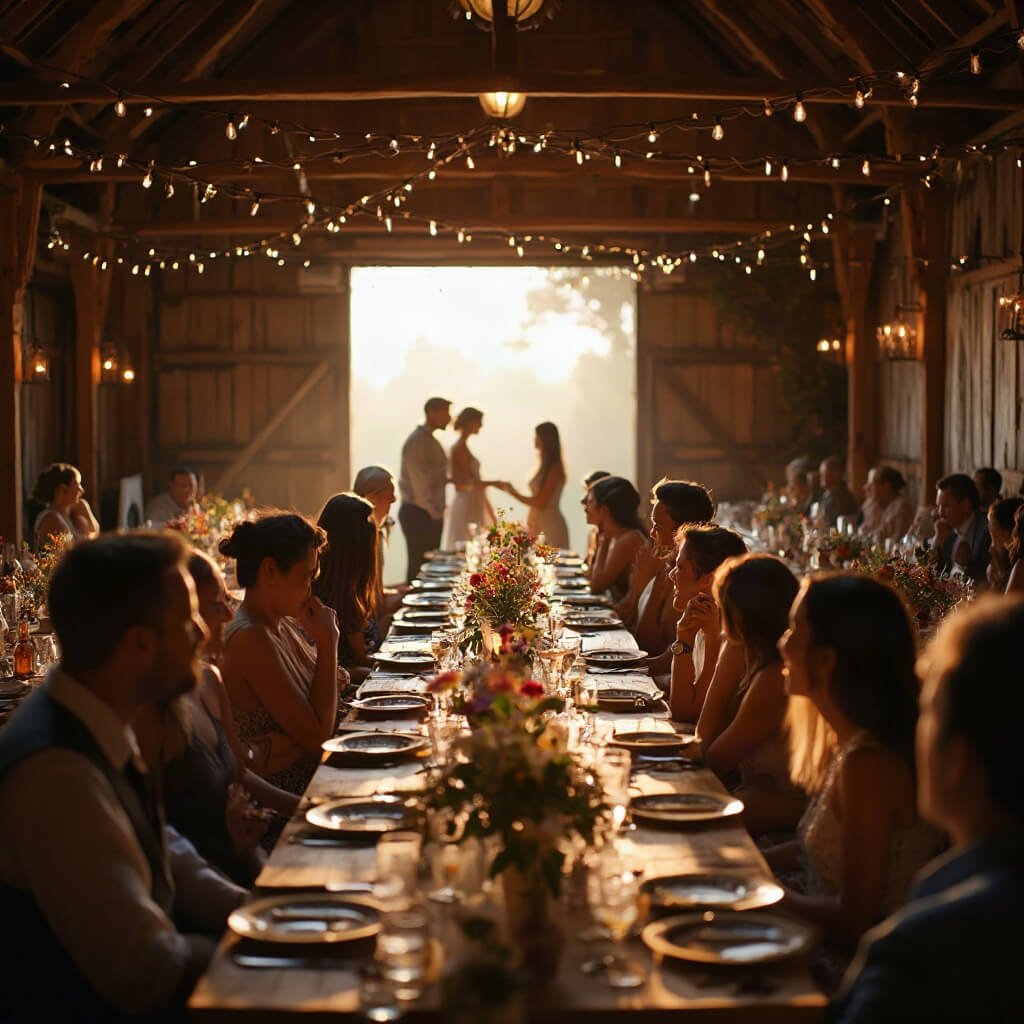
It’s worth actually running the numbers at a few different sizes — 30 guests, 50, 75, 100 — because the jump in cost between those isn’t linear. Venue minimums, for instance, often kick in around certain headcounts, so 52 guests might cost dramatically more than 48 simply because you’ve tipped into a bigger space or an extra staff requirement. If a smaller format appeals, there’s useful language for it: an elopement is typically 2–10 people, a micro wedding runs about 20–50, and an intimate wedding sits around 50–75. Each comes with a genuinely different cost structure, not just a different mood.
Decide What Actually Matters Before You Spend a Penny
Ask yourselves, honestly, what your top three priorities are. Not what you think you’re supposed to care about — what you actually care about. Food? Photography? A particular family tradition? Dancing until midnight? Once you know that, every other decision gets easier, because you’re not weighing options in a vacuum.
A simple categorisation helps:
- Must have: the legal ceremony, feeding your guests, somewhere for people to sit, a venue that actually works logistically.
- Important: photography, attire, music, flowers, cultural or religious elements specific to your families.
- Nice to have: favours, elaborate signage, specialty furniture hire, décor that exists mainly for photos.
Spend generously on the first two categories, as far as your priorities dictate, and treat the third category as entirely optional. Before you book a single vendor, write a “cut list” — the things you’ll drop first if money gets tight later. Having that list ready in September means you’re not making panicked decisions in November when the final catering invoice is bigger than expected. Just don’t let the cut list touch anything related to accessibility, safety, or legal requirements — those aren’t negotiable regardless of budget.
Build a Spreadsheet That Tells You the Truth
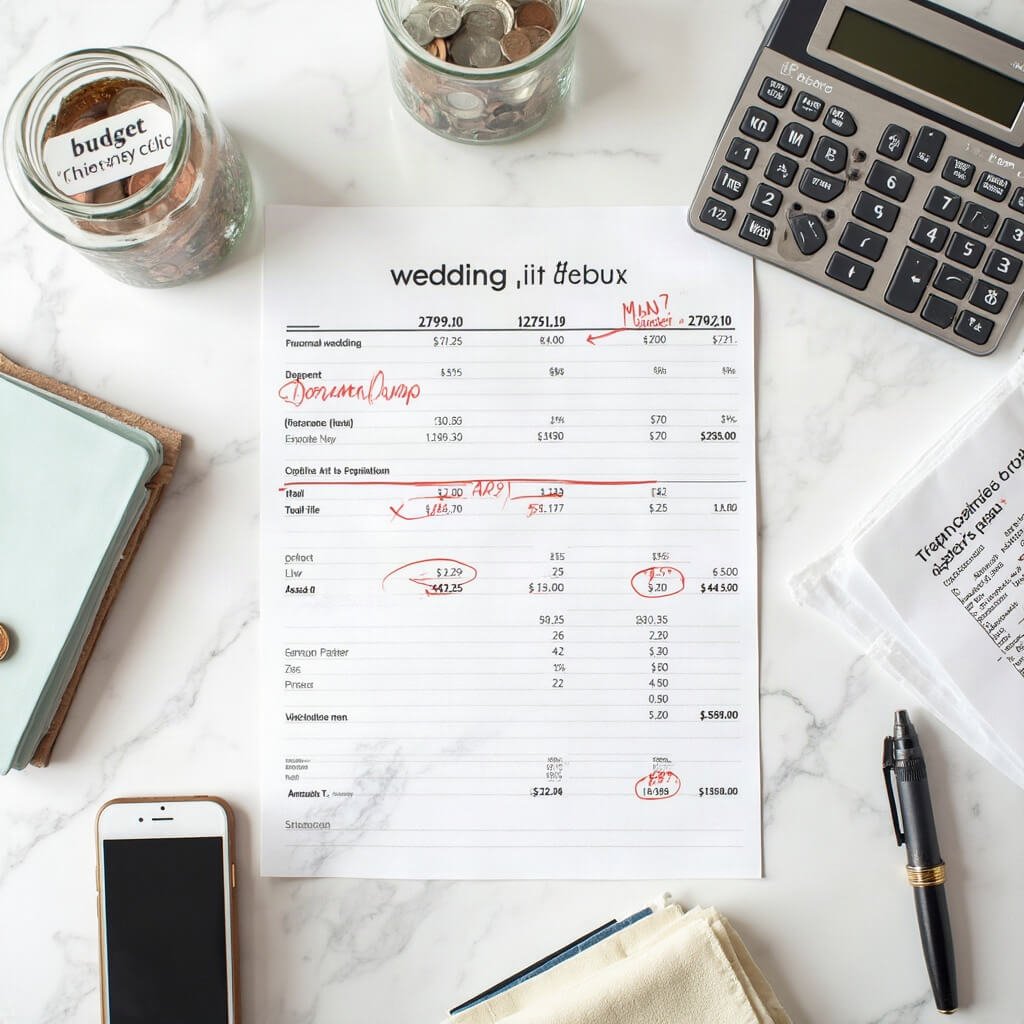
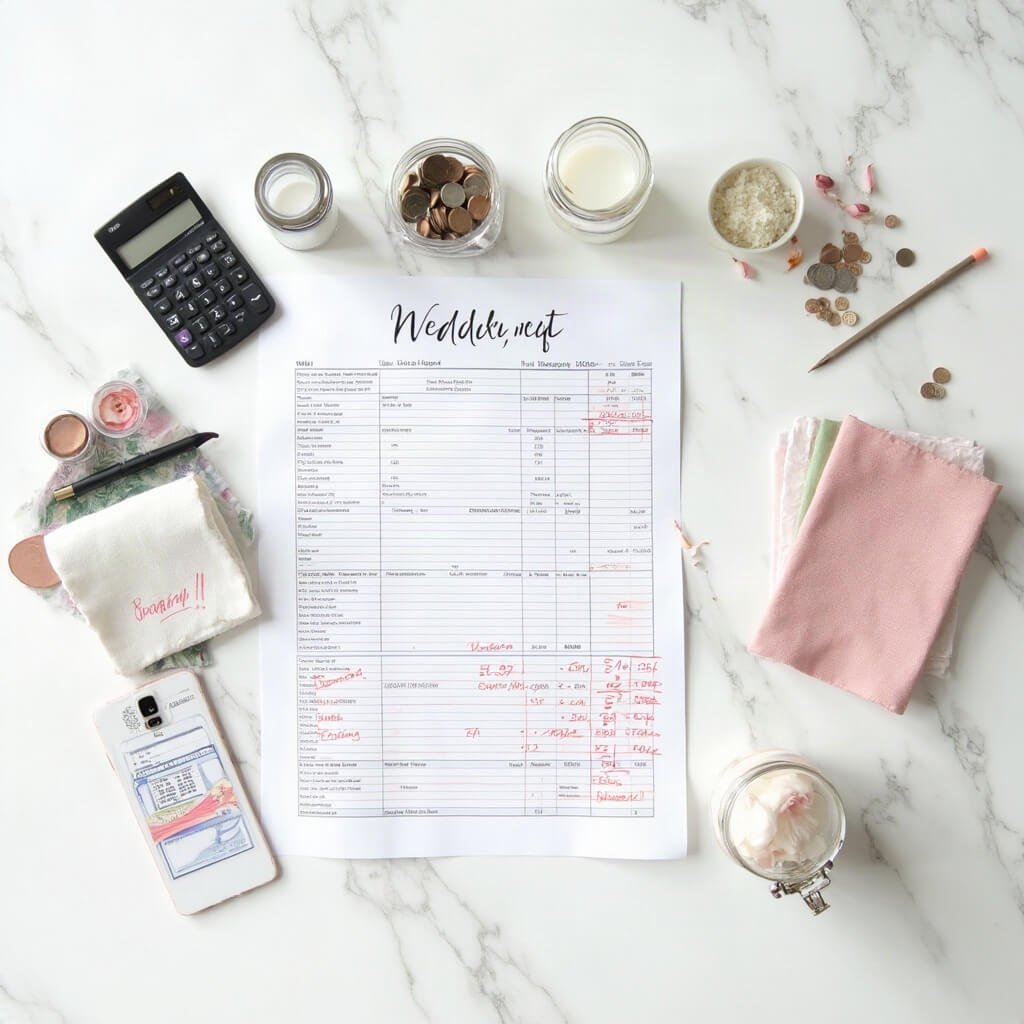
A proper budget spreadsheet needs more than a single “cost” column, because the gap between an estimate and a signed contract is where budgets usually go wrong. Include category, estimated cost, actual quote once received, deposit paid, balance remaining, tax and gratuity, payment deadline, and cancellation terms. It sounds excessive until the month you’ve got four deposits due within a week of each other and no memory of which supplier wanted theirs by bank transfer.
There’s a long list of costs that catch people out almost every time: the marriage licence, the officiant’s fee, alterations and steaming, vendor meals (yes, you usually feed your photographer), delivery and breakdown charges, damage deposits on rentals, hair and makeup trials, postage, cake-cutting and corkage fees, and transport or overnight accommodation if your venue is some distance from home. None of these are huge individually. Together, they can add 10–15% to a budget that looked finished.
Track cash flow as carefully as the total figure. Look at when each deposit falls due, not just how much it costs — committing to three large deposits in the same month, even within budget, can wreck a couple’s cash flow for weeks. And always get quotes in writing, with a clear note of what’s included: does the price cover tax, service charge, delivery, setup, and overtime, or are those extra? I once agreed a “final price” over the phone with a caterer that turned out to exclude staffing — an extra £400 I hadn’t accounted for, discovered three weeks before the wedding when the actual contract landed in my inbox.
What Different Budgets Actually Buy
Numbers mean more with examples attached. For a £10,000 (or $10,000) intimate wedding, a rough allocation might look like: venue, ceremony, and rentals at $1,500; food and non-alcoholic drinks at $2,500; photography at $1,500; attire and beauty at $1,200; music at $500; flowers and décor at $700; cake and dessert at $300; invitations at $200; officiant, licence, transport, and odds and ends at $600; and a $1,000 contingency reserve sitting untouched until needed.
Stretch to $15,000 and you’re generally looking at 40–60 guests, with savings coming from a nontraditional venue, a buffet rather than plated service, a limited bar, digital stationery, and shorter photography coverage rather than a full-day package. At $25,000, you can usually support 60–90 guests depending on your region, with more room to put toward food and photography while keeping décor deliberately simple rather than elaborate.
These figures are planning scaffolding, not gospel — your local prices might make a $10,000 wedding feel generous or painfully tight. The moment you get real quotes from your own area, swap them in and let the model adjust. The structure matters more than the exact numbers.
👇Shop the Look Here👇
Finding a Venue That Doesn’t Eat the Whole Budget
Once the guest list and the spreadsheet are sitting in front of you, the venue conversation gets a lot less emotional and a lot more practical. The obvious move is to look past the traditional wedding-venue category altogether, because “wedding venue” pricing often carries a built-in premium that a function room, garden, or restaurant simply doesn’t.
A backyard wedding — yours, a parent’s, a friend’s with a decent garden — can be genuinely lovely, but go in with your eyes open about what you’re actually taking on. You’re responsible for toilets, power, lighting, parking, a weather contingency, tables, chairs, and the cleanup the morning after when you’d rather be nursing a hangover than stacking chairs. Check your local council’s rules on noise, alcohol licensing, and whether you need an event permit before you commit to the idea in your head. Public parks and gardens work on a similar logic: gorgeous scenery that needs almost no décor, but you’ll want to check reservation limits, whether commercial photography is restricted, and what happens to your plans if it rains.
Restaurants and cafés are underrated. They already have a kitchen, furniture, glassware, and staff, which removes an entire category of rental costs in one go. Ask about private dining rooms, brunch buyouts, or a quiet Tuesday evening when they’d otherwise be half empty — restaurants are often more flexible on pricing than you’d expect, because you’re filling seats they’d otherwise not fill. Museums, galleries, libraries, and community centres offer the same logic from a different angle: the architecture does the decorating for you. Just confirm their policy on outside catering, insurance, security, and who’s cleaning up afterward, because some of these venues are stricter than a traditional wedding venue would ever be.
If you’ve got a religious or cultural venue connected to your community, it’s worth asking directly what a wedding costs there — it’s sometimes drastically lower than a commercial venue, though you’ll need to confirm what reception restrictions apply afterward. And if flying everyone somewhere scenic was the dream, consider finding that same feeling closer to home. A ceremony by a local lake or in a historic part of your own town can deliver the destination feeling without the destination flights. Some couples skip the venue question entirely — a courthouse ceremony followed by a restaurant dinner or a home gathering afterward is a complete wedding, not a consolation prize, and plenty of couples add a bigger anniversary party a year later once money’s less tight. For inspiration, explore budget-friendly intimate wedding ideas.

Timing changes the price as much as the venue does.
Off-season dates — winter, early spring, depending on your climate — often come with noticeably lower venue and vendor rates, provided you’re comfortable with the weather trade-off. Weekdays can be cheaper than Saturdays by a meaningful margin, as long as you give guests enough notice to request time off work. A Sunday brunch wedding is one of the most underused tricks I know: daytime menus cost less than formal dinners, the bar bill shrinks naturally because people drink less at 11am, and the whole thing can wrap up at a sensible hour. Just avoid scheduling against the local marathon, a major match, or graduation weekend, because hotel prices and guest availability both suffer for reasons that have nothing to do with your wedding.
None of this is free of trade-offs. A nontraditional venue is cheaper and more flexible, often with more built-in character, but you may be covering rentals, extra vendor coordination, permits, and insurance that a commercial venue would have bundled in already. Compare the total cost — venue fee plus rentals plus catering logistics plus cleanup — rather than being seduced by a low rental figure that turns out to need another £2,000 of infrastructure behind it. For more ways to make the numbers work, see Wedding Budget Tips: Ways to Save Money Without Sacrificing Style.
Feeding People Well Without the Formal Price Tag
Food is one of the biggest line items, and also one of the easiest to rethink without anyone noticing a drop in quality. A buffet reduces staffing costs compared to plated service and handles dietary variety more gracefully, though you’ll want to clarify whether your caterer charges per person, per tray, or by the hour — those three pricing models can produce wildly different final bills for what looks like the same meal. Family-style service keeps that communal, generous feeling but needs more table space and usually more food volume than people expect, so don’t assume it’s automatically the cheaper option.
A heavy hors d’oeuvres reception — several substantial savoury items rather than a seated meal — works brilliantly for afternoon or early-evening weddings, as long as your invitation makes the format clear. Guests who arrive expecting a three-course dinner and get canapés will be quietly annoyed; guests told in advance “join us for drinks and substantial nibbles” show up with the right expectations and have a great time. Brunch and lunch menus are a genuine budget move too — quiche, pastries, salads, a good coffee station, maybe a sparkling juice for toasting — and food trucks or casual restaurant catering can deliver real flavour for considerably less than a formal caterer, provided your venue has the parking, power, and weather tolerance to support one.
Potlucks work, but only in the right setting. A backyard gathering among close friends and family can handle a potluck beautifully; a wedding with 80 semi-strangers cannot, mostly because of food safety, refrigeration, and the slightly awkward feeling some guests get when asked to contribute dishes to someone else’s wedding. Use your judgment on this one rather than defaulting to it purely to save money. And a late-night snack — pizza, tacos, sliders, a popcorn machine — can replace a full catered meal entirely at an evening reception that starts after a big lunch, which is a trick plenty of city-hall weddings use to great effect.
Cake is where couples waste money out of pure obligation.
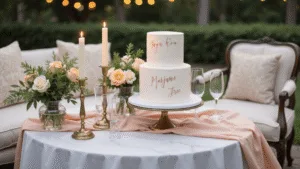
A small display cake paired with sheet cakes cut in the kitchen looks identical to guests and costs a fraction of a fully tiered creation. Cupcakes, cookies, pies, or a dessert table of mixed local pastries all work just as well, and a decorated grocery-store cake dressed up with fresh flowers or a nice cake topper fools almost everyone. I went with a two-tier cake from a local bakery and sheet cake backup, and not one guest noticed or cared — they were too busy eating it.
Bar costs deserve the same scrutiny. Beer, wine, and one well-chosen signature cocktail covers most guests’ preferences without the expense of a full open bar, and offering a limited selection during cocktail hour with wine or beer at dinner trims it further. Always have strong non-alcoholic options on the table — sparkling water, lemonade, a proper mocktail, good coffee — because not every guest drinks, and these options cost very little. Check your venue’s corkage policy before assuming you can bring your own alcohol, and never let the drive for savings compromise responsible service: hire qualified bartenders where the law requires it, keep food and water flowing, and make sure guests have an easy way to get home safely.
Looking Good Without the Boutique Mark-Up
Wedding attire carries one of the strangest price premiums in the entire industry — the word “wedding” attached to a dress or a cake stand seems to add a zero. Preowned and sample-sale dresses are a legitimate first stop, provided you check the condition carefully and budget for cleaning and alterations. Nontraditional options are worth a proper look too: a well-cut cocktail dress, a jumpsuit, separates, or a vintage find can look every bit as considered as a traditional gown, often for a quarter of the price. Suits are usually simpler — renting works well, but compare the rental fee against tailoring, shipping, and the penalty for a late return, because those extras sometimes make buying a decent suit the cheaper long-term option.
For the wedding party, let people wear coordinated colours from their own wardrobes rather than insisting on identical, specially ordered outfits. A shared accessory — the same tie, the same ribbon, the same brooch — does the visual-cohesion job without anyone spending £150 on a dress they’ll never wear again. And say the budget out loud before you ask someone to be in your wedding party; nobody should find out what it costs after they’ve already said yes.
Hair and makeup is another place where “professional for everyone” isn’t actually necessary. Book a professional for the two people getting married, keep it to a single trial, and let everyone else do their own thing or help each other. A relaxed getting-ready morning with friends doing each other’s hair is, frankly, more fun than a room full of silent professionals working against the clock — though if you do book one, ask explicitly about gratuity, travel fees, and early-start charges before you’re surprised by them on the invoice.
Décor That Looks Expensive Without Being Expensive
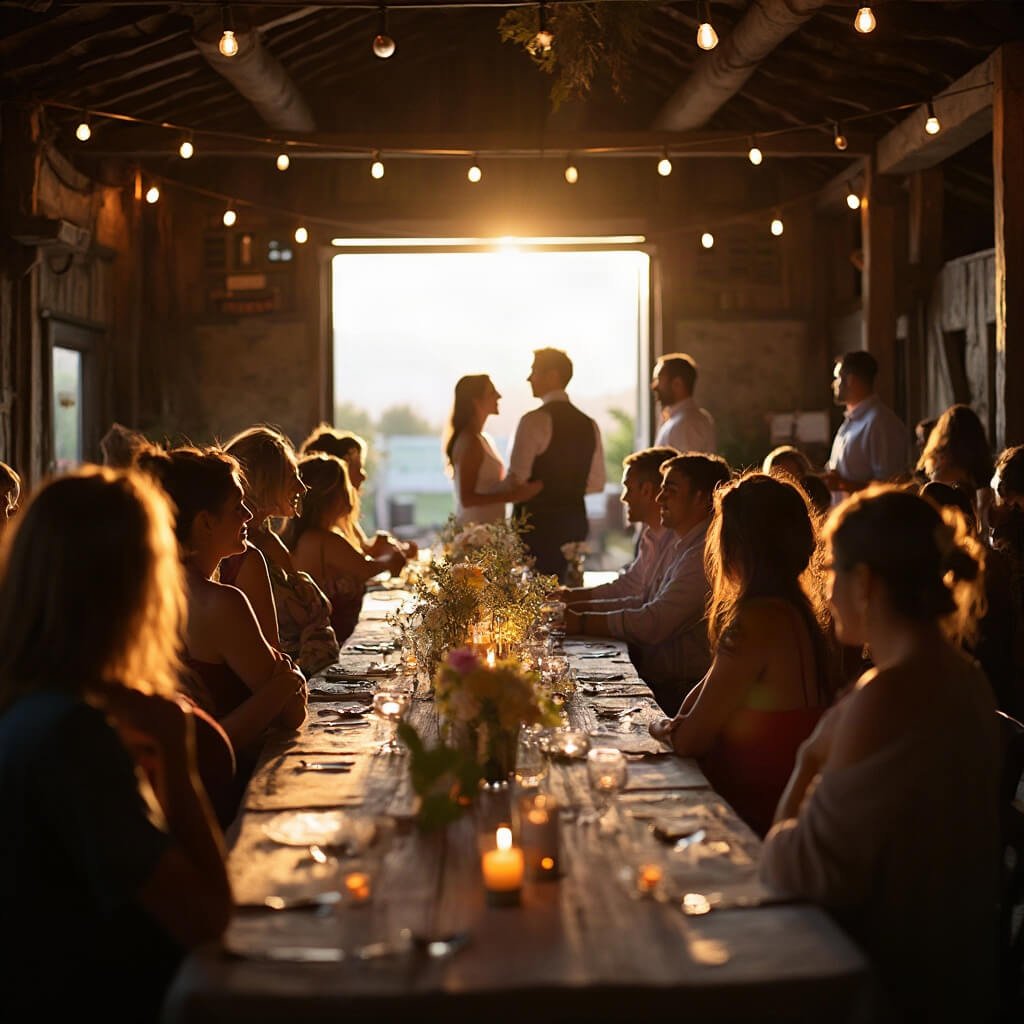
The venue should be doing most of the decorating work before you’ve spent a penny on flowers. A room with good windows, interesting architecture, or a naturally pretty outdoor setting needs far less dressing than a blank function room, so weigh that into your venue decision from the start. String lights, candles where they’re permitted, and a few well-placed lamps transform a plain space more effectively than almost anything else, and they’re cheap to hire or buy. Rather than decorating everywhere, concentrate on the spots people actually photograph and notice — the ceremony entrance, the head table, the bar, the dessert table — and let everything else stay simple. Find more inspiration in this affordable wedding decor checklist and these wedding reception decor ideas that look expensive.
Flowers follow the same logic.
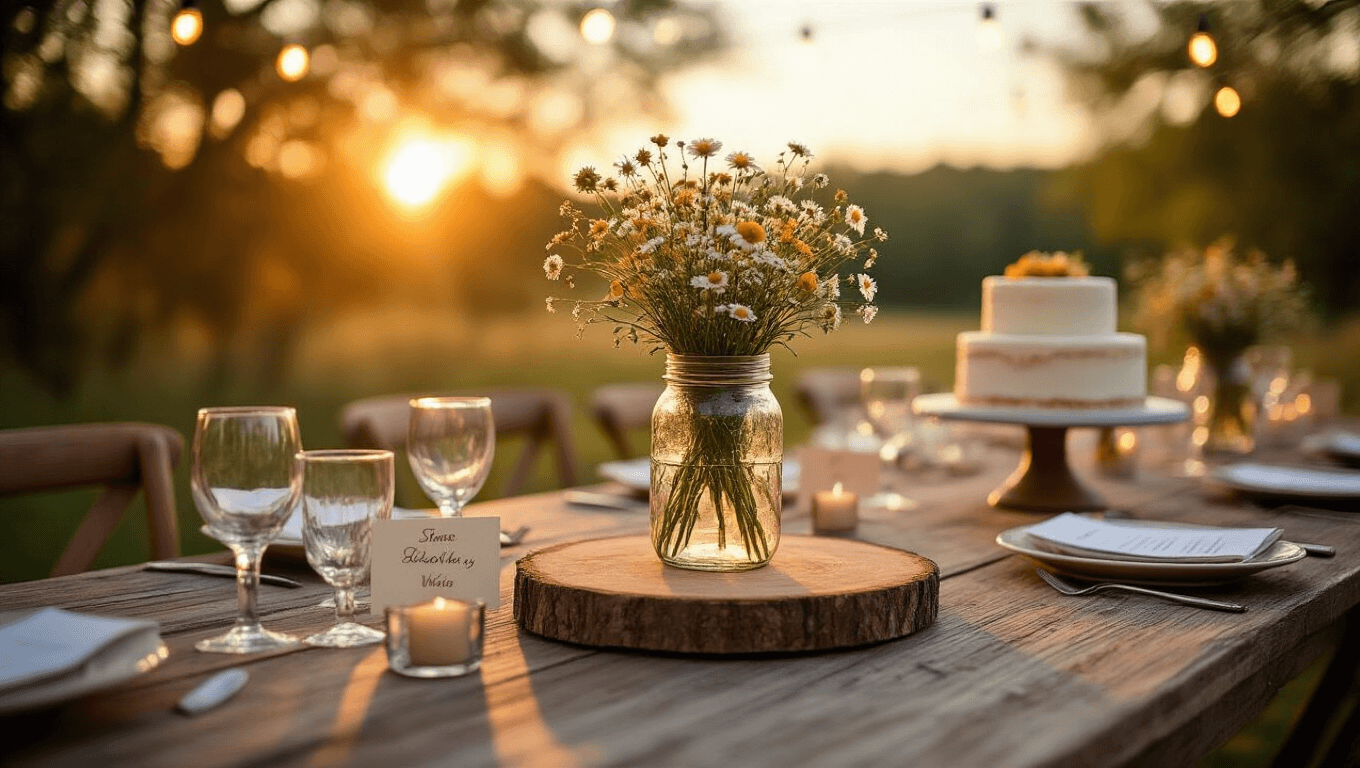
Seasonal, locally grown blooms cost less and look fresher than anything flown in, and sticking to one or two varieties rather than a complicated mixed arrangement keeps both the cost and the visual chaos down. Greenery, branches, herbs, and potted plants fill space generously for very little money, and ceremony flowers can simply migrate to the reception afterward rather than sitting unused. Bridesmaids’ bouquets make excellent, zero-extra-cost head-table décor once the ceremony’s over. If you’ve got genuinely enthusiastic, well-organised help, a wholesale flower market run is worth considering — but only if someone has done it before, because arranging flowers under time pressure the morning of a wedding is not the moment to discover you’re not good at it. See these budget-friendly wildflower centerpieces for ideas.
Borrow and rent rather than buy anything you’ll use once. Vases, candleholders, frames, and signage circulate endlessly through local wedding resale groups, especially right after peak season when couples are offloading everything from their own big day. Buy only what you’d be happy to resell or donate afterward, and try to keep single-use plastic out of the picture altogether — not just for the planet’s sake, but because disposable décor tends to look disposable too. Consider minimalist wedding decor that looks luxe for less.
DIY deserves one honest caveat: it’s not automatically cheaper, and it’s not automatically fun under deadline pressure. Signage, digital invitations, playlists, and favour packaging are safe, low-stakes projects for most people. Large floral installations, anything electrical, structural tent work, and day-of coordination are not — not unless someone involved genuinely knows what they’re doing. Before committing to any DIY project, add up materials, tools, transport, storage, and the hours it’ll actually take, then compare that honestly against a vendor’s quote. Sometimes DIY wins easily. Sometimes it’s a false economy wearing a glue gun.
Keeping Stationery and Communication Simple
Paper costs more than people expect once postage and inserts are added up, so it’s an easy place to simplify without anyone feeling short-changed.
Digital save-the-dates and, where appropriate, digital invitations cut costs to nearly nothing, and a wedding website can carry directions, schedules, registry details, and dress-code information far better than a stack of printed inserts ever could. If you do print, postcards reduce both design complexity and postage, and a simple design with minimal inserts from a budget stationery company looks perfectly polished. Skip programs and menu cards unless there’s a specific reason you need them — most guests don’t read them anyway.
Just keep an eye on accessibility. Not every guest, especially older relatives, is comfortable navigating a wedding website, so offer a paper alternative to anyone who’d prefer it, and make sure essential details — parking, accessibility, dietary options — are easy to find regardless of format. And track RSVPs properly as they come in; a vague guest count is one of the quietest ways a “budget” wedding quietly overspends, because caterers charge for the headcount you give them, not the one that actually turns up.
Where I’d Spend the Effort First
If you take nothing else from this, start with the guest list and the venue — those two decisions ripple through every other number on the spreadsheet, while stationery and favours barely move the needle no matter how much you agonise over them.
Get real quotes early, build in that 10–15% contingency, and resist the urge to compare your wedding to anyone else’s Instagram feed, because you have no idea what they actually spent or borrowed to get there. Wedding ideas on a budget work best when the budget comes first and the ideas get built around it, not the other way round — do that, and the day still ends up looking and feeling exactly the way you wanted. For further ideas, read Smart Ways to Cut Wedding Costs While Keeping Your Vision Intact.
👇Shop the Look here 👇