If you’re staring down the wedding cake decision and feeling faintly overwhelmed, you’re not alone — it’s one of those choices that seems small until you realise it touches your budget, your menu, your photographs and your dessert course all at once. The cake is doing two jobs. It’s the visual centrepiece that people photograph and gather around, and it’s also, well, pudding. Get both right and you’ve spent your money well. Get distracted by Pinterest and you can easily end up with something gorgeous that nobody enjoys eating, or a five-tier showpiece for forty guests.
So before we get into the pretty stuff, a word on planning order.
The decisions to make first (before you fall in love with a photo)
The mistake I see people make is choosing a look before they’ve settled the practical bones of the thing. Do it the other way round. Sort out guest numbers, serving format and budget first, then let the style follow. It’s far less painful.
Here’s roughly the order I’d tackle it in:
- Format and size — how many people are you feeding, and does the cake need to be dessert or is it a cutting-and-photos affair?
- Flavours and fillings — classic or adventurous, and what the season suggests.
- Style and aesthetic — traditional, rustic, modern, whatever fits your venue and dress code.
- Budget and complexity — sugar flowers, hand-piping and sculptural shapes all add cost, quickly.
- Dietary needs — vegan, gluten-free, nut-free. Sort this early because it can affect the whole build, not just one tier.
On that last point: don’t leave dietary requirements as an afterthought. A good baker can build a gluten-free or vegan tier into the main cake so those guests aren’t handed a sad separate slice on a side plate. But they need to know in advance, ideally at the tasting.
And a general truth about cost — the price isn’t really in the cake, it’s in the labour. A plain smooth buttercream cake and a fondant cake dripping in hand-piped lace might use similar ingredients, but one takes a day of skilled work and the other takes an afternoon. Decoration is where your money goes.
Traditional and classic cakes
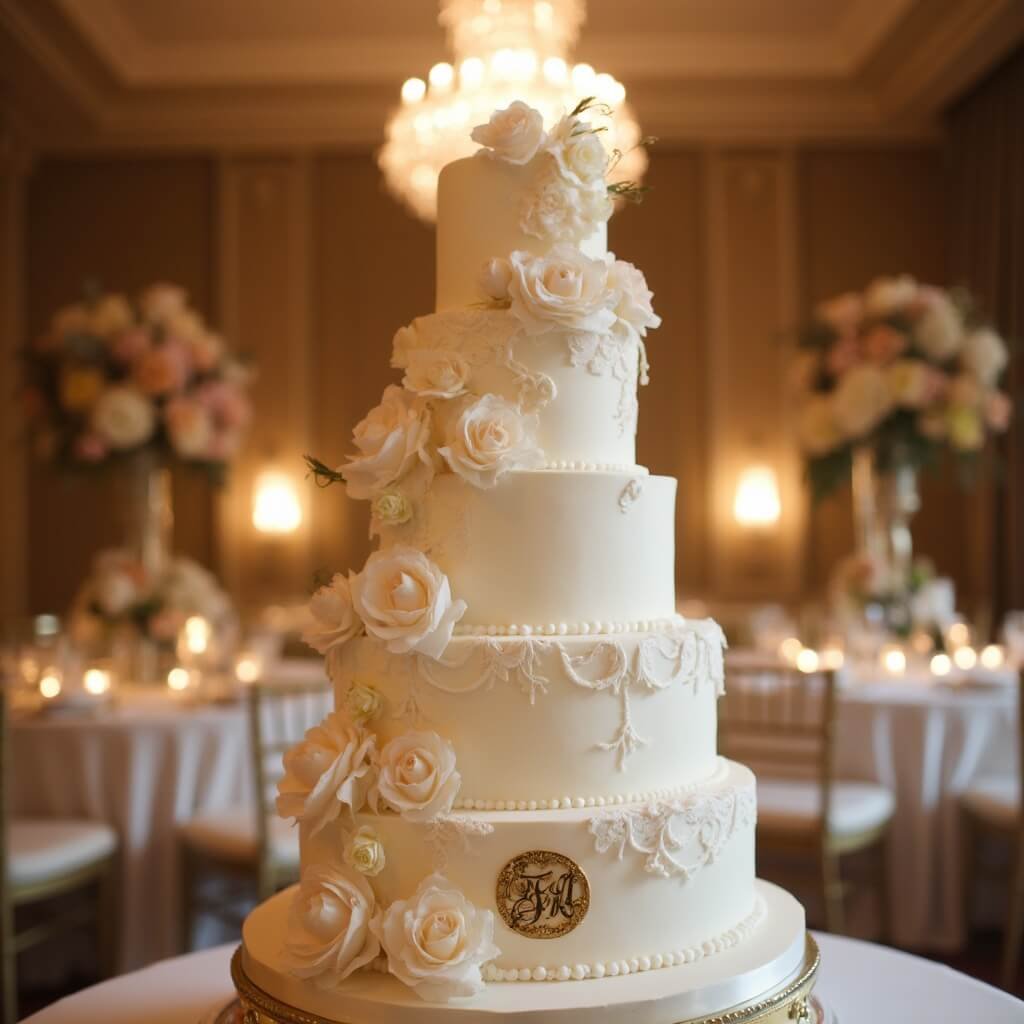
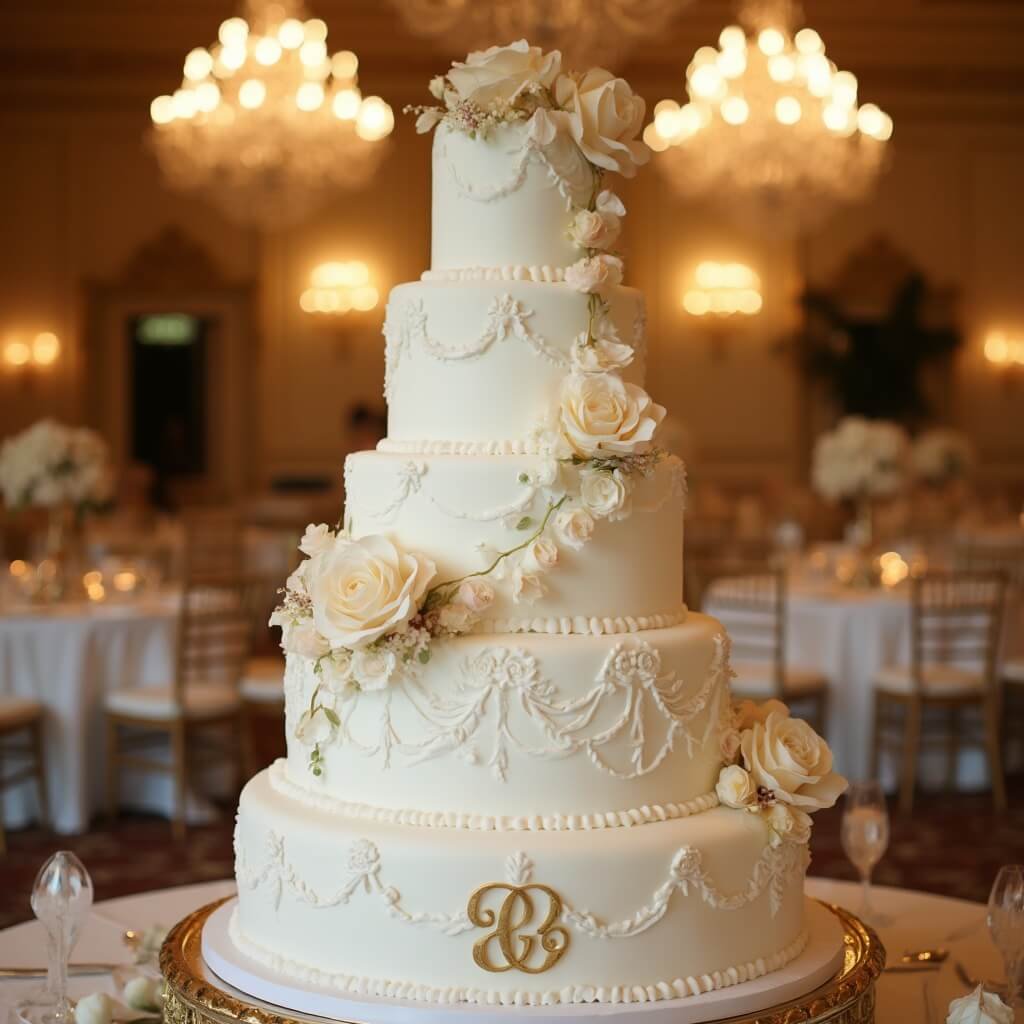
The classic white wedding cake earns its reputation. Fondant-covered tiers, piped lace, sugar roses, maybe edible pearls or gold monogrammed initials — it reads instantly as wedding, and it photographs beautifully in almost any venue, which matters more than people admit. In a formal ballroom, pillar-supported tiers with floral accents look properly grand.
The main debate here is fondant versus buttercream. Fondant gives you that flawless, smooth, sculpted surface and lets a baker do incredibly precise detailing. It’s also more expensive, and honestly, a lot of guests peel it off and leave it on the plate because they don’t love the taste. Plenty of bakers now do a fondant-effect finish with buttercream underneath, or combine the two — smooth fondant for the crisp look with a buttercream flavour people actually want to eat. If you love the traditional aesthetic but not the fondant flavour, ask about that.
The only real downside to going fully classic is that it can feel a touch impersonal. A monogram helps. So does an unusual flower choice.
Rustic and natural styles
If you’re marrying in a barn, a garden or anywhere with exposed beams and fairy lights, the rustic cake styles are made for you.
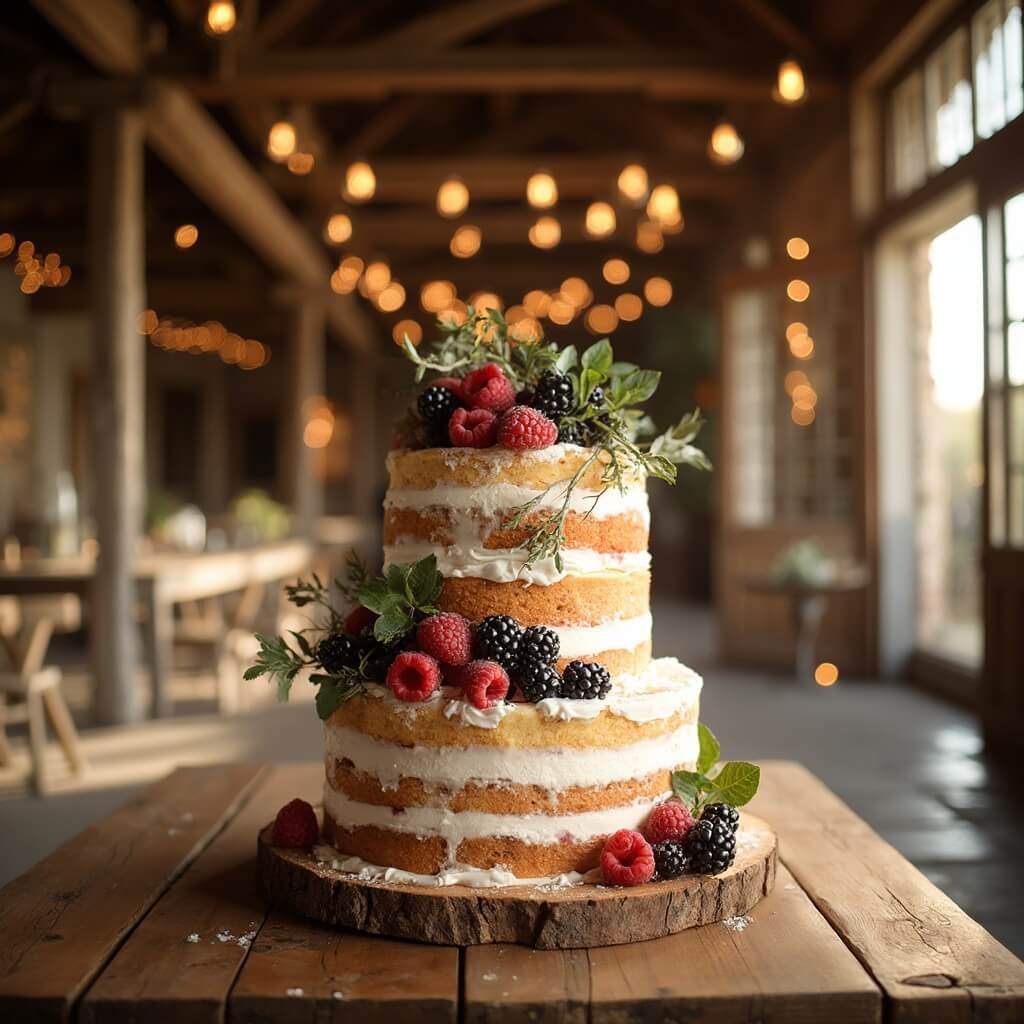
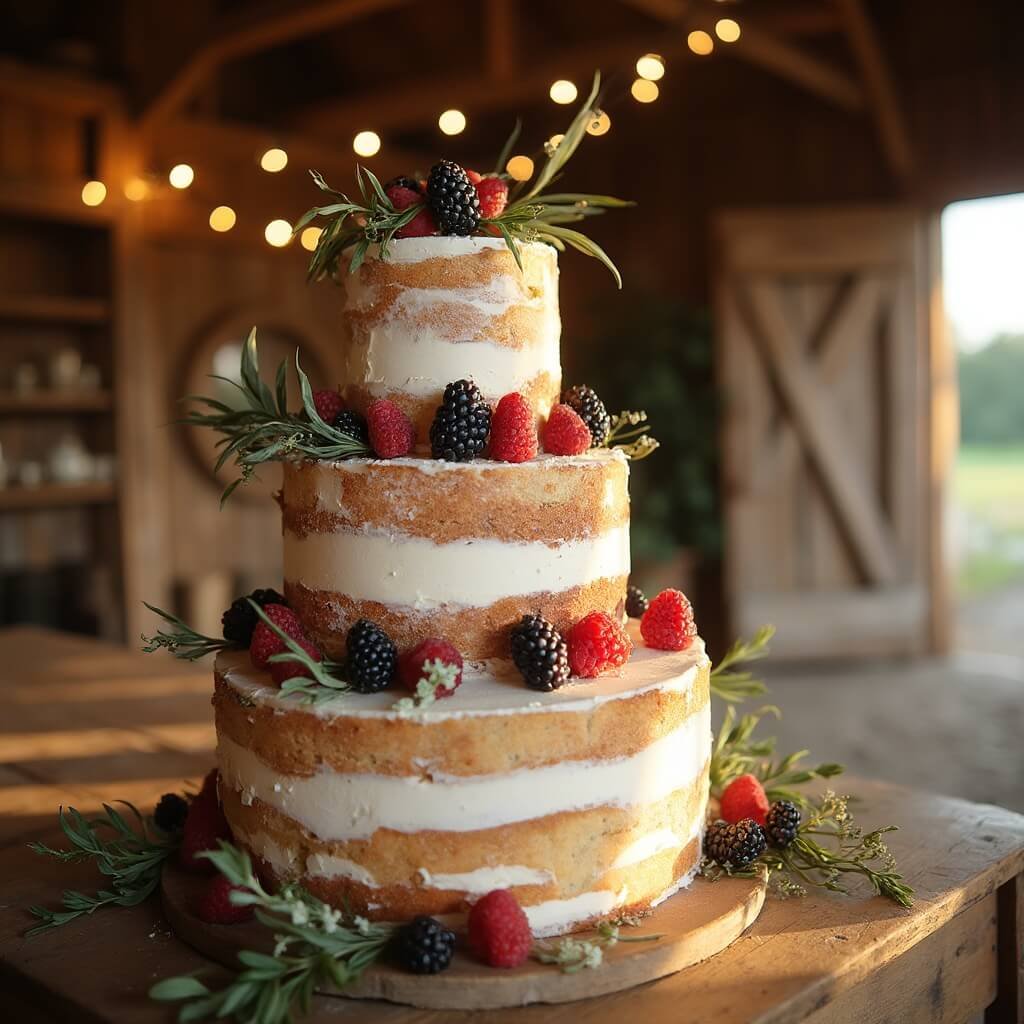
Naked cakes — exposed sponge with little or no outer icing, the layers filled with jam, buttercream or ganache and finished with a dusting of icing sugar, fresh fruit and flowers — have a relaxed, slightly homemade charm. They’re less sweet than a heavily iced cake, and they show off the actual ingredients, which is lovely if your sponge is good. The catch is they don’t last. Without that protective icing layer, sponge dries out and the cake is more fragile in transit and in heat. I wouldn’t choose a fully naked cake for a hot day outdoors unless it’s being cut early.
We had a naked cake at my sister-in-law’s wedding a few Augusts ago — Victoria sponge with raspberries, decorated by the baker on site at about eleven in the morning. It was 26 degrees by lunch. By the time speeches finished around four, the buttercream between the layers had gone soft and one tier had slid a good centimetre to the left, which meant the photographs of the actual cutting were a bit… jaunty. Nobody minded. But the baker had quietly told the caterer to get it into the coolest room they could find, and I’ve never forgotten that.
Semi-naked cakes are the sensible middle ground — a thin scrape of buttercream that gives you a lightly frosted look while still protecting the sponge. Paired with berries or a few flowers, they suit rustic and winter weddings equally. Drip cakes, where ganache or a coloured sauce runs down the sides, add a bit of drama and pair well with matching florals. And for full woodland commitment there are birch-bark effect cakes with carved hearts and initials, or burlap-wrapped tiers.
One left-field option worth mentioning: cheese towers. Stacked wheels of cheese, decorated with greenery and flowers, cut like a cake. If you and your guests are savoury people and you’d rather not force down sweet cake after a big meal, it’s a genuinely good idea — though budget carefully, because good cheese in that quantity isn’t cheap.
Modern and minimalist cakes
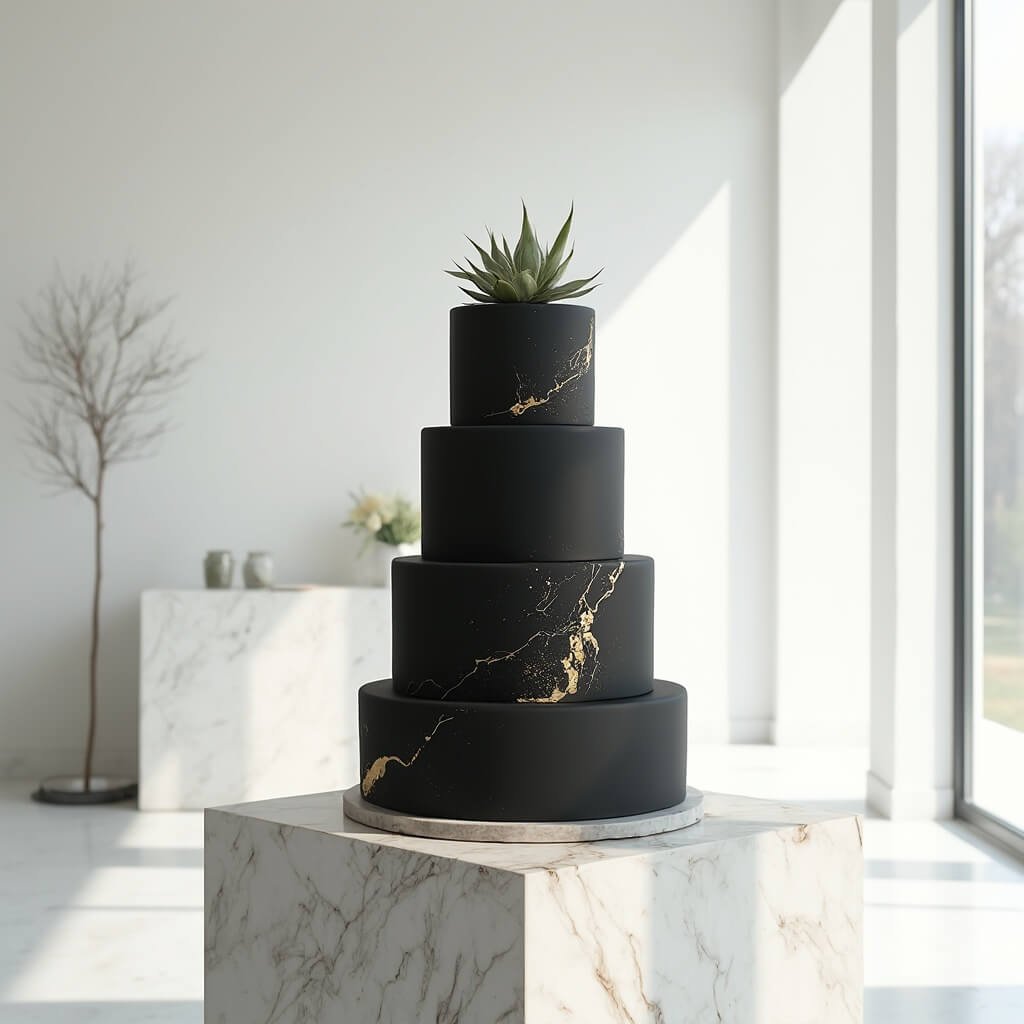
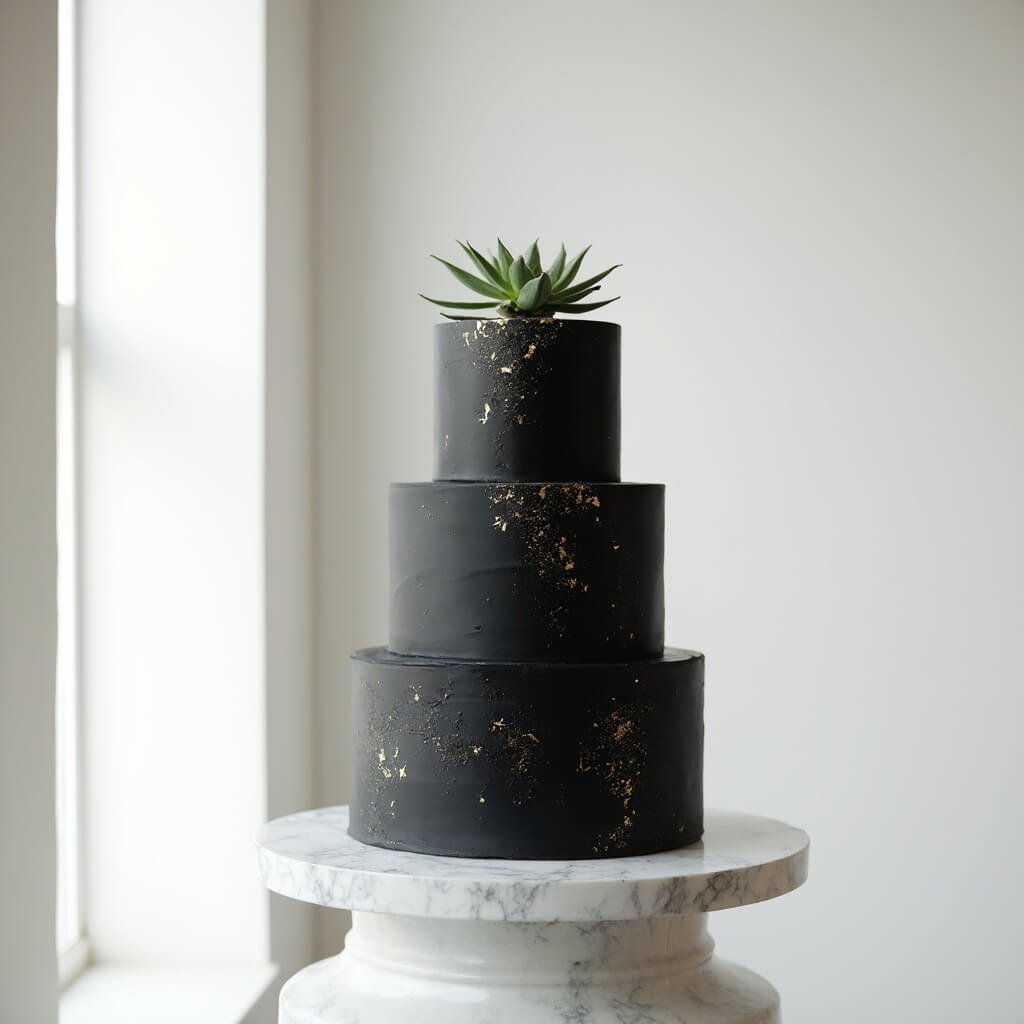
At the other end entirely, the contemporary styles strip things right back. Think geometric tiers with sharp angular edges and metallic accents, or marble-effect cakes in white, grey and silver that look almost architectural. Matte black cakes with edible gold splatter are bold and photograph brilliantly against a pale venue. Concrete-textured cakes with a single sugar succulent or a whisper of gold leaf lean into that stripped-back, design-led feel.
My personal favourite in this category is the truly minimalist cake — smooth buttercream or fondant, no fuss, maybe a single ribbon or one gold leaf accent and nothing else. It sounds like the easy option. It isn’t. A minimalist cake has nowhere to hide, so every ripple and fingerprint shows, and you need a genuinely skilled baker to get that flawless finish. Simple to look at, hard to make.
Romantic and floral designs
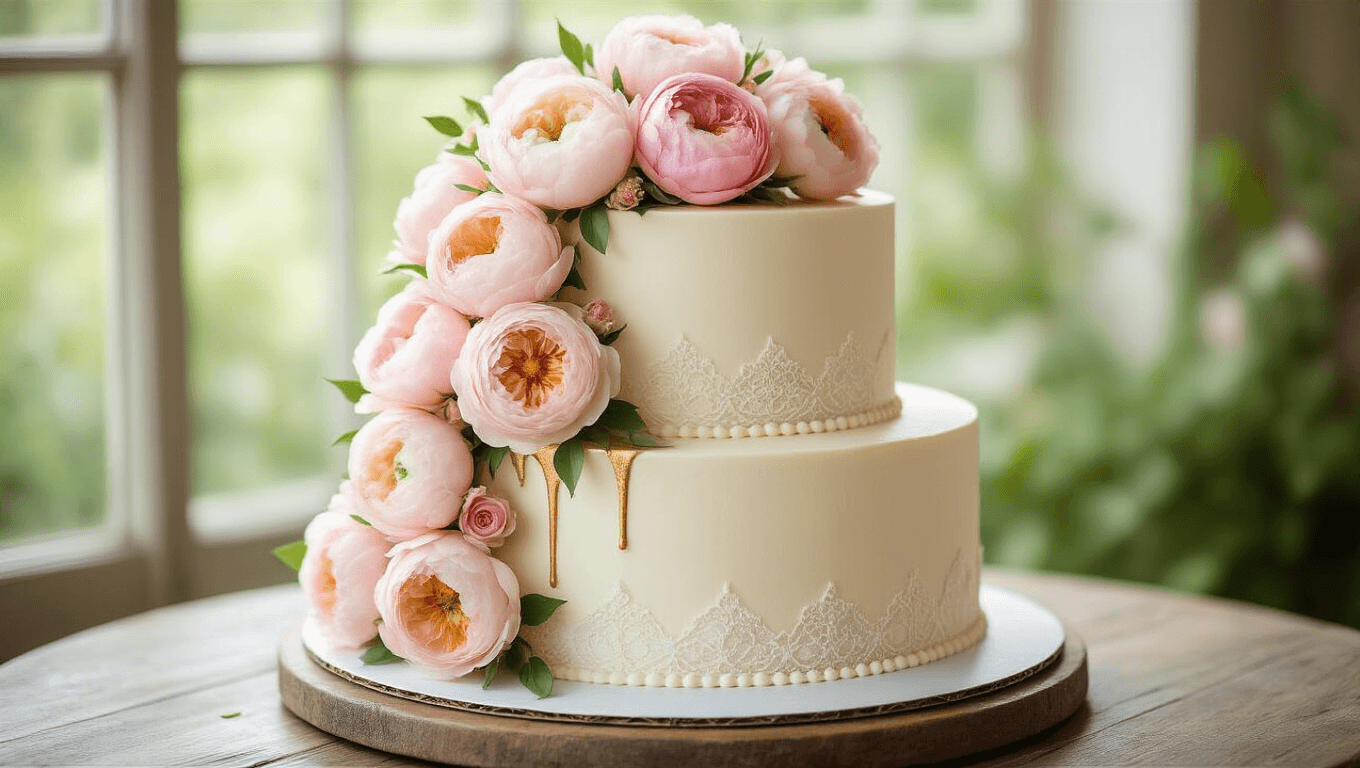
If your whole wedding leans soft and pretty, the floral cakes are where it’s at. Tiered buttercream with cascades of sugar peonies or ranunculus between the layers is the classic romantic look, though fresh florals work just as well and cost less than intricate sugar flowers, which are enormously labour-intensive.
A few directions worth considering:
- Cakes covered entirely in edible flowers or petals for a colourful, botanical effect.
- Ombre cakes using a gradient of one wedding colour — pinks and pastels being the obvious choices.
- Watercolour cakes, where buttercream or fondant is painted with edible colours to suggest florals, leaves or something more abstract. These can be stunning and quite personal.
- Fresh greenery wreaths around plain buttercream tiers, for understated romance without the flower budget.
A note on fresh flowers: they need to be food-safe and properly prepared, so this is a job for your baker and florist to coordinate, not something to improvise on the morning with blooms left over from the bouquets.
Whimsical and artistic cakes
For couples who want the cake to be a talking point rather than a backdrop, things can get genuinely inventive. Unusual shapes — stacked spheres, semi-circles, cloud or feather-inspired forms — turn the cake into an art piece. Leaning or deliberately askew tiers create a cascading, slightly gravity-defying effect, sometimes with little exposed shelves holding fruit or flowers.
Then there are sculptural and bas-relief cakes, with raised scroll, feather or cameo motifs pressed into textured fondant, and cakes painted or printed with artwork, patterns, even personal photographs. These are proper statement pieces. Just go in knowing they command a statement price, and book a baker whose portfolio actually shows this kind of work — it’s a specialist skill, not something every wedding baker offers.
Cultural, seasonal and thematic cakes
Plenty of cake choices come down to heritage and time of year. The traditional British fruit cake with marzipan and fondant is still going strong, often as a multi-tiered classic, and it has the practical advantage of keeping well — couples used to save the top tier for a first anniversary or a christening, and with a fruit cake you actually can. An Italian wedding cake, with its rich buttermilk layers and shredded coconut coating, suits a simpler garden reception beautifully.
Season should steer you more than you’d think. In spring, quilted patterns, pastel ribbons and fresh florals feel right. Summer calls for lighter sponges, berries and those naked or semi-naked finishes. Come autumn, carrot cake, pinecone motifs and rustic textures make sense, and winter is the moment for richer flavours — vanilla buttercream semi-naked cakes with metallic accents, or something properly indulgent.
Which brings us neatly to what’s actually inside.
Flavours, fillings and getting the taste right
Start with the classics, because they’re classic for a reason: vanilla sponge, rich dark chocolate, light fruit cake, lemon and carrot cake are the reliable wedding standards. What lifts them is the filling — lemon curd, caramel, ganache, jam, good buttercream — which adds both flavour and the moisture that stops a cake tasting dry after it’s been sitting out.
For more inspiration on cake ideas, see our just married cake ideas and learn how to enhance your presentation with wedding cake table decorations.
👇Shop the Look Here👇
Current Trend-Forward Flavours
If you want to feel a bit more current, there’s a clear set of trend-forward flavours doing the rounds at the moment. Salted caramel has become close to a modern classic in its own right — sweet, a bit of salt, universally liked, hard to get wrong. Lemon basil turns up more than you’d expect, and it’s a good choice if you want guests to actually remember what they ate rather than nodding politely and forgetting by the following week. Tiramisu-inspired cakes, with coffee and mascarpone worked into the sponge and filling, suit an evening reception nicely. And there’s a broader move towards floral and herbaceous notes — elderflower and lemon, herb-infused fillings — plus what I’d call “classic with a twist”: chocolate with a touch of chilli, citrus lifted with fresh herbs. None of this needs to be wild. A hint is usually better than a statement.
Texture and Seasonal Pairing
Texture matters as much as flavour, and it’s the bit people forget to ask about. Cheesecake-style buttercream sandwiched between layers of chocolate sponge gives you something richer and slightly less sweet than standard buttercream, which a lot of guests actually prefer after a big dinner. In naked cakes, the filling is doing double duty — since there’s no thick outer icing to carry sweetness, the jam, buttercream or ganache between layers needs to pull more weight, so don’t skimp there. And that shredded coconut on an Italian wedding cake isn’t just decoration; it adds a genuine bite of texture against the soft crumb underneath.
Match the flavour to the season and the meal that’s come before it. Light fruit or citrus cakes suit a summer outdoor reception where people have already eaten a fair bit and don’t want anything heavy. Rich chocolate, caramel or spiced cakes come into their own in autumn and winter, when a denser, warmer flavour feels right after a more substantial menu. Explore more about summer cakes seasonal flavors and styles.
Dietary Considerations
Dietary needs deserve the same care as flavour choices, not a bolt-on. A vegan carrot cake with coconut and cashew icing is genuinely good — not “good for vegan cake,” just good — and most decent bakers now offer it as standard rather than a favour. Gluten-free and dairy-free options can be built into the main cake as a dedicated tier, iced to match the rest, so those guests get the same cake everyone else is eating rather than a plain supermarket substitute wheeled out separately. Ask at the tasting stage, and be specific about who needs what — a vague “we might have a coeliac guest” gets a vague answer back.
Structure, Size, and Serving Options
Tiered cakes remain the default for a reason, but the shape of “tiered” has shifted. Two-tier cakes have become genuinely popular even for larger weddings, not just intimate ones, because they still read as a proper cake in photographs without needing a five-tier structure that outstrips your guest count. If you want height without the bulk, a tall, narrow four-tier cake in matte white or ivory gives you the drama on the table without asking for a huge amount of cake nobody eats. Pillar-supported tiers and suspended, seemingly-floating cakes push this further, though they need a properly experienced structural hand — this is not the place for your cousin’s friend who “does a bit of baking.”
Alternatives to the Traditional Wedding Cake
Small wedding cakes have had a real moment, driven partly by the rise in micro weddings and elopements. A small cake, done well, can look every bit as considered as a six-tier version — edible flowers, a neat fondant finish, a few ornamental details — it’s simply built for twelve servings instead of a hundred and twenty. If you’re having a tiny wedding, please don’t feel pressured into a big cake just because that’s what weddings “look like.” It’ll cost more and most of it goes in the bin.
Cupcakes solve a different problem. A tower of cupcakes with a small cutting cake on top gives you the tradition of a cake to cut for photos, while the actual dessert course is far easier to serve — no plating, no slicing, no queue at the dessert table. They can be decorated with matching initials, florals or an ombre gradient of colour, arranged to look like a bouquet or a colour fade up the tower. The trade-off is obvious: it’s a less dramatic centrepiece than one tall cake, and some people do think of cupcakes as a bit less “occasion.” I don’t share that view, but it’s worth knowing your guests’ expectations before you commit.
Sheet cakes are the unglamorous, sensible option that more couples are quietly choosing. The idea is simple — you have a beautiful, smaller display cake for the room and the photographs, and a plain sheet cake in the same flavour sitting in the kitchen, sliced up and served alongside or instead of the display cake once everyone’s actually eating pudding. Nobody at the table knows or cares that their slice came from a sheet tin rather than the tower they photographed earlier. It’s a proper cost-saver too, since decoration is where the money goes and a sheet cake needs none.
Decoration: Techniques That Make the Difference
Most of what separates a good cake from a great one comes down to the icing and how it’s handled. Buttercream gives soft, textured finishes — it can be smoothed to something close to fondant’s precision, or left artfully rustic with visible strokes. Fondant gives you the smooth, sculpted surfaces, the lace panelling, the marble effects and anything architectural. Ganache drips add shine and a bit of drama on top. And the naked or semi-naked finishes we’ve already covered minimise the outer layer entirely, letting the sponge itself do the talking.
Adding Texture and Color
Beyond the base finish, texture is where cakes are getting more interesting. Fondant paneling, scalloped edges and ruffled petals bring real dimension without needing colour to do it. A scraper pulled through frosting in a particular way creates ripples or subtle divots that catch the light nicely in photographs. Quilted patterns wrapped in pastel satin ribbon suit spring beautifully, and bas-relief panels with tiny sugar pearl textures lean into a quieter, classic sort of luxury. Pleated surfaces — folds and tucks worked into fondant or buttercream — are turning up a lot in what bakers are calling 2026’s big trend, and I think they’ll age well, unlike some of the more novelty finishes that date a cake to a specific year almost instantly.
Colour is worth deciding deliberately rather than defaulting to white because that’s what cakes “are.” Pure white, in both buttercream and fondant, still gives you that timeless, monochrome look that never reads as dated. Ombre layers, whether in buttercream tiers or a cupcake tower, give you a gradient effect that’s softer than a block colour. Two-tone tiers — ivory split against a warmer stone grey, say, or one accent colour running down one side of each tier — are a nice way to bring in your wedding colours without going full rainbow. And if you want something with more presence, black, white and gold together, or an all-gold finish, makes a proper statement in the right venue. Metallic and pearlescent finishes are everywhere in the current trend lists too, though I’d use them as an accent rather than covering the whole cake — a little gold leaf goes a long way, and too much starts to look like a Christmas decoration rather than a wedding cake.
If I were advising a friend right now, I’d say this: pick your flavour and format based on your actual guest list and reception style, not on what’s trending, then spend your decoration budget on one or two details done properly rather than five done adequately. Book a tasting before you commit to anything, ask your baker directly about structural risk if you’re going tall or leaning, and get the wedding cake ideas you like into a shared folder for your baker early — most good ones book up a year or more in advance, and the earlier you talk it through, the more room you’ll have to actually enjoy the decision rather than panic your way through it.
For further inspiration, explore these unique wedding cake designs for every celebration or check out our guide on luxury wedding cake ideas with real flowers.
👇Shop the Look here 👇