Rustic wedding ideas are probably what you searched for because you’ve got a vision of wooden tables, fairy lights, and something that feels warm rather than stiff — but you’re worried it’ll end up looking like every other Pinterest board from 2016. Fair worry. I’ve been to a fair few rustic weddings over the years, styled bits of two, and there’s a real difference between a wedding that feels considered and one that feels like someone bought the entire “rustic wedding decor” section of a craft shop in one go.
Let’s sort out what rustic actually means, because it’s become a catch-all term that covers everything from a proper working farm to a hotel function room with some twine on the chairs.
What Actually Makes a Wedding “Rustic”
At its core, rustic is about natural materials and a countryside feel rather than polish and formality. Think wood, foliage, rattan, hessian, wicker, terracotta, galvanized metal — things that look like they’ve come from a barn or a garden rather than a rental warehouse. The whole point is imperfection that still feels cosy, not sleek and matching.
Visually, you’re looking at wooden backdrops, woven textures, floral tablescapes that look gathered rather than arranged, and a general sense that nature did most of the decorating for you. The atmosphere should be relaxed. Nobody at a rustic wedding should feel like they need to sit up straighter.
Where people go wrong is treating “rustic” as one fixed look, when actually it splits into quite different sub-styles depending on what you’re drawn to:
- Rustic chic (or modern rustic) — raw materials like wood and linen, but with more refined florals and proper tableware. This is the one for people who want rustic without it looking undone.
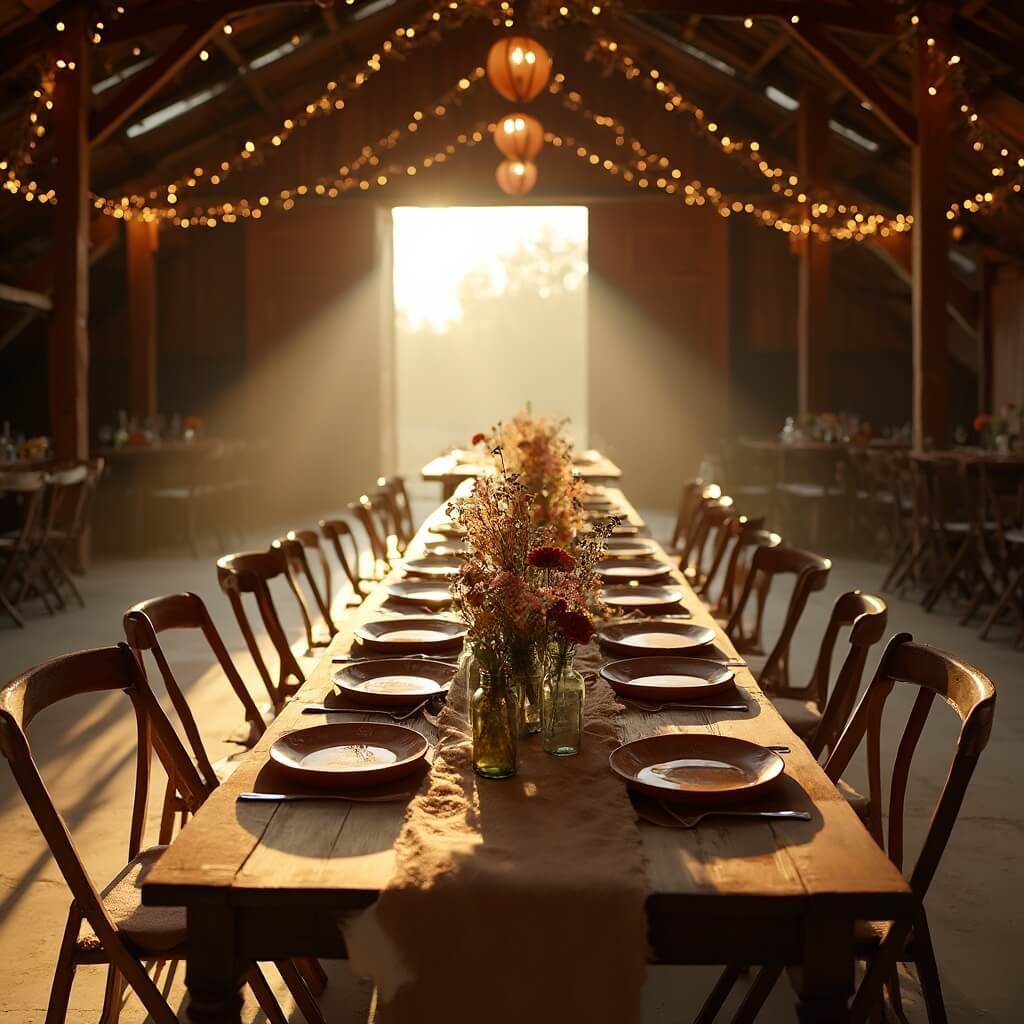
- Farmhouse or barn rustic — long wooden tables, pastoral views, maybe some vintage farm equipment lying about looking charming rather than in-the-way.
- Country or Western rustic — ranch venues, cowhide, leather, boots, sometimes a horse-drawn carriage if you’re going all in, BBQ food.
- Boho rustic — pampas grass, macramé, hoop wreaths, loose wild florals. This one’s had a huge moment and honestly still looks good, unlike some trends that date badly.
- Cottagecore or shabby-chic rustic — mason jars, mismatched crockery, gingham, homemade pies, crochet doilies. The cosiest of the lot.
None of these are mutually exclusive, by the way. Most real weddings I’ve seen borrow from two or three at once, which is exactly how it should be.
Is a Rustic Wedding Actually a Good Idea for You?
It can be genuinely budget-friendly, which is probably part of the appeal. DIY decor — wood slices, jam jars, foliage cut from a hedge rather than bought from a florist — costs a fraction of what a formal ballroom setup costs. It’s also enormously personal; you can bring in family heritage, local produce, handmade touches, in a way that feels naff in a five-star hotel but feels exactly right in a barn.
The settings themselves do a lot of heavy lifting too. Farms, woods, vineyards, lakesides — you get built-in scenery, which means less money spent trying to make a beige function room look like something.
But there are real downsides worth being honest about. Outdoor and barn venues bring weather risk, temperature problems, and sometimes accessibility headaches — you will likely need a backup plan, and probably tents, heaters, or fans, none of which are free. I once helped a friend plan a September barn wedding in Somerset where we were so confident about “one of those mild autumn days” that we didn’t book heaters until three weeks before. The barn owner laughed at us down the phone — turned out every heater in a 20-mile radius was already booked by other autumn weddings, and we ended up paying nearly double the normal hire rate for two patio heaters delivered from Bristol. Guests were fine, just, but I’d never leave that until three weeks out again.
The other risk is that rustic can tip into cliché fast — endless burlap, mason jars stacked six deep, hay bales everywhere. The fix most stylists suggest, and I agree with this, is to soften it with proper florals and one or two refined details, so it reads as “considered countryside” rather than “craft fair.”
Explore more rustic wedding table decor ideas
Choosing the Right Venue for a Rustic Feel
The venue does more work than any amount of decor, so it’s worth spending proper time here rather than rushing to the first barn with availability.
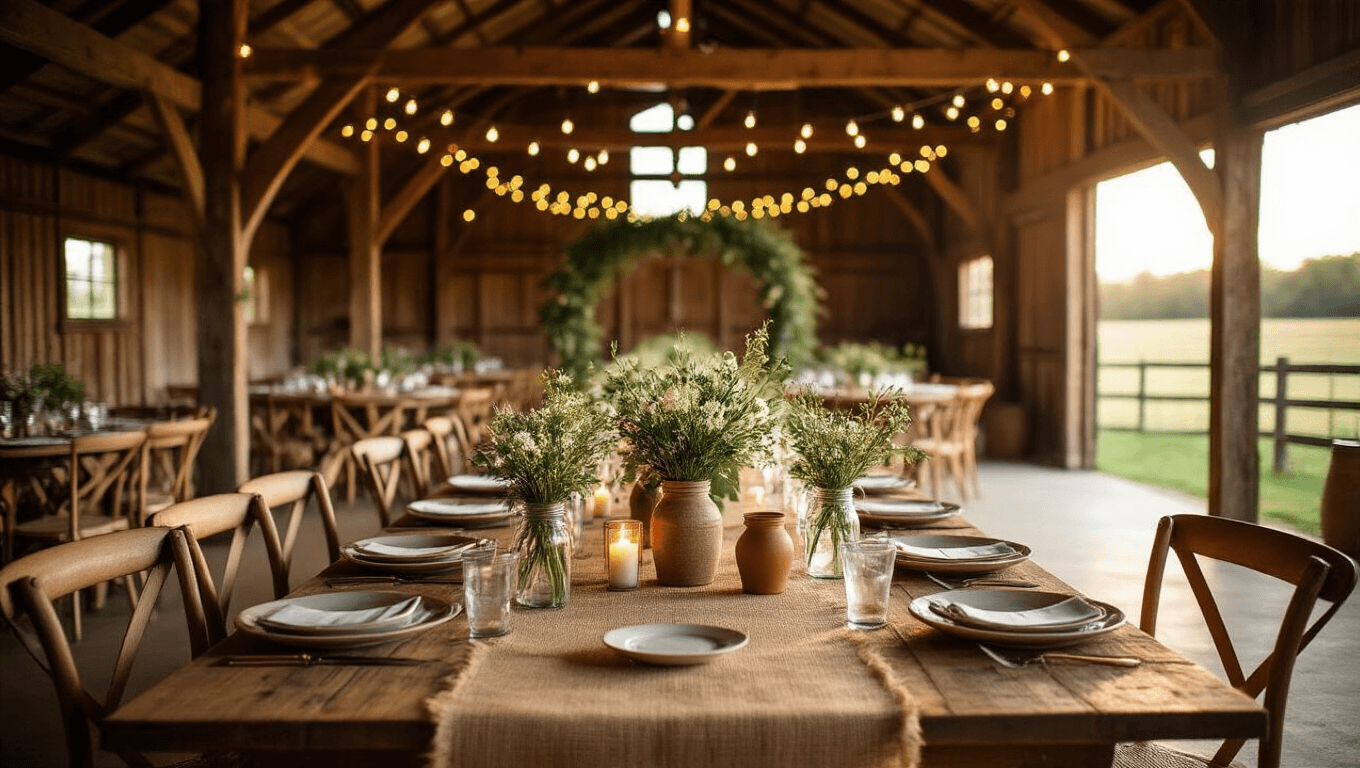
Barns are the obvious choice, and for good reason — the wooden beams and rafters give you atmosphere before you’ve hung a single fairy light. Long tables fit naturally under that kind of roofline, and you rarely need to dress the ceiling because it’s already doing the job.
Farms and ranches offer something barns sometimes lack: actual pastoral scenery. Open fields, animals nearby, an old farmhouse as a backdrop. If you want photos that look like they were taken somewhere real rather than staged, this is usually the better bet.
For the ceremony itself, a few settings come up again and again:
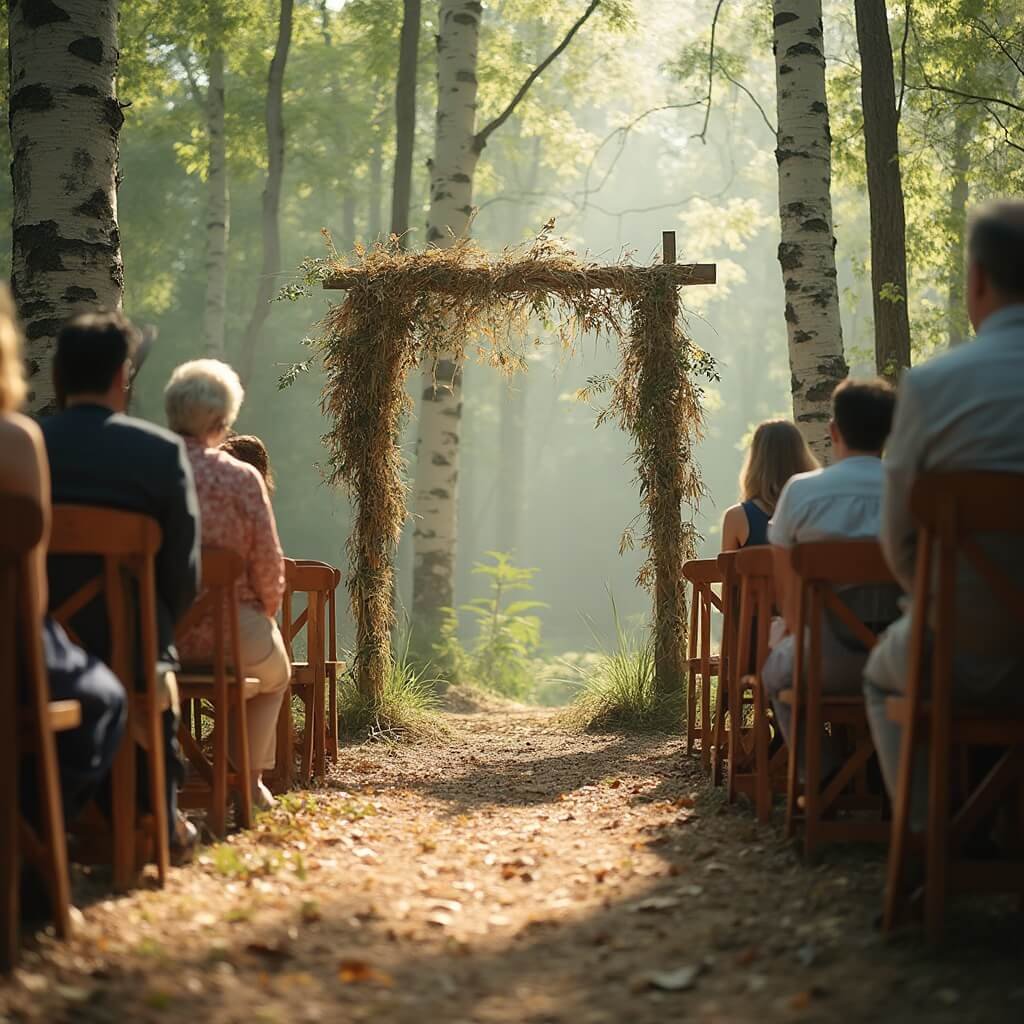
- Woodland or forest ceremonies — trees and dappled light do the decorating; you barely need an arch.
- Gardens or vineyards — cultivated greenery and vines pair beautifully with a simple wooden arch and rustic seating.
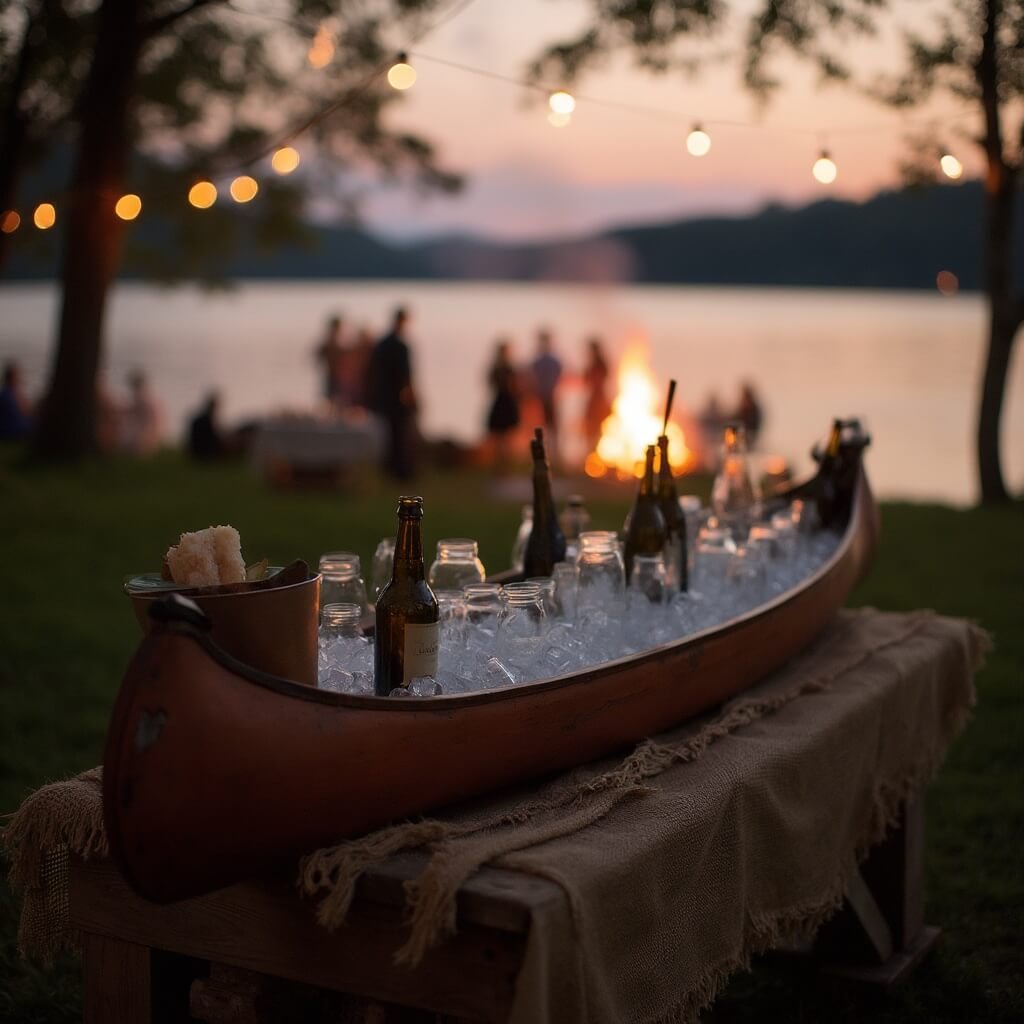
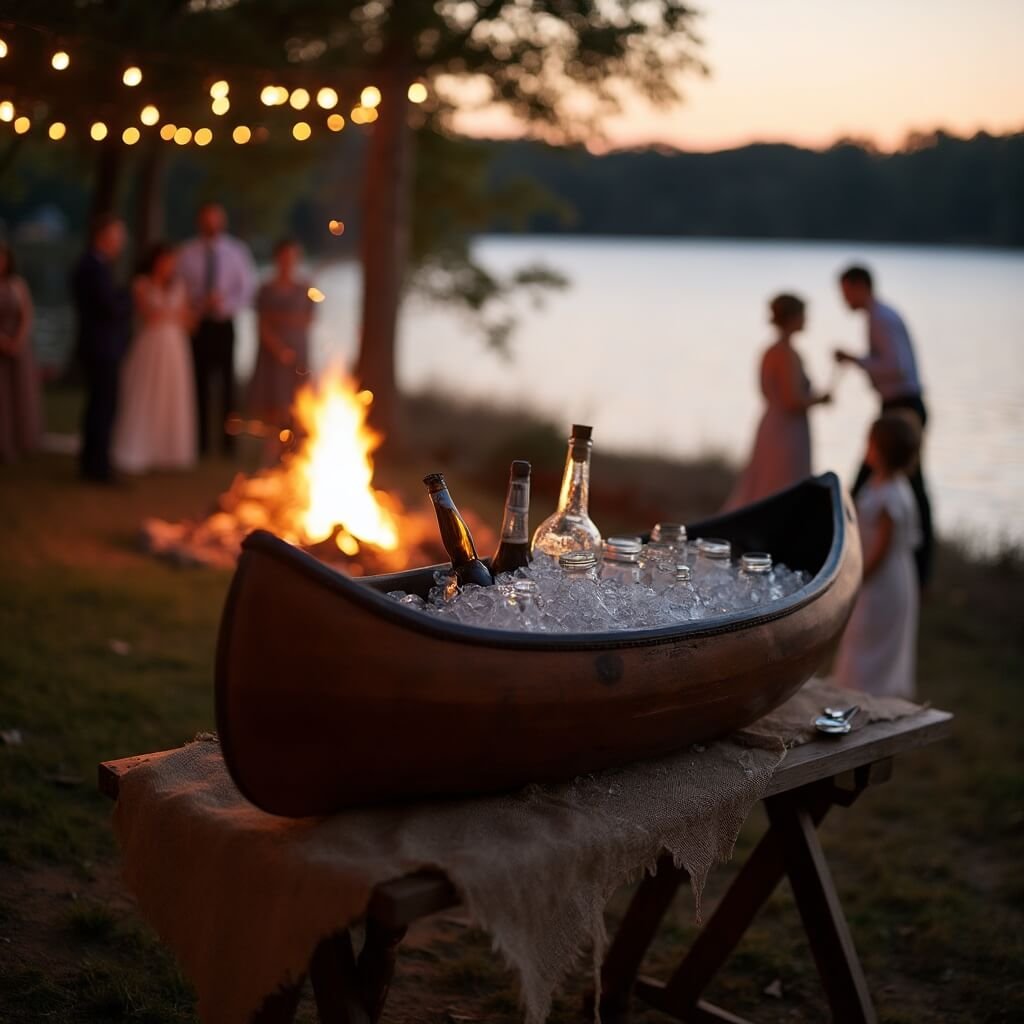
- Lakeside or riverside spots — these lend themselves to nice touches like a canoe filled with ice for drinks, or a bonfire once the sun’s gone.
Some couples skip venues altogether and get married at home — a family farmhouse, a big garden, wherever there’s history. It’s a lovely idea, but be realistic about the logistics: you’ll likely need to hire in flooring for uneven ground, lighting for anywhere without power, and enough loos for however many guests you’re expecting. Parking gets forgotten more often than you’d think, and it’s the thing that causes chaos at 3pm when fifty cars are trying to find somewhere to sit on a farm track.
Whatever venue you land on, guest comfort needs thinking about properly — shade in summer, heating in autumn, some kind of shelter if rain looks likely, and accessible paths if you’re on uneven farmland or in an older barn with awkward thresholds. It’s not glamorous to think about, but it’s the difference between guests remembering a lovely day and guests remembering how cold they were.
Find more rustic fall outdoor wedding inspiration
👇Shop the Look Here👇
Building the Look: Decor That Doesn’t Scream “Craft Aisle”
Once the venue’s sorted, decor is where most people either nail the rustic feel or accidentally tip it into fancy dress. The good news is that rustic decor is genuinely one of the more forgiving styles to get right because a lot of the effort goes into things that look effortless.
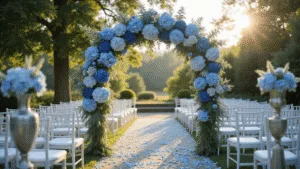
Start at the ceremony. A wooden arch — timber, reclaimed pallets, actual tree branches, even grapevines twisted together — gives you a focal point without needing much else. Dress it with trailing greenery, a few flowers, maybe a length of hessian or fabric draped through it, and you’re done. If you’re having a religious ceremony, this is easy enough to adapt too; a wooden cross worked into the arch, or a mandap dressed in foliage rather than heavy fabric, keeps the rustic thread running through without it feeling like an afterthought.
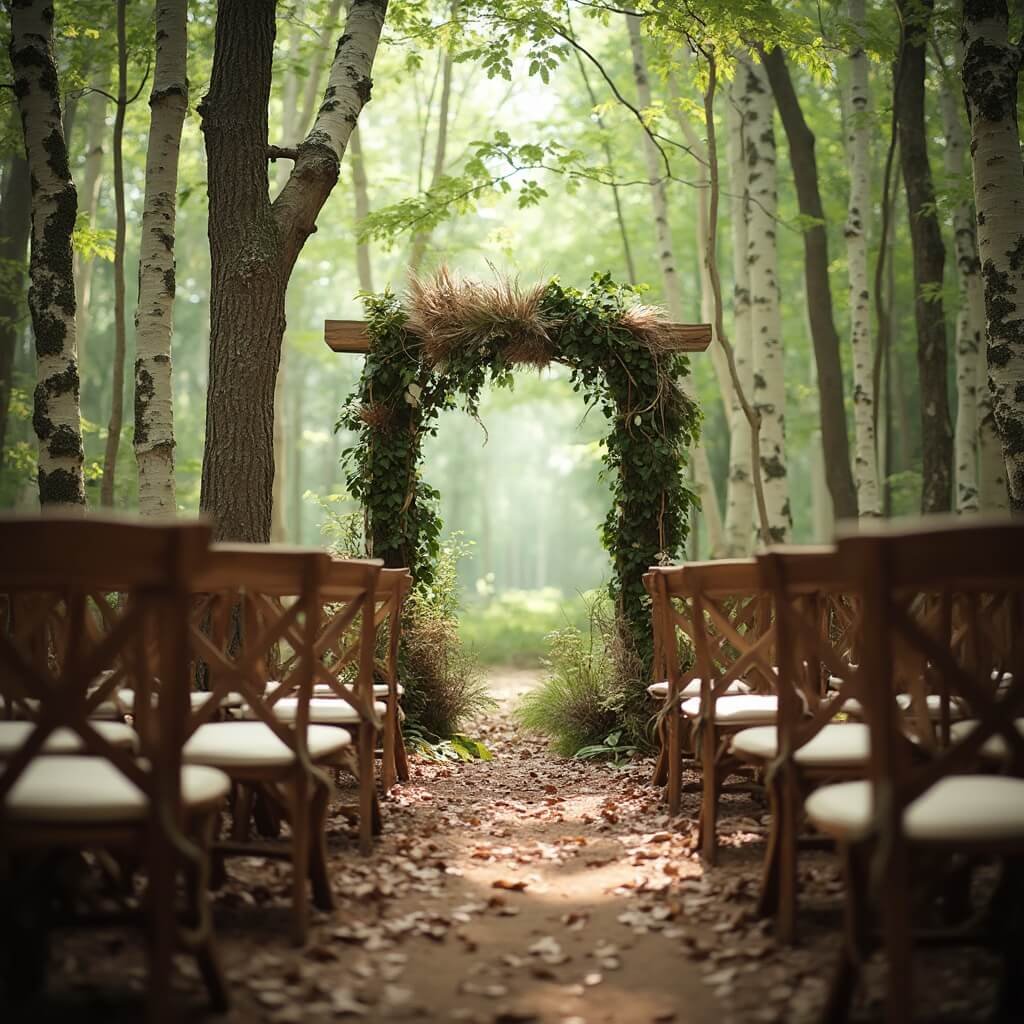
The aisle is where people either overdo or underdo it. Barrels, lanterns, a scattering of petals, jam jars with single stems — pick two of these, not all four. I’ve seen aisles so laden with mason jars that guests were nervous to walk past them, which rather defeats the relaxed vibe you’re going for. Hay bales with a folded quilt on top make lovely informal seating for a handful of guests near the front, though I’d not put your gran on one unless she’s up for the challenge of getting off it gracefully in heels.
For the reception, long wooden farm tables beat round ones every time for this style. They force a kind of communal, elbows-on-the-table conversation that round tables don’t, and they photograph beautifully with minimal dressing — a runner, some low candles, done. Centrepieces work best when they look gathered rather than arranged: mason jars or old glass bottles with wildflowers and herbs, or, if you want something a bit different, arrangements built from fruit and veg instead of flowers. Artichokes, apples, small squash, a few pomegranates dotted along the table look properly seasonal and cost considerably less than a florist’s bill.
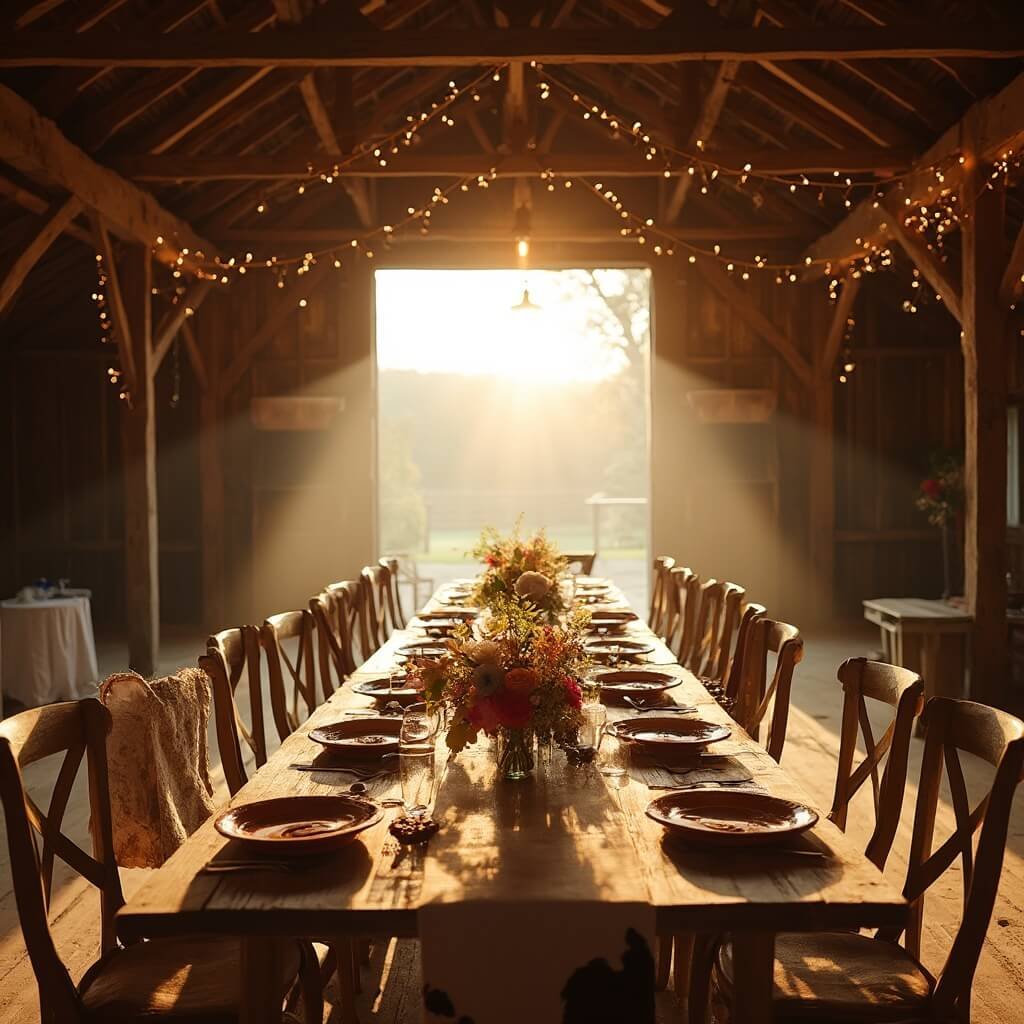
Textures matter more than people expect. Burlap runners, a bit of lace, gingham napkins, crochet doilies under the cake — small things, but they’re what makes photos feel warm rather than sparse. Pair those soft textiles with harder materials like reclaimed wood, wicker, galvanized buckets for drinks, and terracotta pots for herbs or small florals, and you get a good balance of textures rather than everything reading as “soft and beige.”
Lighting is genuinely non-negotiable for rustic weddings, in my opinion. String lights draped from barn rafters or strung between trees do more to create atmosphere than almost anything else on this list, and they’re relatively cheap to hire. Add lanterns hung from branches or beams, a few candles along the tables, and if your venue allows it, a fire pit or bonfire for later in the evening. That fire pit, incidentally, is where half your guests will end up by 11 pm regardless of how nice the dance floor looks, so lean into it — a s’mores station nearby turns it into an actual feature rather than just somewhere people go to escape the music.
On florals, loose and slightly wild beats tight and formal every time here. Dahlias, mums, trailing greenery, the odd wildflower — arrangements that look like they were picked from a hedgerow that morning rather than wired into submission by a florist. Dried flowers, lavender, wheat stalks, and pampas grass are worth considering too, partly because they look lovely and partly because they don’t wilt if your ceremony’s running late in the sun.
Don’t ignore the small stuff either. Stationery on kraft paper or textured recycled card, tied with twine, sets the tone before guests have even arrived. Signage — table numbers on wood slices, a welcome sign painted on an old door or chalkboard — costs very little and reinforces the whole theme without adding to your actual decor budget.
If you’re marrying across different seasons, the rustic template flexes nicely. Spring and summer lean into wildflowers and airy linens; autumn brings in harvest produce, warm tones, and heavier textiles; winter rustic — which I think is underrated — works beautifully with mulled cider in jars, candlelight, and blankets draped over chair backs for guests who get cold halfway through the speeches.
What People Actually Wear
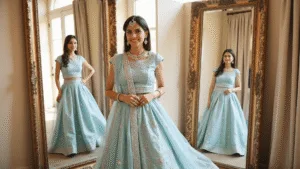
Bridal dresses for rustic weddings tend to favour lace, soft tulle, and flowing silhouettes over structured ballgowns — anything too stiff looks slightly at odds with a barn or a field. Flower crowns, simple veils, or even a wide-brimmed hat suit the setting far better than a tiara ever would.
Grooms have more room to relax than they think. Tweed or linen suits, waistcoats without jackets, braces, proper boots instead of polished dress shoes — earthy tones work better here than classic black. For the wedding party, mismatched bridesmaid dresses in muted, complementary shades look intentional rather than sloppy, and groomsmen in rolled-up shirtsleeves with boots or even denim jackets fit the mood without looking underdressed.
Hair and makeup follow the same logic as everything else: natural over polished. Loose waves, soft braids, a few stems tucked in rather than a full crown if you want something subtler. Makeup that glows rather than sets hard is more forgiving anyway if you’re outdoors in summer heat or a slightly draughty barn.
Food and Drink That Fits the Theme
This is where rustic weddings genuinely get to shine because the theme lends itself so naturally to good, simple food. Farm-to-table menus built around seasonal, local produce fit the setting far better than anything overly plated or fussy. Think roasts, fresh bread, home-style casseroles, proper BBQ if the venue allows it — food that looks like it was cooked rather than assembled.
Interactive stations work brilliantly here too. A wood-fired pizza oven, a grilling station guests can watch, a pie table groaning with options instead of a single tiered cake — all of it reinforces the cosy, homemade feeling without requiring you to actually bake forty pies yourselves (please don’t attempt that, by the way, however tempting it looks on Pinterest).
Drinks are an easy win. Serve cocktails, lemonade, or mulled cider in mason or Kilner jars, and you’ve ticked the theme box without spending anything extra on glassware hire. A drinks station built from an old barrel, or a canoe filled with ice for beer and wine bottles, makes a genuinely good focal point for photos and costs very little to put together if you know someone with a barn full of odd bits, which, in my experience, most rural venues do.
For the cake, semi-naked sponges — minimal buttercream, a bit of fruit or foliage on top — look far more in keeping than a smooth iced tower. Displayed on a wood slice or tree stump stand, it needs almost nothing else around it to look finished.
If I were advising a couple starting from scratch, I’d say pick your venue first, let that dictate your rustic sub-style, and resist buying decor until you’ve walked the space in person — half of what you think you’ll need turns out to be unnecessary once you see how much the setting is already doing for you. Rustic wedding ideas work best when they feel like an extension of the place you’re getting married, not a theme bolted on top of it.
For more ideas, you can explore fresh rustic wedding ideas beyond the basics and elevated rustic wedding inspiration.
👇Shop the Look here 👇