Christmas party decorations don’t need to cost a fortune or take a fortnight to put up, but I know how quickly the whole thing can spiral. One minute you’re pinning a few wreaths, the next you’ve got twelve browser tabs open and a Pinterest board titled “Xmas 2024 FINAL FINAL” that’s somehow 400 images deep. I’ve hosted everything from a chaotic twelve-person flat party with a two-day budget of £40 to helping a friend dress a marquee for her office’s 80-guest do, and the decisions that actually matter are far fewer than the internet suggests.
Start With What Kind of Party You’re Actually Throwing
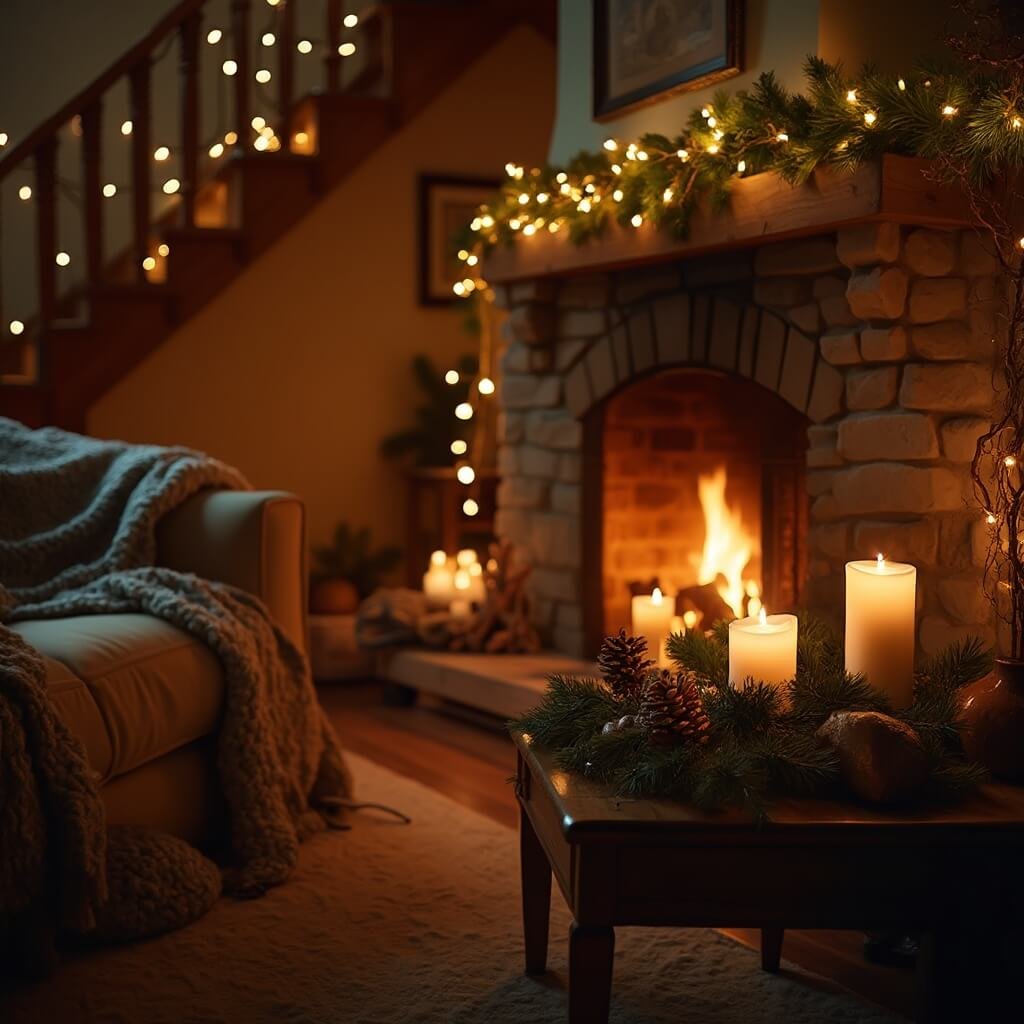
This sounds obvious, but it’s the step most people skip, and it’s why so many Christmas parties end up looking like a slightly confused Homebase display. A family gathering wants warmth — think low lighting, real greenery, candles that make the room smell like someone’s been simmering cloves all afternoon. An office party wants scale and photographability, because half the point is the Instagram story. A kids’ party wants things at knee height that can survive a six-year-old with a biscuit in one fist.
Once you’ve settled the type of event, pick a theme or colour story and stick to it. This is the single decision that saves you the most money and stress, because it stops you buying “just one more thing” that doesn’t actually match. Classic red-and-gold, an all-white winter wonderland, rustic woodland with pinecones and buffalo check, or a candy-cane-covered whimsical spread — any of these works, but pick one before you set foot in a shop.
Budget, Space and Time — Be Honest About All Three
Budget-friendly decorating doesn’t have to mean cheap-looking, and this is where I get a bit stubborn with people. You don’t need a £60 garland from a homeware shop when there’s a perfectly good conifer hedge in next door’s garden (ask first, obviously). Pinecones, birch branches, and offcuts of evergreen cost nothing and look better than most plastic alternatives once they’re mixed with a few fairy lights.
Balloon décor is the other properly underrated option here. A cluster of balloons at a doorway or a balloon “tree” made from a bundle of long latex balloons costs a few pounds and photographs brilliantly, which matters more than people admit — most guests will remember the party through their phone camera roll.
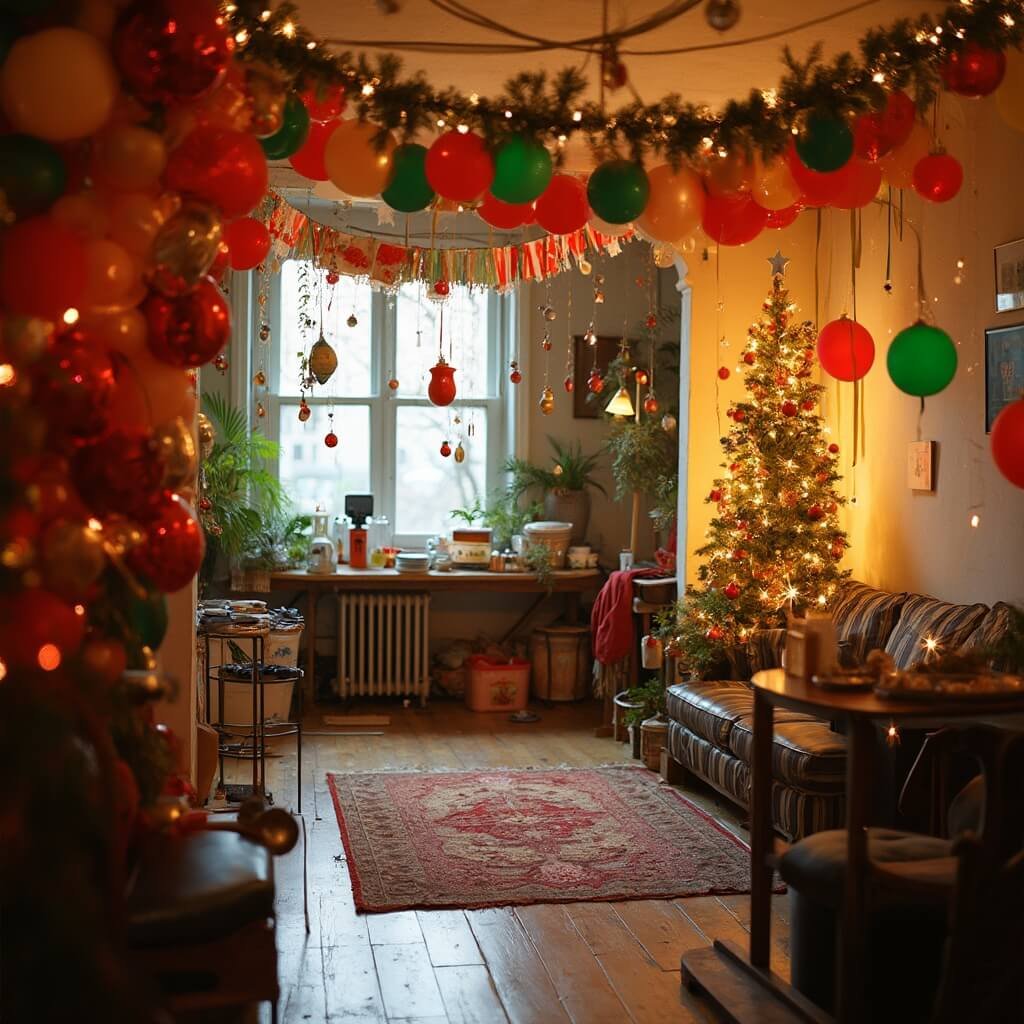
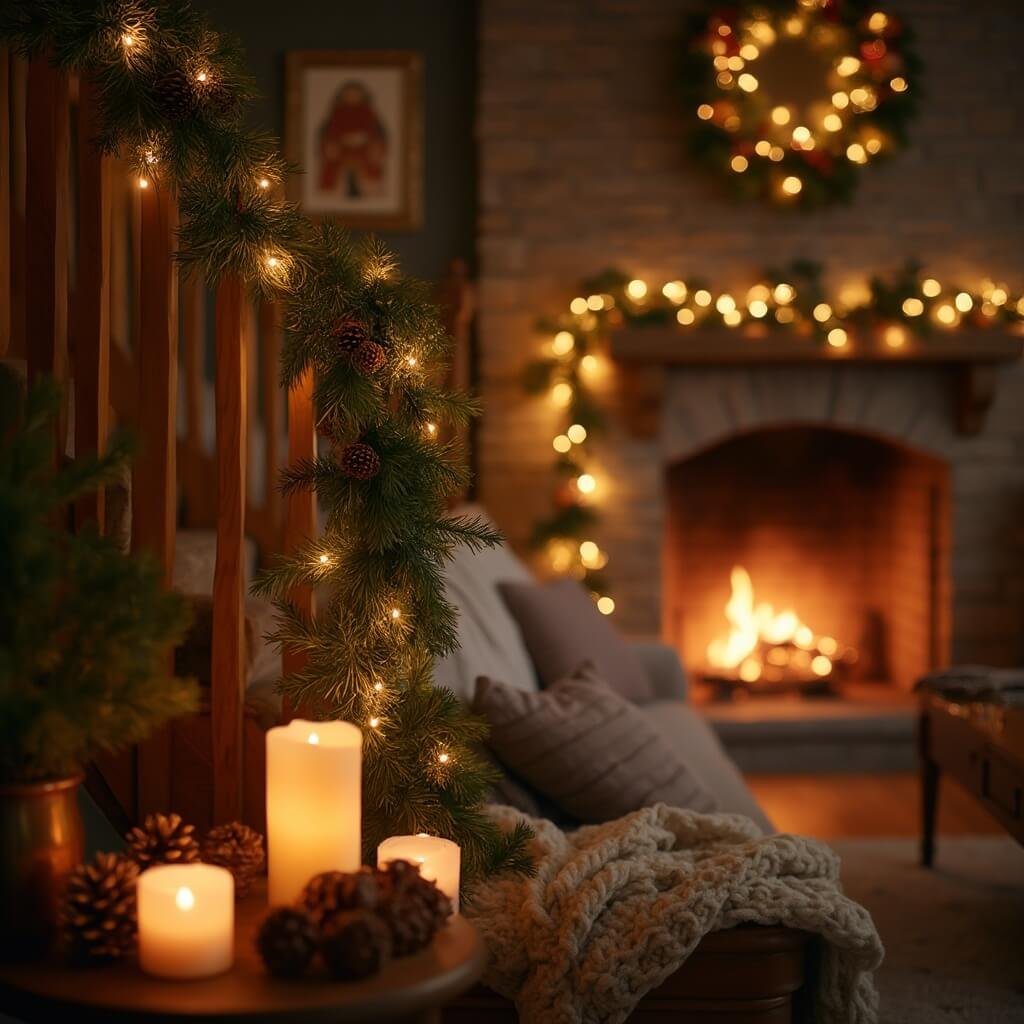
If you’re working with a small flat or a single reception room, go vertical. Hang ornaments from the ceiling at different heights, wind garland up the stair banister, drape something over a light fixture. Floor space fills up fast with people and food tables, so let the walls and ceiling do the decorative heavy lifting.
On time: don’t try to DIY everything. I made that mistake three years ago, staying up until half eleven on a Tuesday night hot-gluing a candy wreath while an actual box of shop-bought garland sat unopened in the hallway because I’d decided it “didn’t feel personal enough.” The wreath took two hours and looked fine — about the same as if I’d bought one. Mix a few store-bought basics (banners, string lights, a proper garland) with one or two DIY projects you’ll genuinely enjoy making, not ten you’ll resent.
Safety Bits Nobody Wants to Think About But Should
Flameless candles aren’t just a nice-to-have if you’ve got a table runner made of dry evergreen clippings — real flame and dried pine is not a combination you want near a tablecloth after three glasses of mulled wine have been poured. LED candles have got convincingly good in the last few years; nobody at a party is going to clock the difference unless they’re actively looking.
Beyond fire, think about how people will actually move through the space. Separate your food area, drinks station, and any photo zone so you don’t end up with one bottleneck by the door where everyone’s coats, the buffet, and the only mirror all compete for space. And however tempting it is to pile decor at the entrance, keep the actual walkway clear — nobody wants to shuffle sideways past an oversized nutcracker with a plate of canapés in each hand.
Choosing a Theme That Actually Holds Together
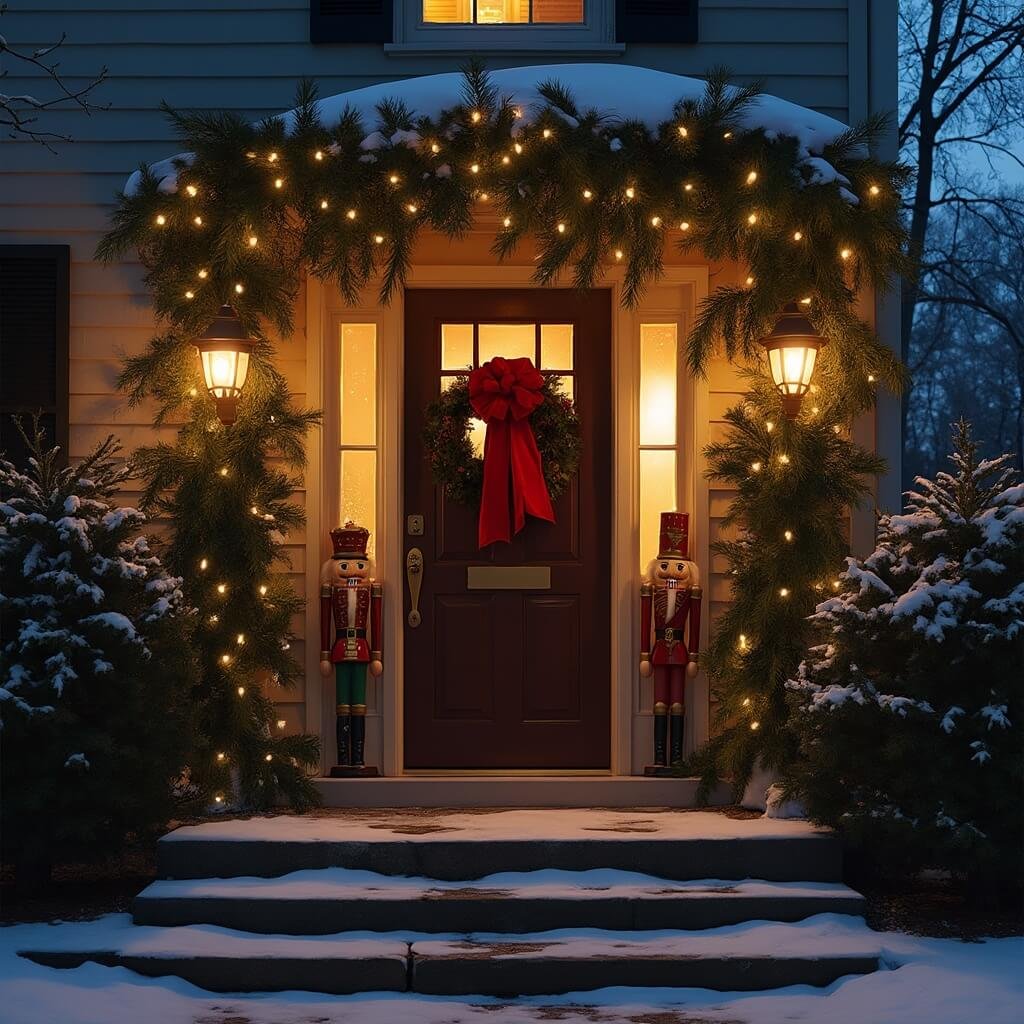
Classic Christmas is the reliable one — red, green, and gold, evergreen garland along the banister, nutcrackers either side of the door if you’re feeling traditional. It’s not exciting, but it’s rarely wrong, and it’s the easiest to source affordably because every shop stocks it.
Winter wonderland leans all-white and silver — faux snow, icy blue accents, glass ornaments, maybe a few spray-painted pinecones for texture. It photographs beautifully under warm string lights, though I’ll say this: it can tip into looking a bit cold and corporate if you don’t warm it up with at least some texture, like a chunky knit throw or wooden accents.
Rustic and woodsy uses pinecones, twigs, and muted browns and greens, often with buffalo check thrown in. This is the theme I’d recommend to anyone on a tight budget, because half of it can be foraged and the other half — vintage-style plates, plaid ribbon — turns up secondhand constantly.
For 2026-leaning glam, think burgundy velvet, brass candleholders, and soft low lighting rather than bright fairy lights everywhere. It’s a more grown-up look, better suited to a cocktail-style evening than a kids’ tea party. And if none of that appeals, there’s always the whimsical, candy-covered route — oversized candy canes at the door, sweets scattered across tables, which kids adore and which nobody over the age of forty will ever admit to also loving.
The Front Door Sets the Tone Before Anyone’s Even Inside
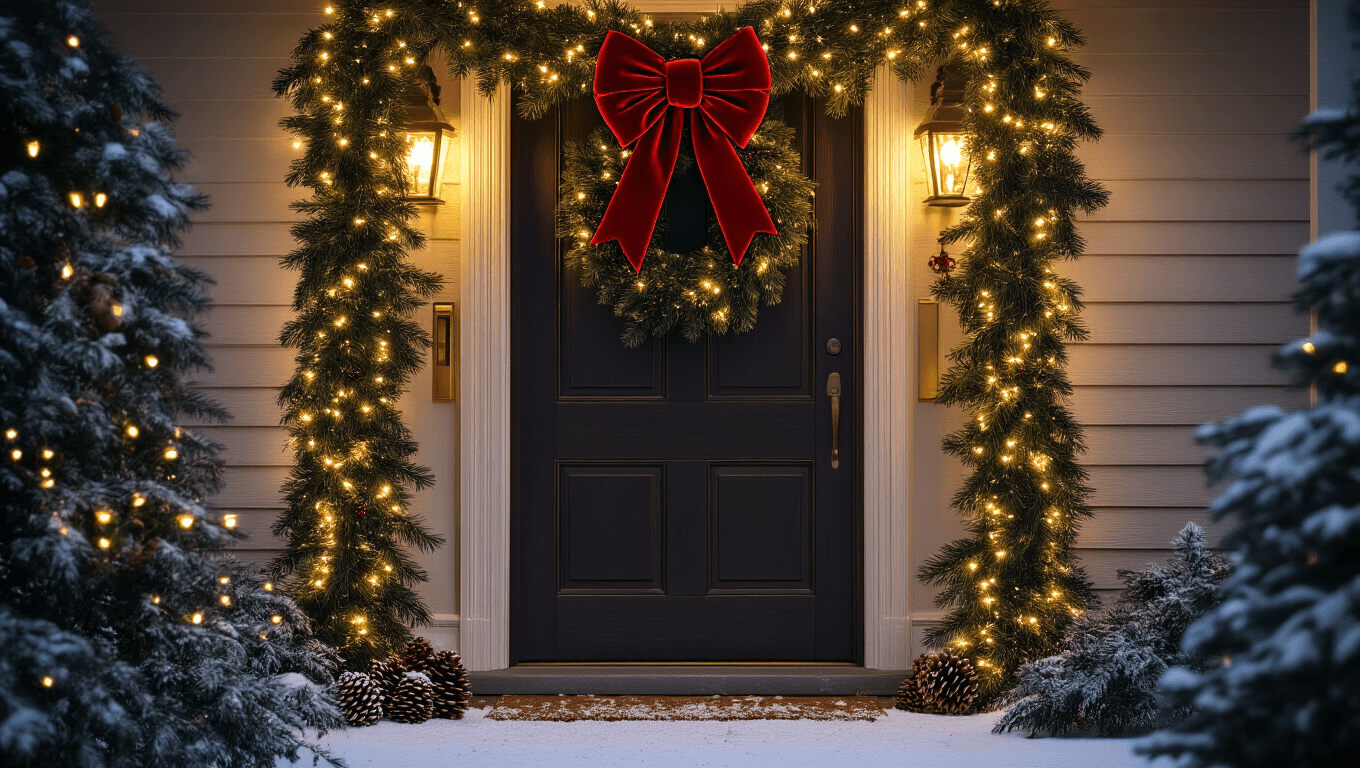
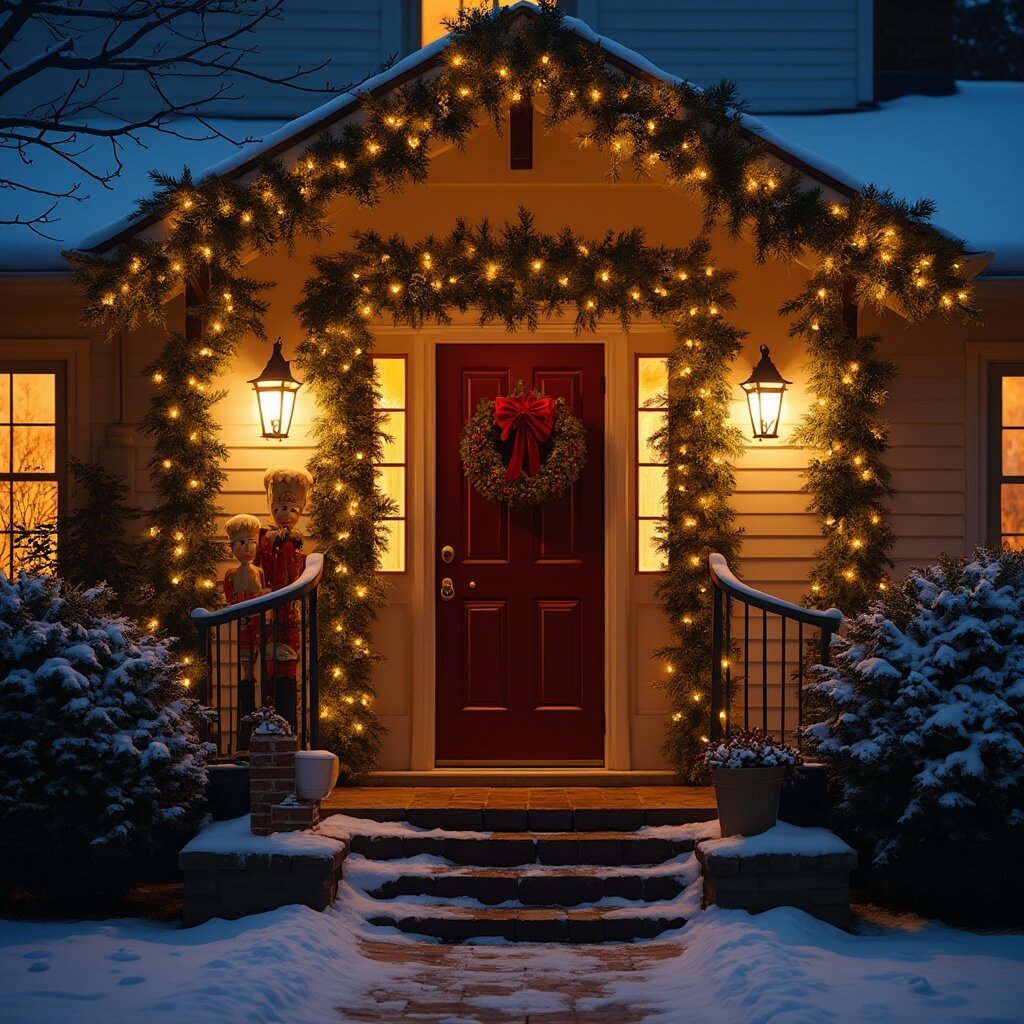
Your entrance is doing more work than you think. A thick evergreen garland around the door frame, warm white lights, a red velvet bow — that’s the first thing guests see, and it tells them immediately what kind of evening they’re walking into.
For more inspiration, explore Christmas Gift Basket Ideas and discover the charm of Christmas Tree Balloon Decorations.
👇Shop the Look Here👇
Transform Your Entrance with Scent and Light
If you’ve got the budget or the inclination, a scent diffuser just inside the door does something a lot of decorating advice ignores: it makes the transition feel complete. Visual cues tell your brain “Christmas,” but a hit of cinnamon or pine the second you cross the threshold does it faster and more convincingly.
Pair that with a tiny welcome station — a tray of mulled wine and some name tags if it’s a mixed-guest-list party — and you’ve solved the awkward first ninety seconds where nobody knows where to put their coat.
Outside, if you’ve got a path, garden, or even just a stretch of pavement between the gate and the door, line it with lanterns holding flameless candles. String lights wound through a tree or along a fence do a similar job and cost very little if you already own them from a previous year.
For anything happening outdoors — a porch gathering, a garden marquee — a couple of patio heaters and a stack of blankets over the backs of chairs will keep people outside far longer than they’d otherwise stay, which matters if your indoor space is small.
Inside: Walls, Ceilings, and the Bits People Forget to Look Up At
Once you’re through the door, banners and garlands along walls establish the theme quickly, but don’t neglect the ceiling — it’s the one surface nobody else bothers with, so it’s an easy way to make a room feel considerably more decorated than it actually is.
Hanging ornaments at staggered heights, or a garland made entirely of balloons strung along fishing line like oversized fairy lights, both do this without much effort or expense.
Windows are worth a beat of attention too. Outlining them with warm white lights means the house glows properly once it’s dark outside. If you’ve got a chandelier or a central light fitting, wrapping it in a bit of evergreen and ribbon turns it into a focal point rather than just a source of light.
The Table Is Where Most of the Evening Actually Happens
People spend more time at or near the table than anywhere else, so it deserves proportionally more of your effort.
An evergreen runner down the centre — made from whatever clippings you can gather — dressed with flameless candles, a few pinecones, and some silver ornaments, does more for a table than any single centrepiece bought from a shop.
For place settings, a few small details go a long way:
- A candy cane tied with a sprig of greenery around each napkin, or standing upright in a tripod as a place-card holder
- Hand-lettered place cards propped against a small twig base with a sprig of evergreen tucked behind
- A gingerbread biscuit tucked inside each folded napkin, which guests invariably eat before the starter arrives
Balloons, Backdrops, and Where People Actually Take Photos
A balloon arch at an entrance or around a designated photo corner costs relatively little and gives you an immediate, impressive backdrop without hours of work. Balloon “trees,” built from a bundle of long latex balloons, make a playful alternative to a real tree.
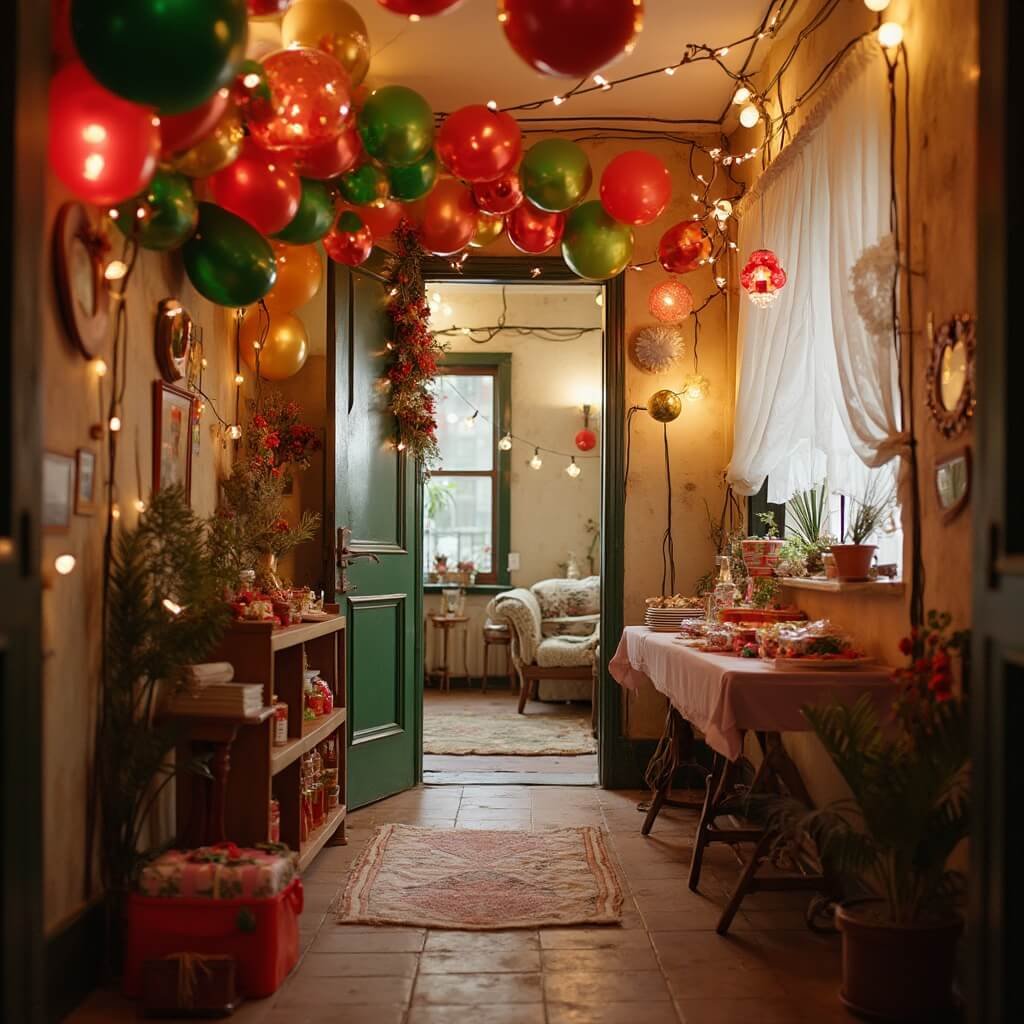
Wherever you put your photo spot, position it away from the food and the main entrance to avoid awkward photo opportunities.
Give Guests Something to Do With Their Hands
A decorating station — plain baubles, paint pens, ribbon, a hot glue gun if you trust your guests — turns a lull in the evening into an activity, and people leave with something they made rather than another party favour they’ll bin in January.
None of this needs to be elaborate. The best Christmas party decorations I’ve seen were rarely the most expensive — they were the ones where someone had clearly thought about what the room needed rather than what a shop window suggested they buy.
For more ideas, explore Christmas Party Ideas for Every Room in Your Home or discover Budget-Friendly Christmas Party Themes and Decorations to elevate your festive celebrations.
👇Shop the Look here 👇