
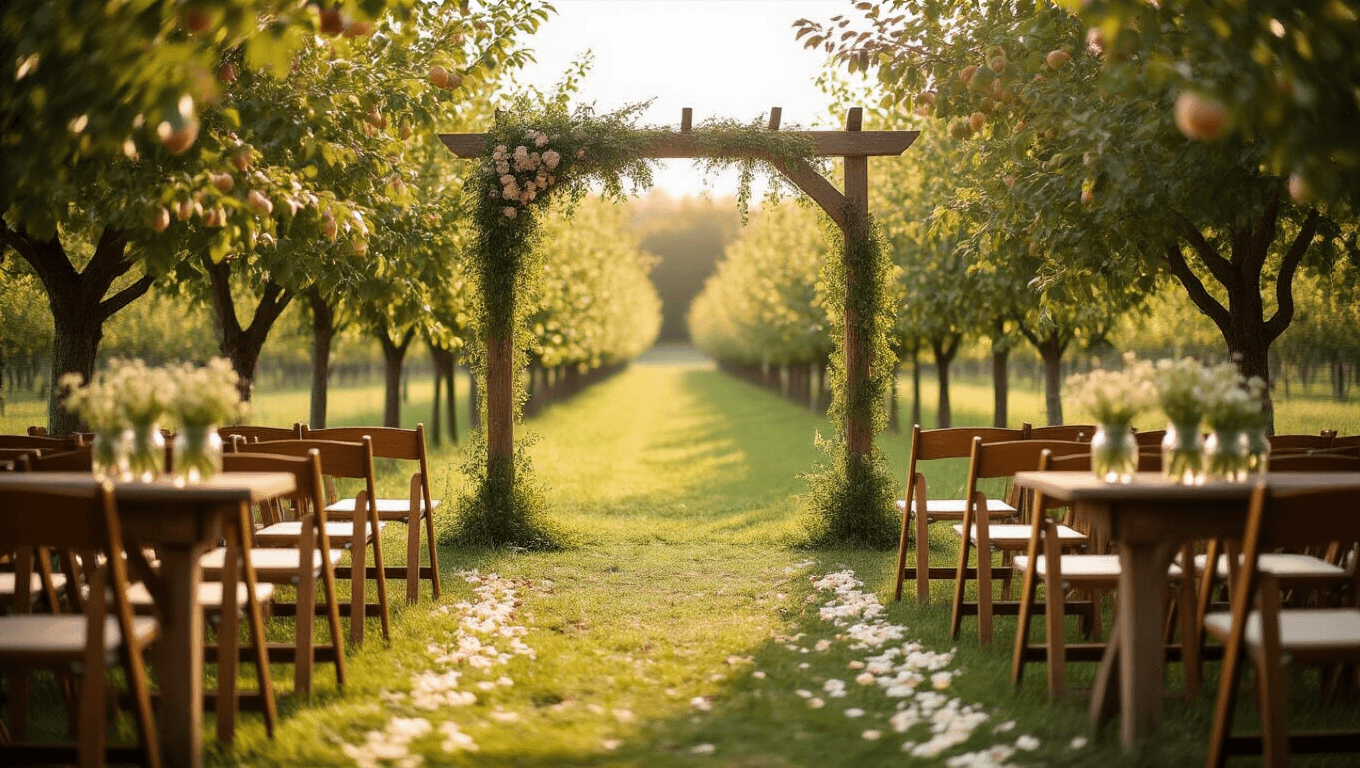
Outdoor wedding ideas are what everyone starts googling the moment they get engaged in spring, and I understand why. There’s something about the thought of saying your vows under real trees, with actual sunlight, instead of under a hotel’s fluorescent ballroom lights, that just feels right. But before you fall down the rabbit hole of pampas grass arches and fairy-lit pergolas, it’s worth understanding what you’re actually signing up for — because outdoor weddings are brilliant, and also occasionally a nightmare, sometimes on the same afternoon.
What Counts as an Outdoor Wedding, Really
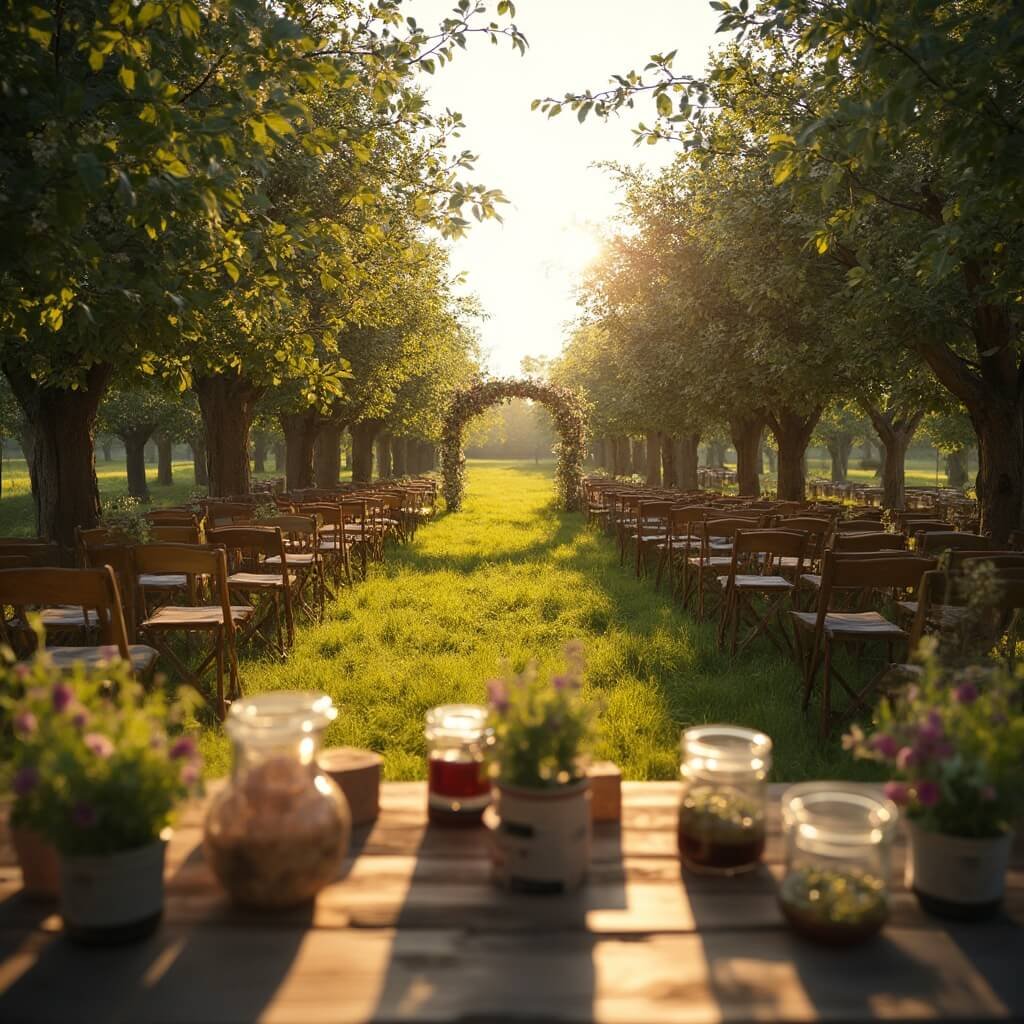
An outdoor wedding just means your ceremony, your reception, or both happen somewhere open-air — a back garden, a farm, a park, a beach, somewhere with trees involved. The appeal is obvious once you think about it: nature does most of your decorating for you. A field with wildflowers or an orchard in late September doesn’t need much dressing up. Compare that to a windowless function room, which needs draping, uplighting, and a small fortune in florals just to feel less like a conference venue, and you can see why so many couples are drawn outside.
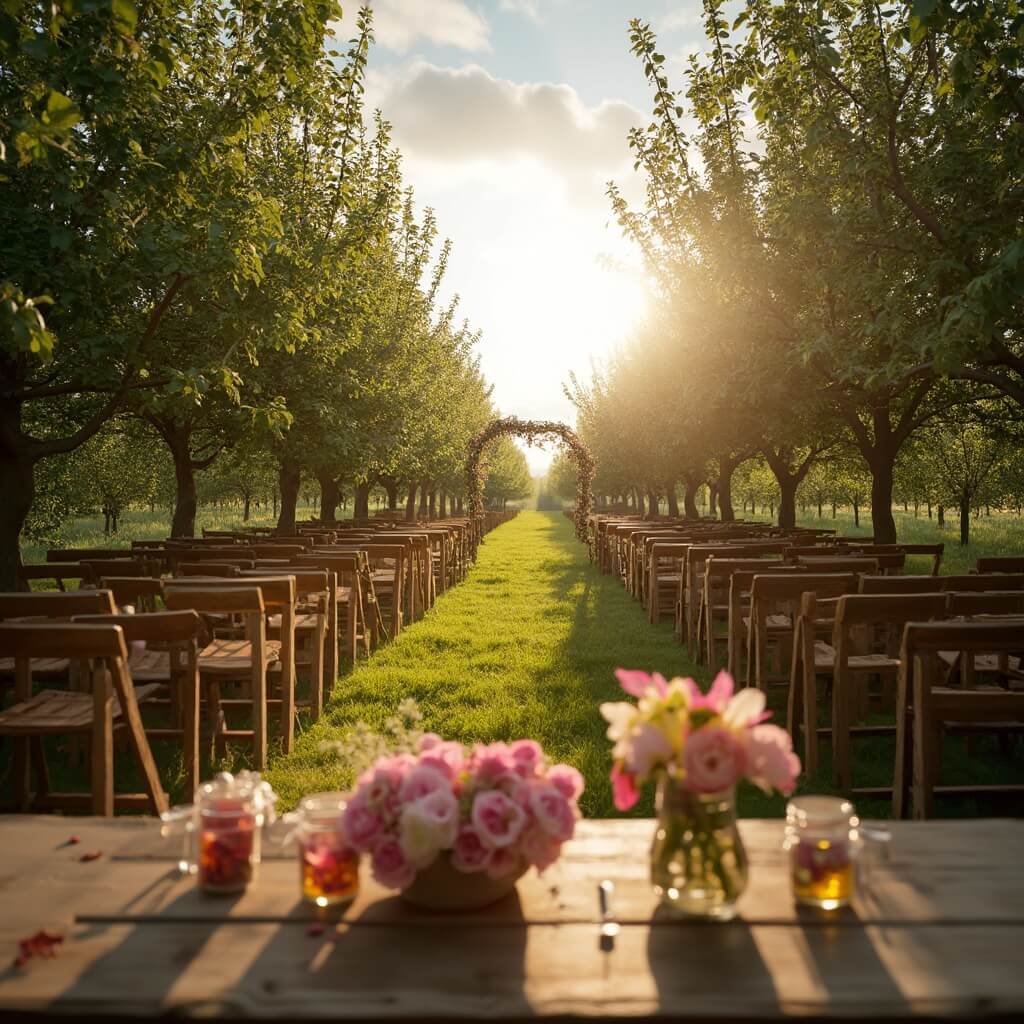
The best outdoor weddings I’ve been to leaned into what was already there rather than fighting it. One friend got married in an orchard in Herefordshire and did almost nothing to the space beyond a few jam jars of sweet peas on the tables — the apple trees did the rest.
The Genuine Upsides
Scenic backdrops are the obvious win. Gardens, barns, pavilions, arched bridges, fountains, pumpkin patches — any of these give you photos that look considered without you having spent hours on Pinterest boards. Photographers tend to love these settings too, because natural light and texture make their job easier.
There’s also more flexibility with layout outdoors than you’d get indoors. You’re not boxed in by a room’s fixed shape or a venue’s insistence that the dance floor goes exactly here. You can spread out — lawn games in one corner, a lounge area with cushions in another, a firepit for later in the evening. It opens the door to looser, more personal styles too: rustic farm weddings, boho forest ceremonies, glamping-adjacent setups with yurts and stretch tents. Indoor venues rarely let you get away with any of that without a fight from the events manager.
The Challenges Nobody Puts on the Moodboard
Weather is the obvious one, and I don’t think it gets taken seriously enough at the planning stage. Rain is the headline fear, but heat, wind, and cold all cause their own separate problems — guests fainting in direct sun during a July ceremony, or shivering through speeches in October because nobody thought about heating. You need a proper contingency plan, not just “we’ll hope for the best,” which is what most people actually do.
Then there’s logistics. Power for the band or the fairy lights. Restrooms, unless you fancy explaining to Great Aunt Susan where the nearest hedge is. Lighting once the sun goes down at 9pm in June and suddenly everyone’s eating dinner in the dark. None of this is insurmountable, but it does mean more suppliers, more moving parts, and more things that can go slightly wrong on the day.
Cost is the other quiet challenge. Outdoor venues often look cheaper on the surface — a farm field or a friend’s garden costs a fraction of a hotel’s package price — but once you’ve added a marquee, a generator, flooring, portable loos, and heaters, you can end up spending roughly the same, sometimes more. I’ve seen couples genuinely shocked by the marquee quote alone, which can run into several thousand pounds before you’ve added a single fairy light.
When Outdoor Actually Makes Sense
Outdoor weddings suit couples who want something relaxed rather than formal — picnic-style meals, bonfires, an evening that drifts rather than follows a strict schedule. They also work best with smaller guest lists. A hundred and fifty people crammed into a modest back garden is a logistical headache; sixty people scattered comfortably across the same space feels intimate rather than cramped. If you’re picturing three hundred guests, you’ll likely need a proper marquee operation rather than a casual outdoor setup, and the “simple and natural” appeal starts to disappear under scaffolding and cabling anyway.
Choosing the Right Kind of Outdoor Venue
This is where most people get stuck, because “outdoor wedding” covers so much ground — literally. A few of the main categories worth considering:
- Backyard weddings, using a home or family property, often with the patio or deck repurposed as a dance floor and linens added to create defined “outdoor rooms.”
- State and national parks, which give you dramatic scenery at a fraction of the cost of a private estate, though you’ll need to check permit rules well in advance.
- Gardens and conservatories, which offer structured greenery and floral backdrops without much extra styling needed.
- Farms, barns, and ranches, complete with fields, rustic outbuildings, and sometimes livestock wandering into your photos whether you planned it or not.
- Beach, lake, or riverfront settings, usually paired with a pavilion or gazebo for shelter.
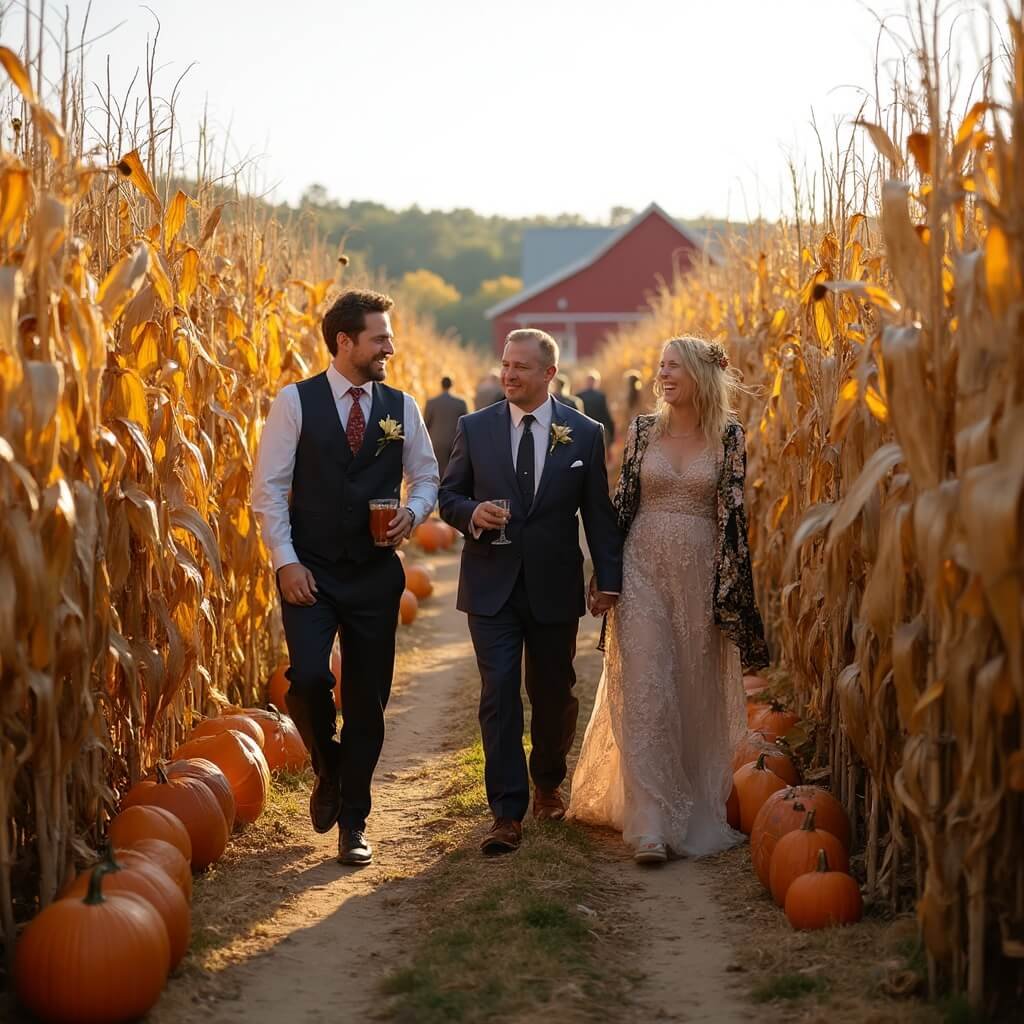
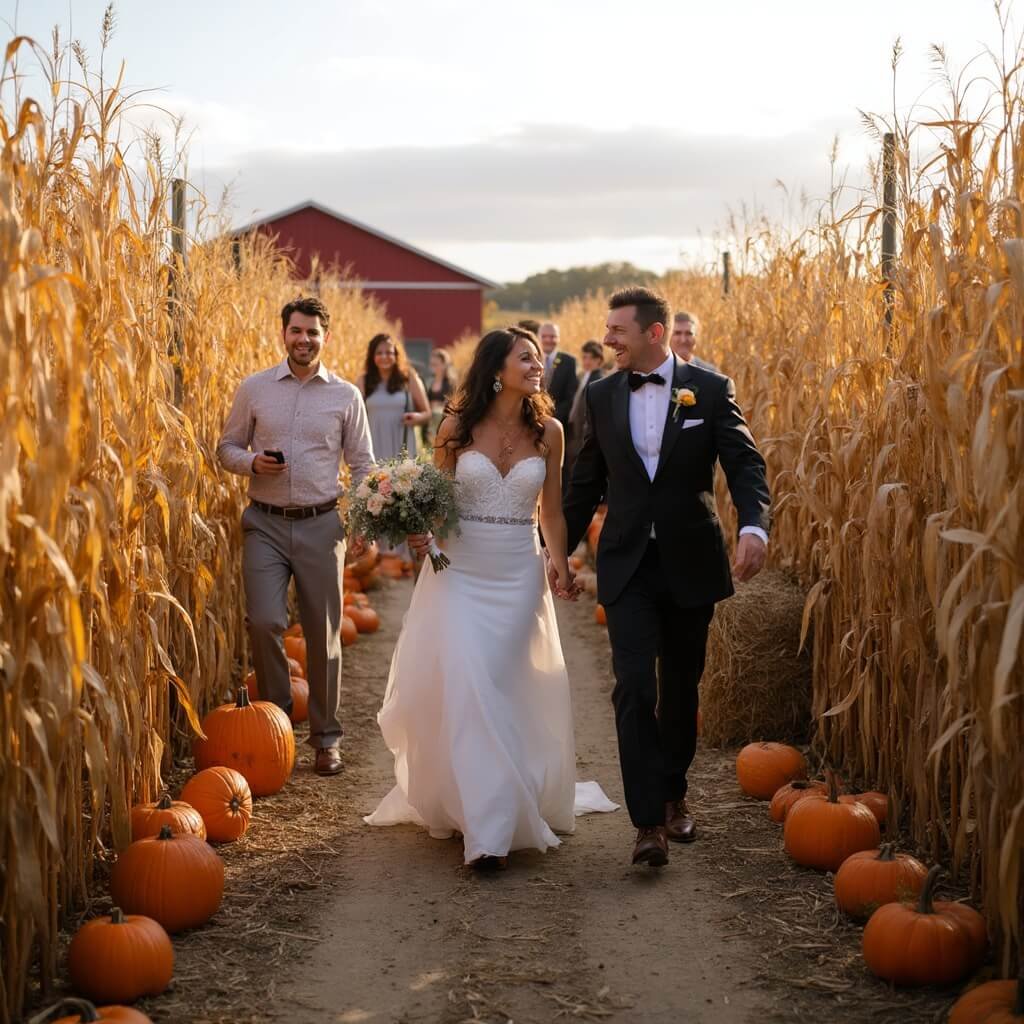
Farms deserve a special mention because they’ve become properly popular in the last few years, and not just for the rustic-wedding aesthetic. Pumpkin farms and apple orchards make genuinely lovely autumn venues, with corn mazes and orchard rows doubling as photo backdrops without any additional decorating. A friend’s sister got married at a small pumpkin farm in October — guests wandered the maze during cocktail hour, which sounds gimmicky written down but was, in practice, the best part of the day.
What to Look For Structurally
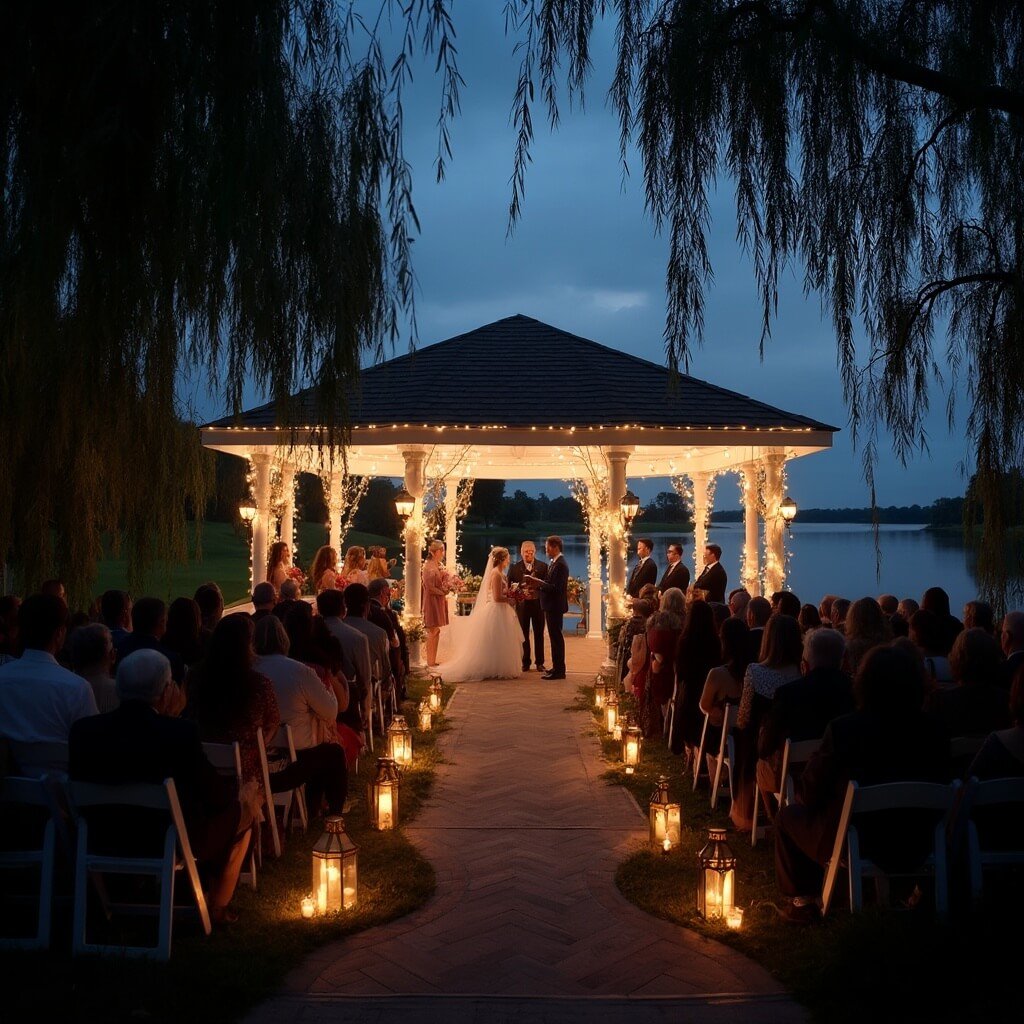
Whatever venue type you pick, look for built-in structures that work with the landscape rather than against it — pergolas, gazebos, pavilions, trellises, existing patios. These give you a natural focal point for the ceremony without needing to build one from scratch, and they double as shelter if the weather turns. A garden gate, a view down a valley, an existing archway of trees — any of these can replace a custom-built arch entirely, and often looks better for being unforced.
When you’re actually viewing venues, a few practical questions matter more than how pretty the photos look online. Is there enough space for the ceremony, the reception, lawn games, and a backup wet-weather area, all separately? What’s the actual access to power, a working kitchen or catering space, parking, and toilets — or if there isn’t any, can portables be added easily? And how does the site handle its specific climate — is there shade for a summer afternoon, shelter from wind, decent drainage if it rains the week before?
That last point matters more than people expect. I’ve heard of at least one wedding where a beautiful sloped lawn turned into a mud slope after three days of rain, and by the morning of the wedding the whole ceremony had to be relocated to a marquee that was only meant as decorative overspill space. Always ask a venue what their actual rain plan looks like, not just whether they have one.
Sorting Out the Legal Side
Depending on where you are, not every outdoor spot is automatically licensed for a legal ceremony — some regions require a registered outdoor location, and plenty of venues now offer this as an option, but it’s worth confirming rather than assuming. If your dream spot isn’t registered, the workaround plenty of couples use is having the legal ceremony quietly at a registry office beforehand, then doing the symbolic outdoor version — vows, walk down the aisle, all of it — on the day itself, in front of everyone. Nobody at the wedding needs to know which part was the “official” one, and it takes the pressure off finding a venue that ticks every box.
Once the venue’s sorted, the next decision is how you actually want the ceremony space itself to look and feel. For more inspiration on decorating your garden wedding, check out our garden wedding decor ideas.
👇Shop the Look Here👇
Building the Ceremony Space
The arch is usually where people start, and reasonably so — it’s the visual anchor of every ceremony photo you’ll look back on. Wood and metal frames both work; the difference comes down to what you drape over them. Greenery is the safe, elegant choice and it photographs well against almost any background. Pampas grass has had its moment and is still going strong for a looser, textural look. Woven fabrics draped asymmetrically give a slightly undone, bohemian feel if that’s more your style. None of this needs to be expensive — a local florist can often build an arch arrangement from wholesale stems for far less than a full “wedding package” quote.
You don’t always need to build anything at all, though. If your venue has a flower garden, a wall of forsythia, or even a decent stand of holly bushes, use it. I’ve seen ceremonies where the couple stood in front of an established rose bed and the effect was better than anything constructed for the occasion, mostly because it looked like it had always been there.
The aisle itself gets less attention than the arch but makes just as much difference walking down it. Small bouquets tied to the ends of chairs, a scattering of petals, jam jars of flowers spaced along the route — any of these do the job without requiring much budget. Outdoor rugs work surprisingly well as aisle runners too, particularly woven or cowhide styles if you’re leaning rustic or western, and they solve the practical problem of walking across grass or gravel in heels without ruining either. At the entrance, a barrel with a small display — the order of service, a framed photo, a lantern — gives guests something to notice as they arrive rather than just filing straight to their seats.
Seating is where you can properly set the tone. Traditional chairs with a simple floral tie at the back suit a classic, tidy wedding. Hay bales covered with blankets or fabric throws suit a farm setting and, frankly, guests seem to enjoy the novelty of them more than you’d expect. For something looser still, benches, porch swings, or even large floor cushions scattered informally work for a picnic-style or very relaxed ceremony — though I’d only recommend that last option if your guest list skews younger and more limber than most wedding parties tend to be.
Signage rounds out the ceremony area and is one of the cheaper, more satisfying things to make yourself. A rustic wooden sign with a few painted flowers suits a summer garden wedding; minimalist black-and-white lettering works better if your whole aesthetic is more modern than rustic. One genuinely useful trick I picked up from a summer wedding I attended: the order of service was printed on a small paddle-shaped card, ostensibly for reading along, but really so guests could fan themselves during a ceremony that ran twenty-five minutes in direct July sun. Small, thoughtful, completely functional.
Pets have become a fixture of backyard and farm ceremonies too, and understandably — a dog walking a ring down the aisle gets more genuine tears from guests than most of the vows do. If you’ve got horses on the property or it’s a farm venue, incorporating them into photos afterward adds a personal touch that a professional prop never quite manages. Some couples also like to hang photos of family members from twine strung between trees near the ceremony space, a quiet nod to people who couldn’t be there.
Designing the Reception Outdoors
Once the ceremony’s done, the reception space needs to work harder, because people will be in it for hours rather than twenty minutes. The most successful outdoor receptions I’ve seen treat the space almost like a house with the walls removed — a dining zone, a separate area for dancing, somewhere quieter to sit and talk, a bar, maybe a corner given over to lawn games for anyone who gets restless during speeches. Trying to cram all of that into one undifferentiated stretch of lawn tends to make the whole evening feel a bit shapeless.
A patio, deck, or simply the flattest bit of ground usually becomes the dance floor by default, and laying an outdoor rug over it — even just a large jute one — helps define the space without the cost of actual flooring.
For tables, picnic-style benches suit a casual outdoor reception far better than formal round tables, and they encourage more conversation across groups than a rigid seating plan ever does. If picnic tables feel too casual for your taste, mixing vintage chairs, wooden benches, and long farm tables gives an eclectic look that still feels intentional. On the table itself, wildflowers in mismatched jugs, dried grasses, linen in undyed or naturally dyed tones, and a few raw wood or stone elements tend to look more considered than a uniform matching set — and they’re usually cheaper too.
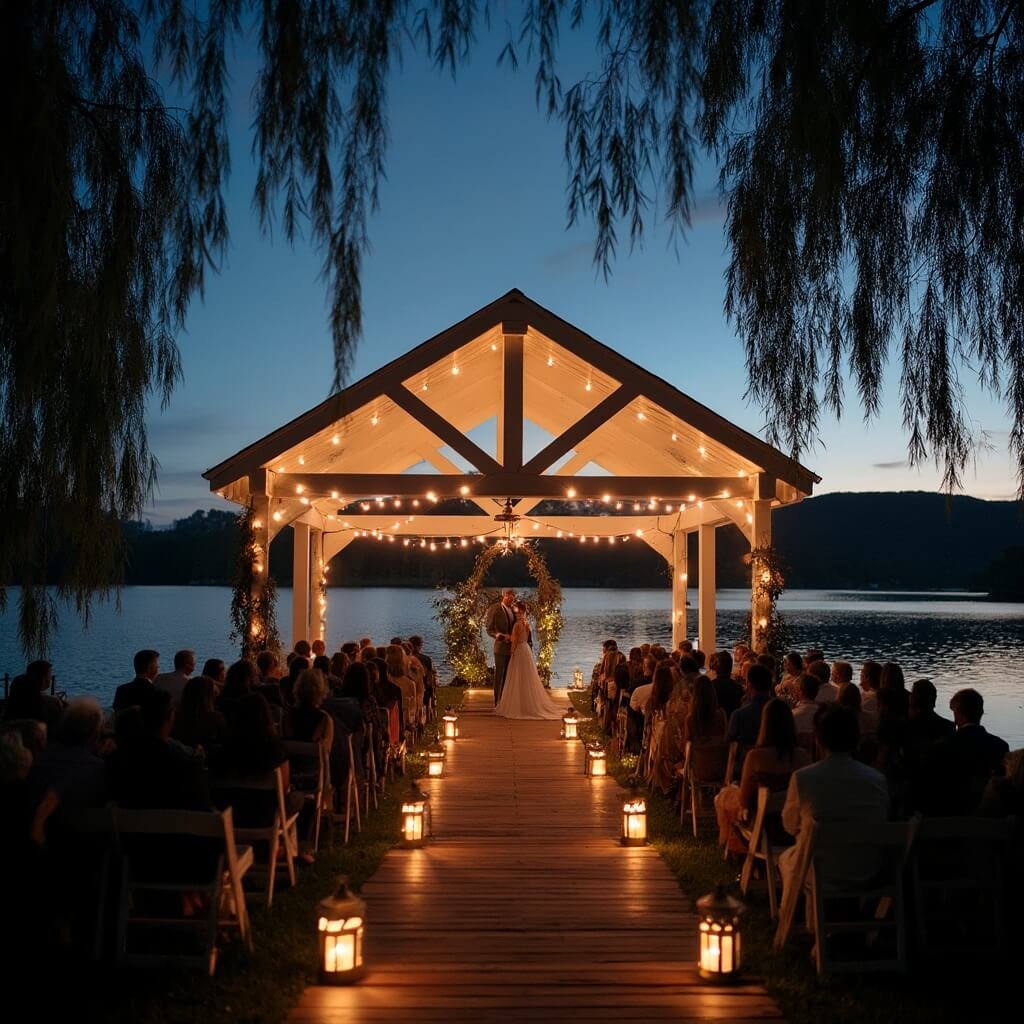
Lighting is where outdoor receptions genuinely earn their reputation for romance, and it’s worth spending a disproportionate amount of your budget here if you can. String lights over trees, pergolas, or strung between poles turn an ordinary field into something that looks properly magical once the sun’s gone. Lanterns scattered along tables and pathways add warmth without the fire risk of open candles, though flameless pillar candles are a decent middle ground for cocktail hour. If your venue has any kind of covered structure, a hanging chandelier above the dining tables or dance floor makes a genuine statement without needing much else around it. And if you want to tie the ceremony and reception spaces together visually, running the same string-light treatment over a second archway between the two areas does that job neatly.
Lounge areas have become one of my favourite additions to outdoor weddings generally. A cluster of actual sofas, armchairs, and a low coffee table, set slightly apart from the main dining area, gives older guests somewhere comfortable to retreat to and gives everyone else somewhere to end up after midnight when nobody wants to keep standing. Put a rug underneath to stop it looking like furniture abandoned in a field, and have blankets folded over the arms for when the temperature drops, which it always does, later than you expect.
As for the bigger, more photogenic gestures — marquee letters spelling out a surname or “LOVE,” a champagne wall framed in wood for guests to help themselves as they arrive, ribbons and lanterns wound through low tree branches — these are lovely if your budget stretches to them, but I’d treat them as optional extras rather than essentials. I’ve been to outdoor weddings with none of this that felt just as special as ones with all of it. The couple and the setting do most of the emotional work; the marquee letters are really just for the photographs.
Keeping Guests Comfortable
This is the section people skip past while choosing fonts for their invitations, and it’s the one that actually determines whether guests remember your wedding fondly or remember mainly that they were freezing/sunburnt/desperate for a toilet.
Weather-appropriate touches matter more than almost any other decision. Baskets of blankets for an autumn evening, paper fans stacked near the entrance for a summer afternoon, a small table of sunscreen and parasols if you’re getting married somewhere properly exposed — these cost very little and get remembered disproportionately. I went to a wedding in late September where the couple had ordered plain cream blankets in bulk, left in a big trunk near the ceremony seating, and by the evening reception half the guests were still wrapped in them like it was part of the dress code. Nobody minded.
If you’re not going fully open-air for the whole event, a marquee, stretch tent, or even a tipi gives you a middle ground — open sides when the weather’s kind, closed up fast when it isn’t. Restrooms are worth sorting properly rather than as an afterthought; a hired restroom trailer isn’t cheap, but it’s considerably better than a single portable loo with a queue snaking past the bar. Position facilities close enough to be convenient but screened off with some planting or fencing so they’re not the first thing guests see.
Basic safety details go a long way too. Uneven ground, gravel paths, tree roots — all fine in daylight, all genuinely hazardous once it’s dark and people have had a few drinks. Lit pathways between ceremony and reception areas aren’t just atmospheric, they’re functional. If there’s any chance of mud, have mats or boards ready rather than discovering the problem when someone’s mother sinks a heel into the lawn during the first dance.
Food, Drink, and Keeping Things Casual
Outdoor settings lend themselves naturally to less formal dining, and I’d argue you should lean into that rather than fight it. Grazing tables loaded with charcuterie, fruit, and bread work better outdoors than a plated three-course meal ever will, partly because they suit the relaxed mood and partly because nobody’s trying to balance a hot plate on their knee at a picnic table. Food trucks have become a genuinely popular choice too — there’s something about a proper wood-fired pizza van or a taco truck parked at the edge of a field that suits an outdoor wedding far better than a catering tent ever could, and guests tend to enjoy the informality of queuing for their food rather than being served it.
For drinks, a self-serve station keeps things moving and takes pressure off a single bar during hot weather when everyone wants water and lemonade at once. If Champagne’s outside your budget, Cava or Prosecco does the job at a fraction of the price, and I don’t know a single guest who’s ever complained about the substitution. Come evening, if there’s a firepit involved, a s’mores station is cheap, easy to set up, and reliably popular with guests of every age — I’ve watched grown adults queue for one at 11pm with more enthusiasm than they showed for the actual dessert table.
A Few Honest Final Thoughts
If I were planning an outdoor wedding tomorrow, I’d spend less time on Pinterest boards and more time on the boring logistics — the marquee quote, the loo hire, the rain contingency — because that’s what actually determines whether the day runs smoothly. The pretty parts, the string lights and the flower arches, tend to sort themselves out with comparatively little stress. My honest advice: pick a venue you love for its bones rather than its potential for styling, keep the guest list realistic for the space, and put real money into weather contingency before you spend it on marquee letters. Outdoor wedding ideas are everywhere and most of them are genuinely lovely, but the ones that work on the day are the ones where someone thought properly about what happens if it rains.
Explore more about backyard wedding ideas, fall outdoor wedding inspiration, forest wedding ideas, terrace wedding decor, and luxury garden wedding decor for more inspiration.
👇Shop the Look here 👇


