

Wedding decor ideas are easy to find and hard to filter — you’ll fall down a Pinterest hole at 11pm and emerge three hours later with forty saved images that don’t have a single thing in common. I’ve been there, and I’ve also stood in a marquee at 4pm watching a florist frown at a chuppah that clashed spectacularly with the venue’s existing oak beams. So before you buy a single fairy light, it’s worth sorting out the bones of your decor plan, because that saves you money and panic later.
Sort your theme and palette before you buy anything
Pick your theme first. I know that sounds obvious, but I’ve watched friends buy gorgeous individual pieces — a sequin runner here, a rustic wooden sign there — that looked like they’d come from two different weddings, because nobody chose a direction before shopping started. Classic, rustic, glam, modern, coastal, whatever — decide, then filter everything through it. It should also reflect who you actually are as a couple, not just what’s trending; a venue with huge Georgian windows and cornicing is going to fight you if you try to force a beachy, driftwood aesthetic onto it.
Your colour palette matters more than people think, and it needs to work with both the season and the space. A moody, deep-red autumnal palette in a bright, white-walled summer marquee is going to look strange, however nice it seemed on a mood board. Once you’ve chosen your colours, use them consistently — across the flowers, yes, but also the linens, the signage, even the ribbon on the favours. Consistency is what makes a wedding look “styled” rather than “assembled.”
Then think about mood, separately from theme. Two rustic weddings can feel completely different — one candlelit and soft, one bright and cheerful with garden lighting — and that’s down to mood decisions like whether you’re leaning on candlelight or chandeliers, sparse greenery or blousy florals. Decide this early because it affects almost every other decor choice down the line.
Where to actually spend your money
Not all decor is equal in terms of visual impact, so don’t spread your budget evenly across the whole day. The ceremony backdrop, the reception entrance, and your tablescapes are what guests will photograph and remember — put your money there. The bits guests pass through quickly, like a corridor or a car park walkway, don’t need the same attention; a couple of lanterns will do just fine.
For everywhere else, lean on affordable accents that punch above their cost. Mismatched bud vases, mason jars, greenery runners, paper decorations — these look intentional and pretty without draining the budget, especially if you buy the vases secondhand or borrow from family. Small details like rhinestone ribbon or organza chair bows are cheap per unit but make a real difference multiplied across a whole room of chairs.
One thing I genuinely think is underused: repurposing ceremony decor for the reception. Those aisle arrangements? They can become centerpieces an hour later, once someone (usually an usher roped in for the job) carries them through. It halves your flower order and keeps a visual thread running through the day, which is honestly more effective than buying two separate sets of florals that don’t quite match.
I made the opposite mistake at my own sister’s wedding — we ordered separate flowers for the aisle and the tables because “it’ll look fresher,” and ended up with a slightly odd situation where the ceremony flowers were a shade warmer than the reception ones, because they came from two different growers three weeks apart. Nobody but me noticed. But it cost an extra £180 for florals we didn’t need to duplicate, and I’d have happily put that towards better lighting instead.
Reading your venue properly
Spend proper time in your venue before you finalise any decor, and I mean walking round it at the actual time of day your ceremony or reception will happen, not just whenever the venue coordinator has a slot free. Note the arches, the high ceilings, the bit of lawn that catches the light. A photo taken every hour through an afternoon will tell you more about where the sun falls than any floor plan will — you’ll spot the moment guests will be squinting into direct sun, or the golden hour window where your photos will look their best, and you can plan decor placement around it rather than against it.
Scale matters too. A grand hall with high ceilings will swallow small, low arrangements — you need draped fabric, hanging installations, or big chandeliers to fill that vertical space. A small barn or marquee, on the other hand, gets overwhelmed fast; go vertical with height in a few key spots rather than clutter everywhere.
Choosing decor that doesn’t end up in a skip
I’ll be honest, I think a lot of wedding decor advice glosses over the fact that most of what’s bought for one day gets binned the next. If you can build in some sustainability, do — not out of pure virtue, but because it saves money too. Upcycled pieces work brilliantly: old curtains make surprisingly elegant backdrops, vintage suitcases double as card holders or display plinths, and glass bottles collected over a few months make free candle holders or bud vases.
Better still, choose pieces you’ll actually want at home afterwards. Lanterns, garlands, framed photographs, even pressed-flower candles — these aren’t landfill-bound the way a foam letter sign or a mountain of fresh-cut flowers usually is. Artificial and dried florals have come on enormously in quality recently, and they mean your arch or your table runners can be reused for a friend’s engagement party, or just live in your hallway looking lovely for years.
Getting the ceremony space right
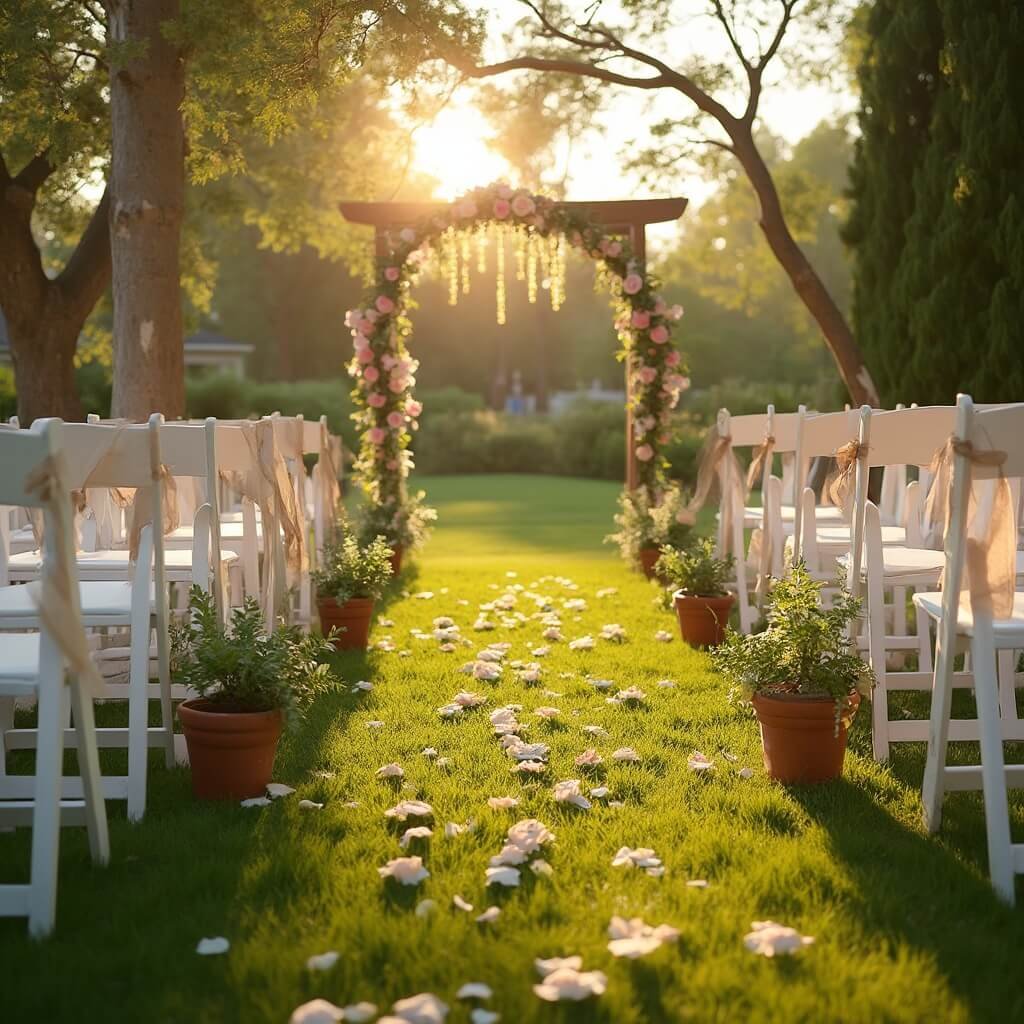
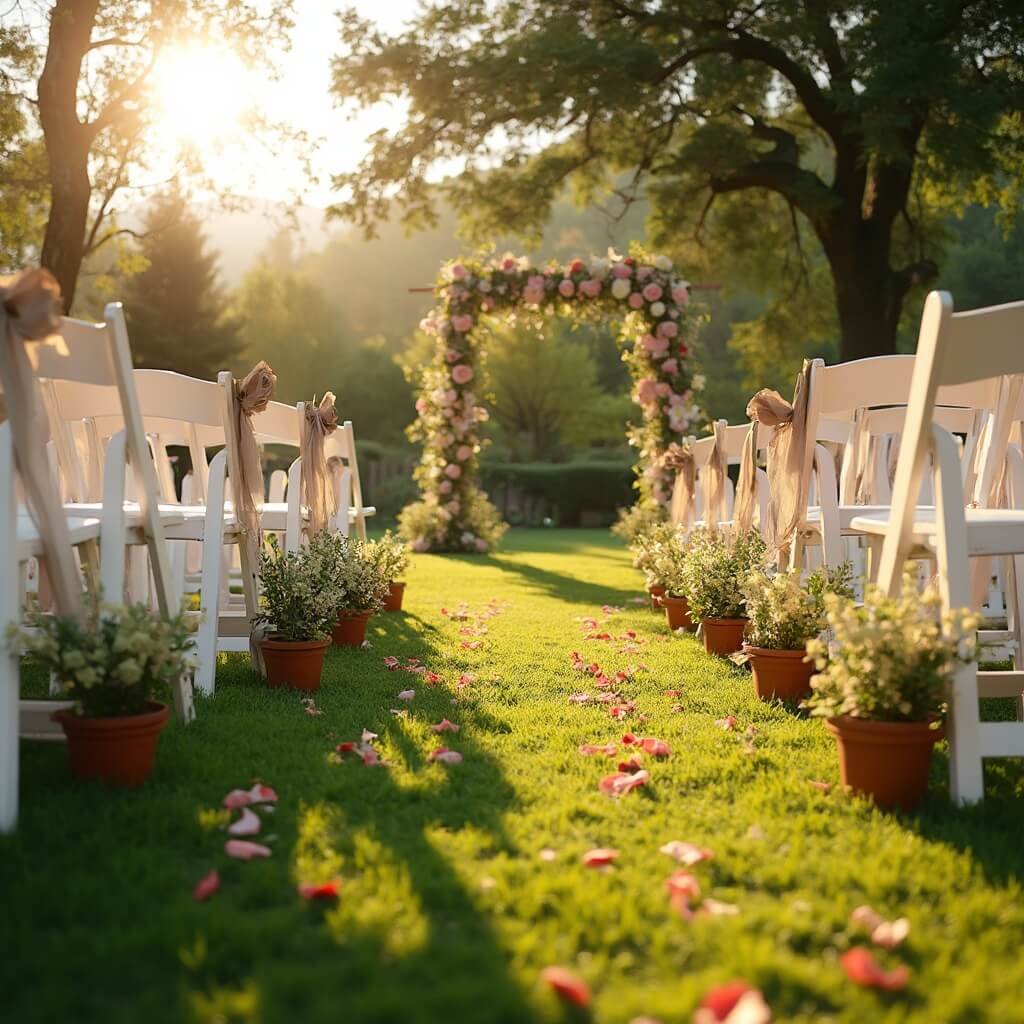
Once the overall plan’s settled, the ceremony itself deserves its own thinking, because it’s the bit guests see first and the bit with the least room for last-minute fixes. Aisle decor doesn’t need to be complicated — small flower arrangements, ribbon-tied bows, or a simple line of candles are still the most popular choices, and for good reason: they’re easy to place, easy to photograph, and don’t compete with the bride’s entrance for attention. If you want more texture, add trailing greenery or potted topiaries along the route instead of relying purely on flowers.

For the altar itself, a flower-studded arch or chuppah gives an outdoor ceremony a proper focal point — without one, a lawn ceremony can look strangely unanchored, like nobody quite decided where the “front” was. Indoors, you don’t need a structure at all; heavy fabric draping can turn a plain function room into something soft and intentional in an afternoon, which is a much cheaper fix than people assume.
wedding reception decor ideas that look expensive
👇Shop the Look Here👇
Creating Meaningful Ceremony Decor
If you’re marrying somewhere with real sentimental weight — a childhood chapel, a grandparent’s garden — consider a small photo-focused altar display instead of (or alongside) florals. It costs almost nothing, and it’s the kind of detail people mention months later, long after they’ve forgotten what the flowers looked like.
Chairs get overlooked constantly, and it’s a shame, because they’re what guests stare at for the entire ceremony. A single stem and a sprig of greenery tied to the back of each chair is such a small gesture but it reads as considered rather than sparse. If your venue’s chairs are a mismatched, slightly tired job lot — mine were, at a village hall wedding I helped decorate two summers ago — a simple bow or a length of ribbon strung between each row does an enormous amount of visual tidying for very little outlay. We spent about £40 on ribbon for eighty chairs and it transformed the room from “borrowed furniture” to “styled ceremony” in about twenty minutes.
Don’t forget signage either. Handmade signposts pointing guests toward the ceremony, the bar, the loos, or the reception room aren’t just practical — they’re an easy way to sneak your theme into a functional object. A rustic wedding gets more rustic with a wood-burned arrow sign; a glam wedding gets a bit more glam with an acrylic or mirrored one. It’s a small win for very little effort, and guests genuinely appreciate not having to guess where they’re supposed to go next.
Making the Reception Room Feel Considered
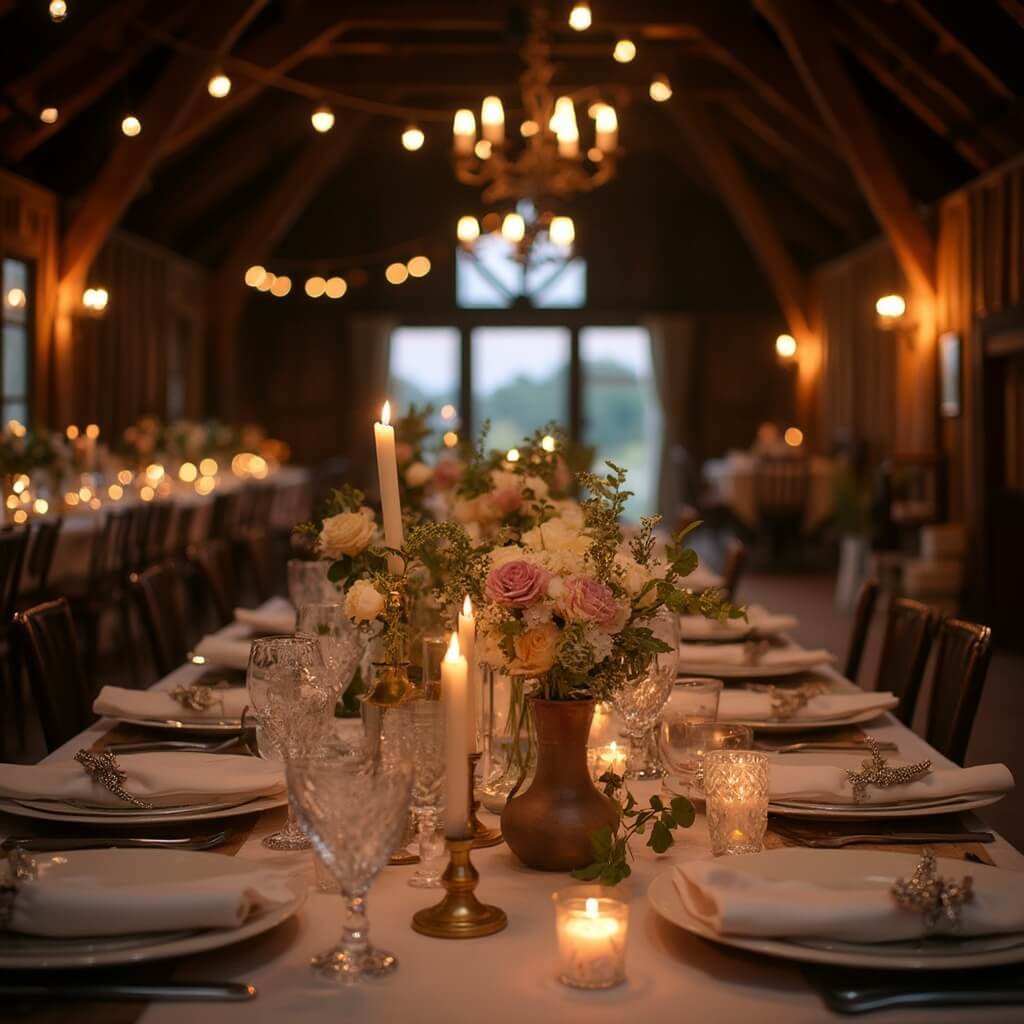
Once people move through to the reception, lighting does more heavy lifting than almost anything else you’ll buy. Warm, layered lighting — candles at varying heights, soft uplighting, strings of warm-white bulbs — has become a real focus for weddings going into 2026, and I think that’s because bright, even lighting flattens a room, while warm and uneven lighting makes it feel alive. If your venue has high ceilings, don’t be afraid to fill that space with a chandelier or two, or with swathes of draped fabric; leaving the top third of a room empty just makes everything below it feel smaller and colder by comparison.
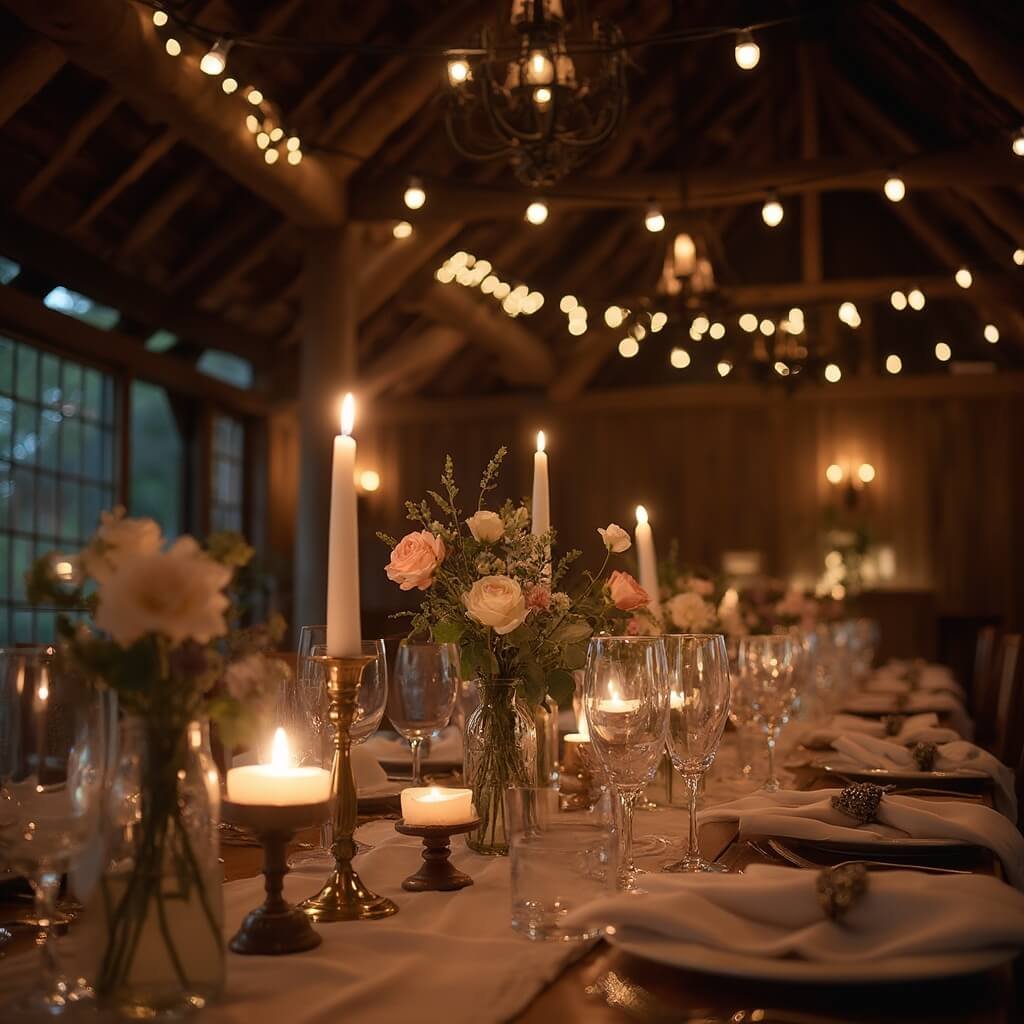
Scent is worth a mention, though carefully. A single, consistent candle fragrance through the reception space can genuinely shape how people remember the evening — smell is tied to memory in a way visuals aren’t — but multiple competing scents from different candle brands dotted around tables just gives people a headache. Pick one, use it sparingly, and don’t put scented candles anywhere near the food.
Look up as much as you look at eye level. Delicate hanging installations — small chandeliers over each table, or something as unexpected as vintage lace umbrellas suspended from the ceiling or from tree branches if you’re outdoors — draw the eye upward and make a low-ceilinged room feel taller than it is. Over a cake table or a sweetheart table, hanging ribbon or a loose floral “curtain” at varying heights gives you a focal point for photos without needing a huge floral budget.
Walls matter more than people give them credit for. A plain function room with fire doors and radiators dotted around isn’t going to feel special until you’ve softened it somehow — fabric draping is the obvious fix, but I’ve also seen couples hang framed family photos along one wall, which gives the whole room a warmer, more personal feel than generic decor ever could. And if you’re using floor-length tablecloths, tucking a string of battery-powered fairy lights behind the fabric skirting gives tables a soft glow from below that photographs beautifully and costs about £6 a set.
The Table is Where People Actually Spend Their Evening
Guests will spend more time looking at their table than almost anything else in the room, so it earns real attention. Long floral garlands laid flat down the centre of the table have become a favorite of mine — they’re romantic, they don’t block sightlines across the table the way tall arrangements do, and they let people actually talk to each other rather than shouting around a wall of flowers. If garlands feel like too much, a cluster of mismatched bud vases with single stems does a similar job for a fraction of the price, and it looks deliberately eclectic rather than sparse.

One trend I didn’t expect to like as much as I do: fruit and vegetable centerpieces. Citrus halves, small ornamental squash, even artichokes arranged among the florals give a table texture and a slightly unexpected, seasonal feel, and unlike flowers, nobody’s precious about throwing them away afterwards. It’s also just cheaper — a bag of lemons costs a lot less than a bunch of imported ranunculus.
Runners and linens are where a lot of the “feel” of a table comes from:
- Swap a fabric runner for a greenery runner if you want something more natural and rustic — it’s often cheaper than a good linen runner too.
- Drapey, textured linens (linen-look rather than stiff polyester, lace overlays, anything with a bit of movement) photograph far better than flat, shiny fabric.
- For a glam table, a sequin runner or backdrop earns its keep purely as a photo prop, even if it’s a bit much for everyday taste.
Small details finish the table off. A sprig of foliage tucked into each folded napkin costs pennies and carries your greenery theme right down to the place setting. Good glassware and flatware matter more than people expect — hired crystal stemware genuinely changes how a table looks in photos compared to standard venue glassware, and it’s rarely as expensive to hire as people assume. Custom place cards, whether calligraphed, boxed, or doing double duty by noting a guest’s meal choice, are a nice final touch that saves your caterers a headache too.
Table numbers are a small thing that people love turning into a bigger thing. Scrabble tiles spelling out a number, propped on a stand on top of a stack of tied vintage books, gives a shabby-chic, literary feel that’s cheap to assemble if you already have old paperbacks lying around. Corks with a slit cut into them make sturdy, rustic place-card holders. Little wooden clip hearts, patterned paper straws, or a scatter of plastic diamonds across the table are all functional-decorative crossover pieces that do more work than their price tag suggests.
Matching Decor to Your Actual Style
Whatever aesthetic you’re drawn to, the details should follow it consistently rather than being borrowed piecemeal from different trends.
Classic and romantic weddings lean on abundant flowers, candlelight, and soft neutral palettes — creams, blush, sage. Traditional arches and hurricane lamps with flameless candles suit this style well and photograph beautifully in most lighting.
Rustic and boho weddings do well with wood — crates, pallets, sliced log centerpieces — paired with natural textures like burlap and jam-jar florals. Recycled glass bottles make free, characterful vases, and an old trunk or suitcase repurposed as a card box or flower display fits the whole look without costing anything extra.
Glam and luxury weddings need contrast and shine: acrylic signage, mirrored surfaces, sequins, and metallics, especially silver. A champagne tower or feather plumes add drama, and chandeliers with richly textured linens finish the look properly.
Modern and minimalist weddings work best when you resist the urge to add more. Clean lines, simple florals, monochrome palettes, sleek acrylic signage — restraint is the whole point, and one bold statement (an oversized floral arch, a striking runner) does more than five small decorative flourishes.
Coastal and nautical weddings lean into blue and sandy tones, seashells, rope details, and anchors without tipping into theme-park territory. Origami sailboat place cards, or simple tealights nestled among shells and sea glass, are small, tasteful nods rather than an overload of nautical clichés.
If you’re honouring cultural or religious traditions, let the structural elements — a chuppah, a mandap, a floral arch — do the visual heavy lifting, and consider a photo display honouring family members who can’t be there. These pieces carry meaning that generic decor simply can’t compete with, and guests notice when they’re done with care.
DIY, If You’ve Genuinely Got the Time
DIY decor is only worth it if you enjoy making things and have realistic time to spare — I’ve seen too many brides start a Pinterest-fuelled DIY project in March for a September wedding and abandon it by June with a box of half-painted jam jars under the bed. Simple projects are worth doing: paper cones or lace doily cones filled with dried petals for confetti, hand-painted bottles as candle holders, or pressed flower candles made by gluing dried blooms onto plain pillar candles. None of these need special skills, and they’re the kind of thing you can do over a couple of evenings with a glass of wine and a podcast on.
If you do go down the DIY route, my honest advice is to pick two or three projects rather than ten, and choose the ones that will actually save you money rather than just feel crafty. Good wedding decor ideas aren’t about doing everything — they’re about choosing the handful of moments that matter, doing them properly, and letting the rest of the room stay simple enough to let those moments shine.
👇Shop the Look here 👇


