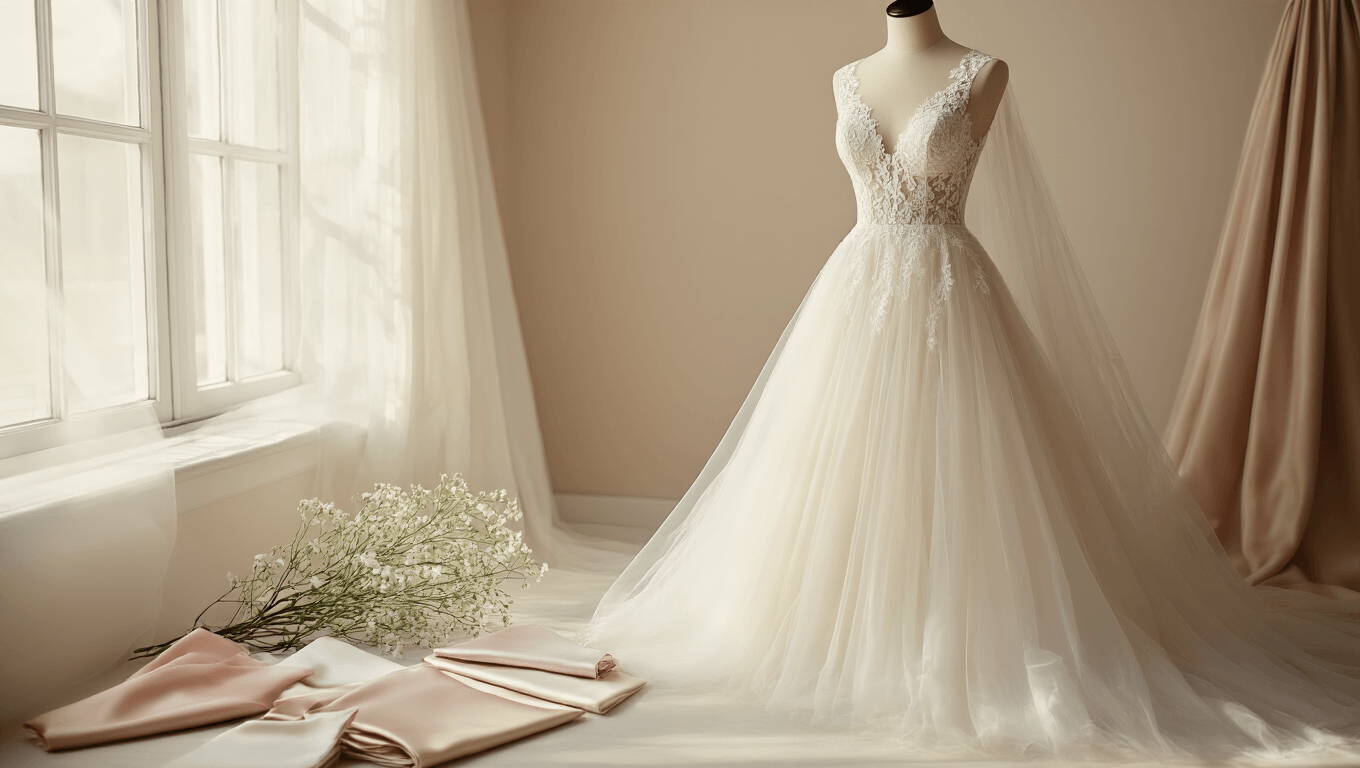
Wedding dress ideas are usually the first thing people ask me about once the venue’s booked, and honestly, it’s the bit that stresses brides out most — not because there’s too little choice, but because there’s an overwhelming amount of it. I’ve sat through more dress shopping appointments than I can count, either as the friend with the opinion or the one holding the prosecco, and the pattern is always the same: everyone walks in thinking they know exactly what they want, and half of them walk out having tried on the total opposite and loved it. So before we get into silhouettes and fabrics, let’s sort out the groundwork, because that’s what actually narrows things down.
Work Out the Vibe Before You Look at a Single Dress
Forget Pinterest boards for a second. Think about what you already wear when you want to feel like the best version of yourself — a fitted blazer, a soft floaty midi, something with a bit of sparkle at the neckline. That instinct tells you more about your bridal style than any mood board will. Romantic, minimalist, boho, vintage, glamorous, whimsical — these words get thrown around a lot, but they’re only useful once you’ve matched one to your actual personality rather than the wedding you saw on Instagram last week.
You also need to decide, early and honestly, whether you’re after something traditional or not. Traditional usually means white or ivory, a classic shape, timeless detailing — think lace sleeves, a chapel train, the works. Nontraditional opens the door to colour, unusual cuts, or embellishments that wouldn’t have gone near a 1990s bridal magazine. Neither is more “correct.” I’ve been to weddings where the bride wore a deep green slip dress and it suited the whole day far better than white ever would have. For more inspiration, check out these green wedding dress fabric inspiration.
Let the Venue and Season Do Some of the Deciding for You
This is where I think a lot of brides overcomplicate things. Your venue and the time of year narrow the field dramatically, and fighting against that usually ends in either discomfort or a dress that looks slightly wrong for its surroundings.
- A grand ballroom or stately home suits structure — think ball gowns or anything with a defined waist and real presence.
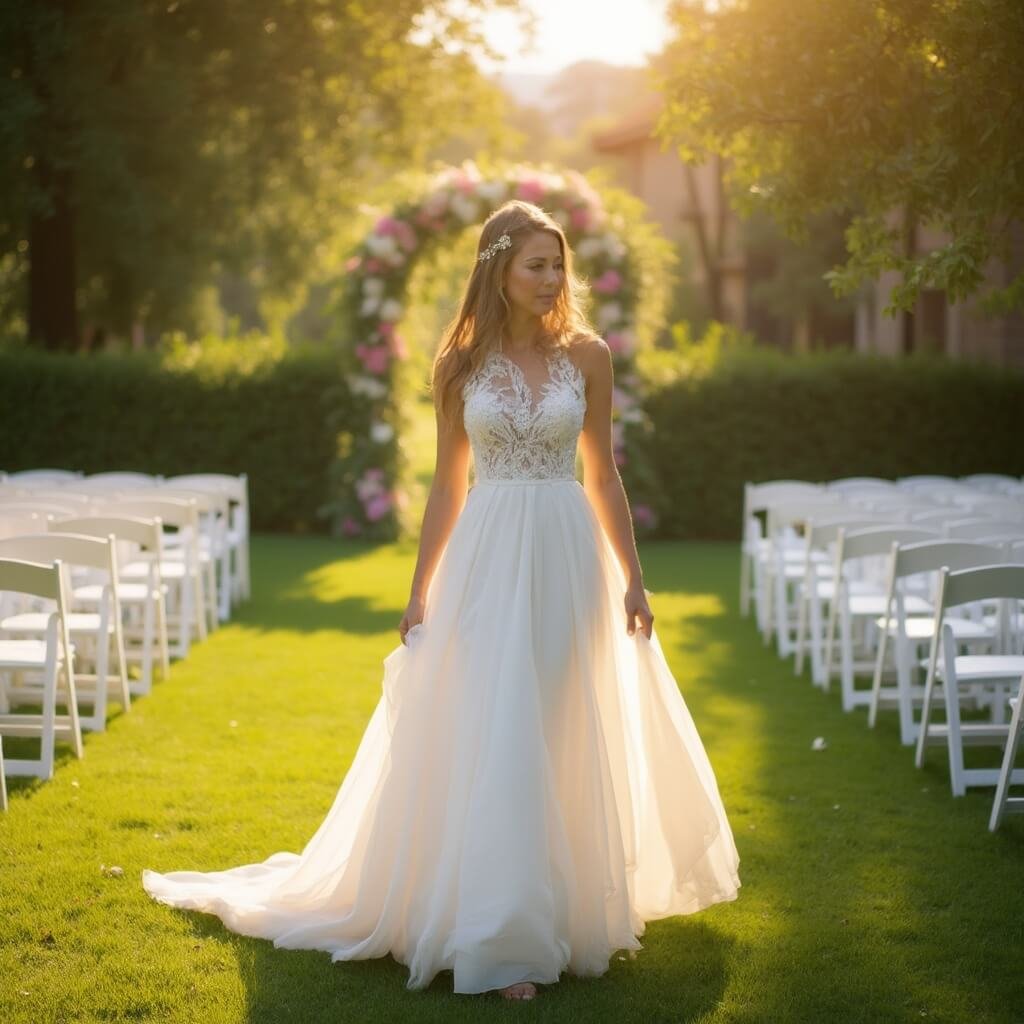
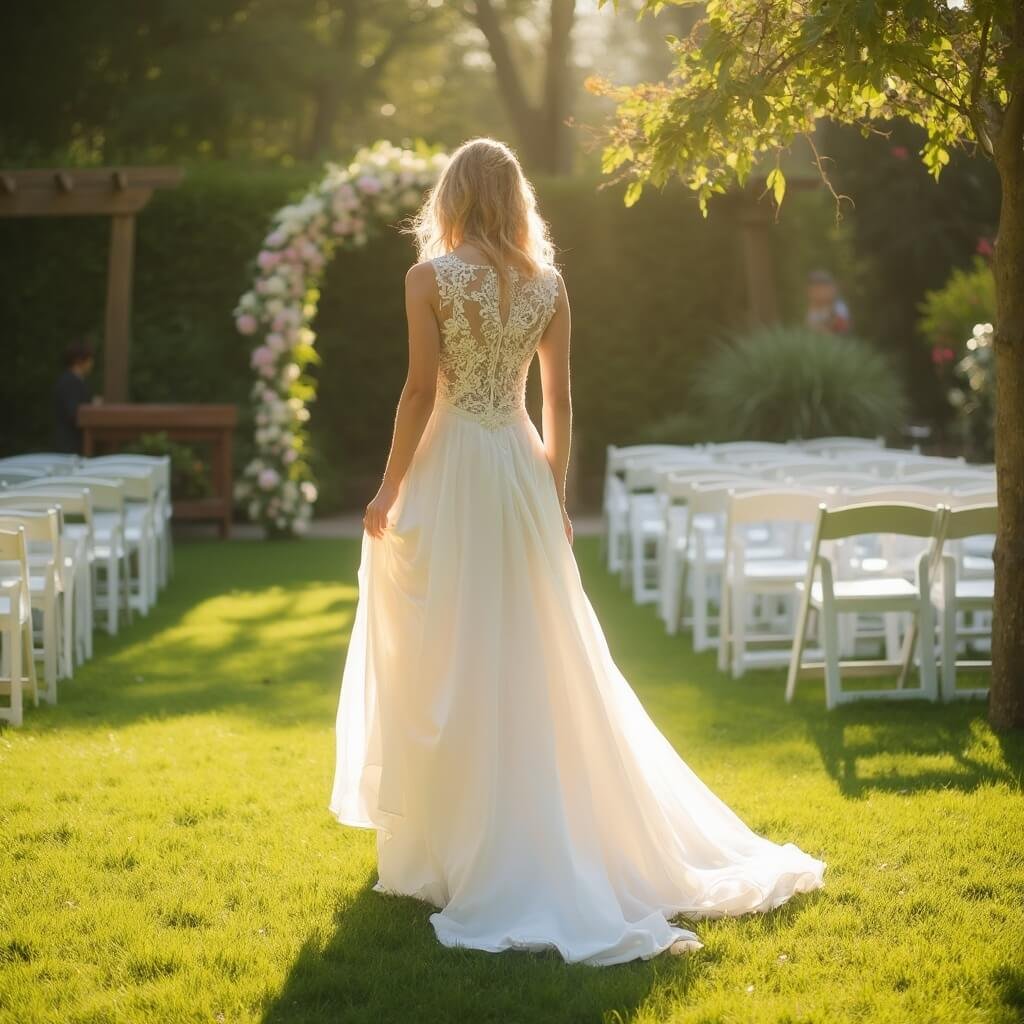
- Gardens and beaches want movement and lightness; a heavy ball gown on grass looks like hard work within twenty minutes.
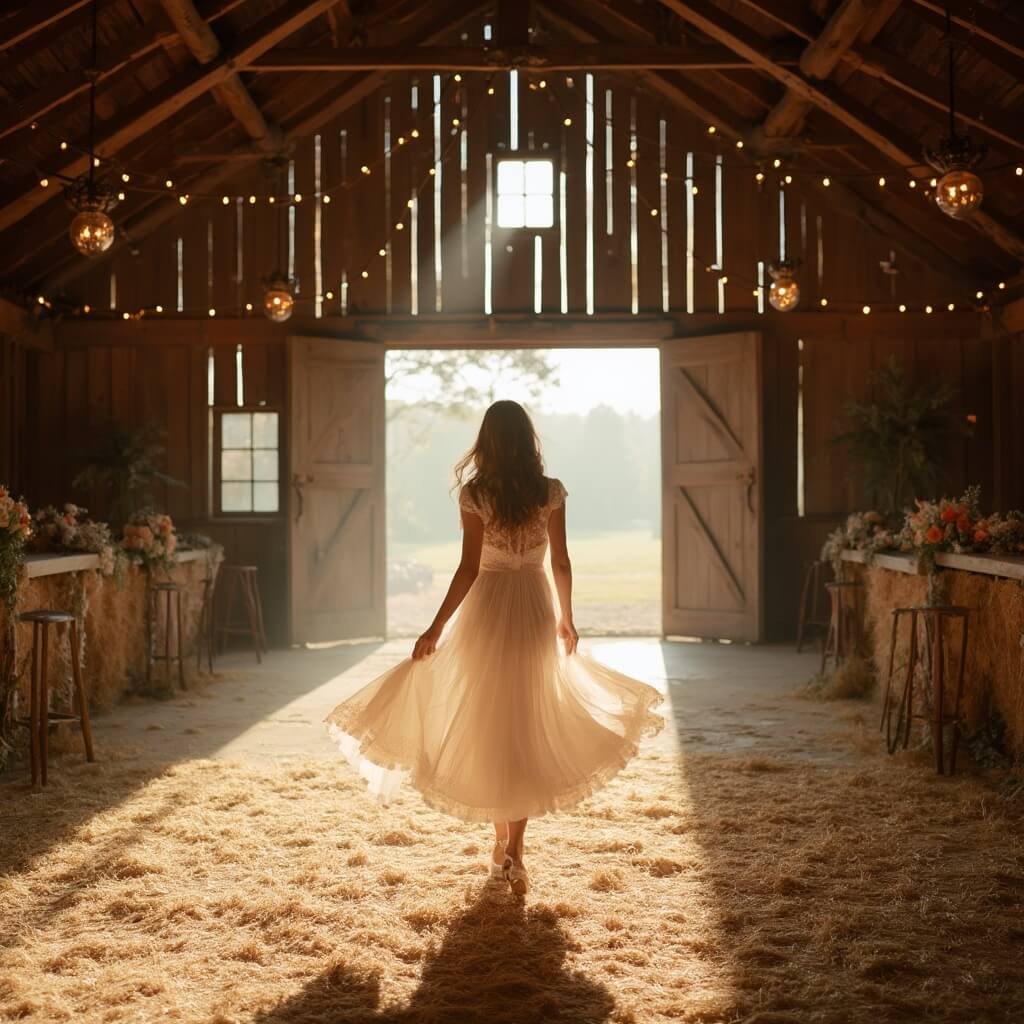
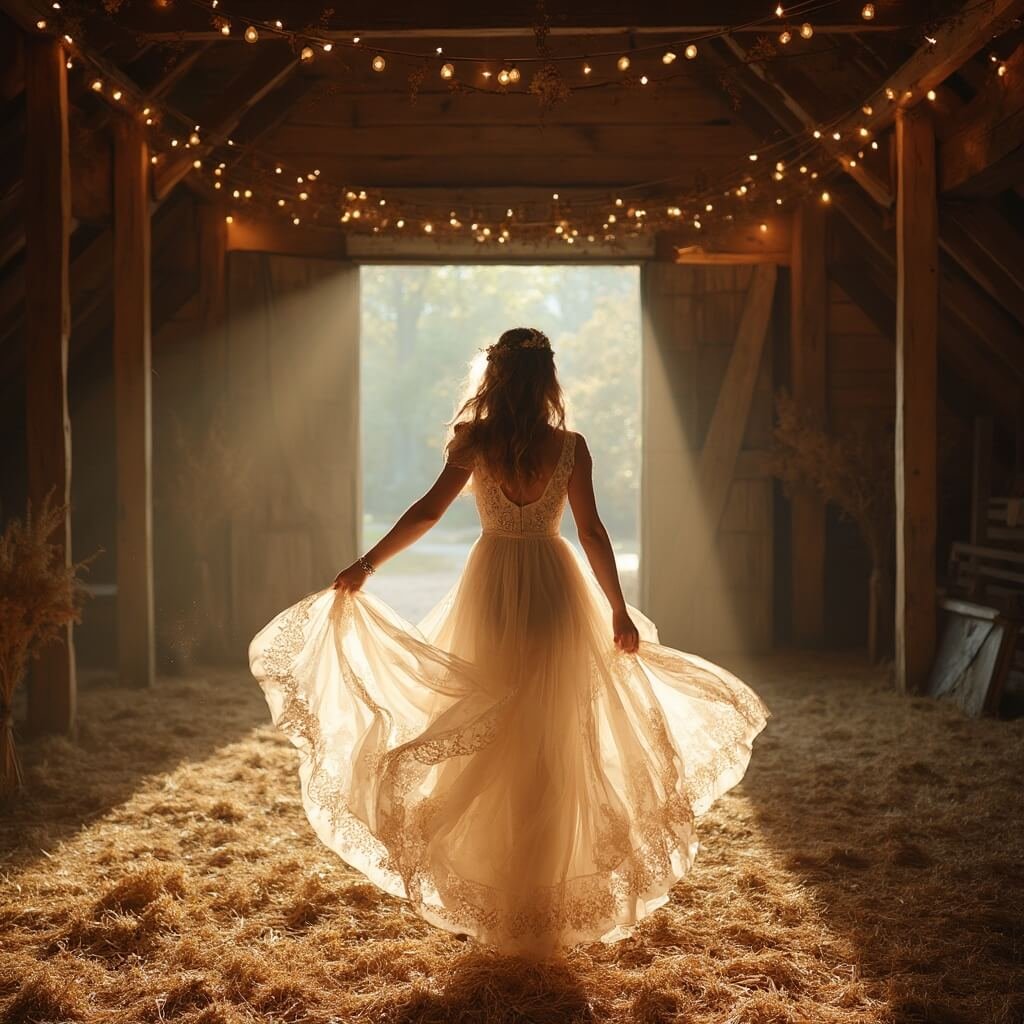
- Rustic barns sit somewhere in the middle — lace and boho shapes tend to feel right, and a floor-sweeping train just picks up dust and hay.
Season matters just as much as venue, maybe more. Winter weddings call for heavier fabrics — satin, mikado — and sleeves aren’t just a style choice, they’re a practical one. Summer wants breathable fabric and bare shoulders, because nobody looks radiant three hours into a July reception sweating through boned satin. I made this mistake myself, sort of, at a friend’s dress shopping trip in August — she’d fallen for a long-sleeved lace gown in the shop’s air conditioning, and it wasn’t until the seamstress mentioned the marquee wouldn’t have aircon that reality set in. She switched to a sleeveless version of the same design. Small change, completely different experience on the day.
Then there’s formality. A black-tie evening do wants a floor-length gown or a genuinely elevated midi — not much else reads as appropriately dressed. Casual daytime weddings give you far more room to play, including some of the shorter or more relaxed silhouettes we’ll get to shortly.
Fit, Comfort, and Body Type — Without Overthinking It
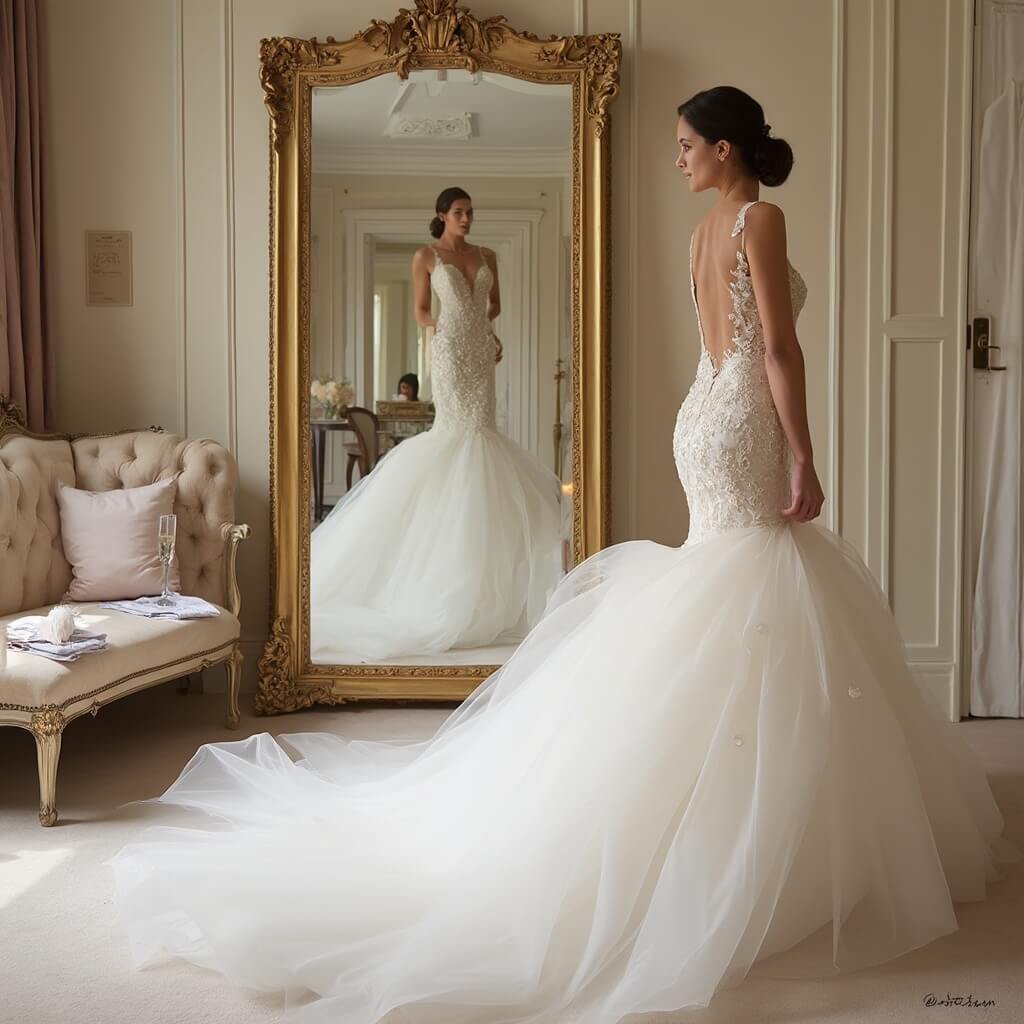
I’m slightly wary of the “dresses for your body type” advice that gets repeated everywhere, because it can make people feel boxed in before they’ve tried anything on. That said, some general patterns hold up. A-line dresses — fitted bodice, skirt gradually flaring into an A shape — flatter an enormous range of body types, which is exactly why they remain the most popular silhouette at almost every bridal shop I’ve wandered into. If you want more shaping or support, a corseted or tailored bodice does genuine work: better posture, a defined waist, and often more comfort than you’d expect from something called a corset. For more ideas, explore plus size wedding dress silhouettes and styles.
Comfort deserves more weight in this decision than most people give it. You’ll be standing, walking down an aisle, sitting through a meal, and dancing — sometimes for eight or nine hours straight. A dress that looks stunning static on a hanger can be a nightmare to sit in. Ask to sit down in the fitting room. Ask to raise your arms. It sounds unglamorous, but it saves regret later.
What Wedding Dresses Actually Cost
Budget conversations get skipped over far too often in these guides, so let’s not do that. Spending varies enormously, but surveys of UK brides have suggested an average dress spend of around £1,300, with high-street options starting from a few hundred pounds and bespoke or designer pieces running considerably higher. Ready-to-wear and high-street bridal ranges can get you a genuinely on-trend dress without the bespoke price tag, while made-to-measure or fully custom designs cost more but give you total control over fabric, fit, and detail.
Whichever route you choose, build in proper time. Multiple fittings, potential alterations, occasionally a change of mind about sleeves or neckline — none of this happens in a fortnight. Months, not weeks, is the realistic timeline, particularly if there’s any custom element involved.
Classic Silhouettes Worth Knowing
Once the groundwork’s sorted, it’s worth actually understanding what you’re looking at on the rail, because bridal terminology gets used loosely by even the shop assistants sometimes.
Ball gowns are the fairytale option — fitted bodice, dramatically full skirt, often built up with layers of tulle, organza, or horsehair braid for structure. They suit grand venues and brides who want a proper entrance moment, though I’ll say it plainly: they’re not for everyone, and they can be genuinely hard work to move in, sit in, or fit through a doorway.
A-line we’ve already covered, but it’s worth repeating that it’s the safest bet in the building if you’re torn between styles — versatile enough for minimalist and romantic weddings alike.
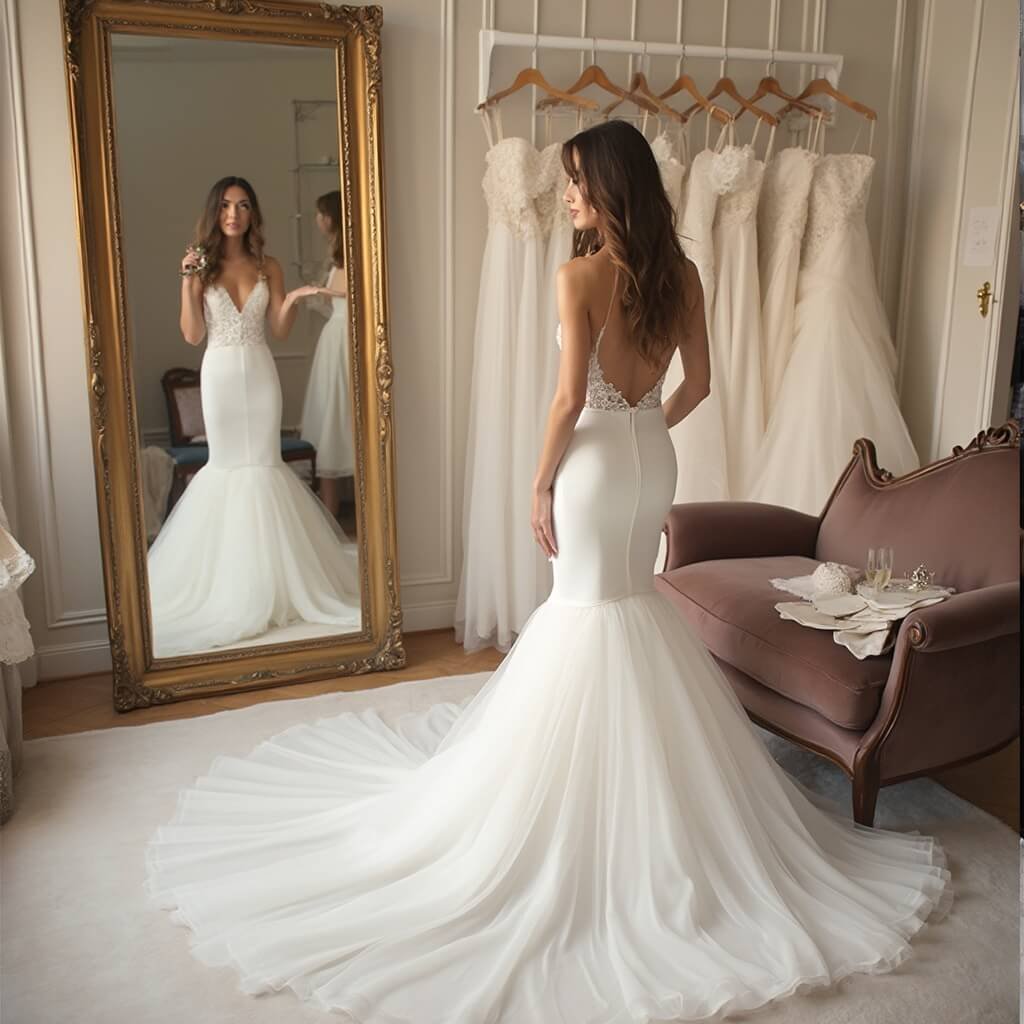
Mermaid and trumpet silhouettes are for brides who want to show off their shape. Mermaid fits close from bodice to knee before flaring dramatically; trumpet does something similar but starts its flare higher, around mid-thigh, which makes it noticeably easier to walk and dance in. If you love the mermaid look but worry about mobility, trumpet is usually the compromise.
Fit-and-flare sits between the two — fitted through bodice and hips with a gentler flare toward the hem, giving shape without the drama. Sheath or column dresses go the other direction entirely: straight, slim, skimming the body rather than sculpting it, and they tend to suit sleek modern venues far better than a heavily structured gown would.
Empire waist and drop waist are worth mentioning too, if only because people forget they exist. Empire sits just below the bust with a long flowing skirt — flattering if you want to elongate the body or draw focus upward. Drop waist does the opposite, sitting below the natural waistline, and reads as more vintage or fashion-forward than most other options on this list.
Shorter, Simpler, and Nontraditional Shapes
Not every bride wants floor-length. Tea-length and midi hems, falling between knee and ankle, have a retro charm that works brilliantly for garden parties or anything with a slightly casual-chic brief. Minis go further still — above the knee, often chosen for second looks, after-parties, or elopements where you genuinely need to move. High-low hems split the difference, shorter at the front to show off shoes, longer at the back for a bit of drama.
Then there’s the category I think gets underused: slip dresses, separates, jumpsuits, and pantsuits. A bias-cut silk or satin slip dress has a timeless, quietly sensual look that suits brides who find traditional bridal styling a bit much. Separates — a skirt paired with a corset or top — let you mix textures in a way a single dress can’t. And jumpsuits or tailored pantsuits are a proper alternative for anyone who’s never pictured themselves in a skirt on their wedding day at all.
👇Shop the Look Here👇
## Fabric Choices Change the Whole Feel of a Dress
The **silhouette** gets most of the attention, but **fabric** is doing at least half the work in how a dress actually reads on the day. *Lace* is the obvious romantic choice — whether it’s covering the whole gown or just working its way through sleeves and a bodice, it brings a vintage or boho warmth that photographs beautifully. Pair it with a birdcage veil and simple pearl studs and you’ve got a look that hasn’t dated in about seventy years, which says something.
**Tulle and organza** give you volume without weight, which is why they turn up so often in skirts and overlays. Layer them properly and you get that ethereal, slightly floaty quality that looks especially good mid-twirl on the dancefloor — genuinely one of the more underrated things to consider, because you will end up dancing in this dress whether you planned to or not.
**Satin** sits at the heavier end, with a proper sheen to it, and it’s the fabric I’d point winter brides toward first. It holds structure well, which makes it a natural fit for ball gowns and mermaid cuts that need something with backbone. Mikado and structured crepe do similar work but with cleaner, crisper lines — better suited to minimalist or architectural gowns than anything overtly romantic. **Chiffon** goes the opposite direction entirely: light, fluid, and the obvious choice for beach or summer weddings where you want movement rather than structure. A bias-cut chiffon slip catches a breeze in a way satin simply won’t.
**Beading, sequins, and embroidery** are where a dress moves from “nice” to genuinely memorable, though there’s a balance to strike. Strategic beading around a neckline or waist adds proper sparkle for an evening or ballroom wedding without tipping into fancy dress territory. *Embroidery*, meanwhile, is where you can get sentimental — I know a bride who had a panel of her late grandmother’s lace embroidered into the hem of her skirt, invisible unless you knew to look for it, which is exactly the sort of detail worth asking your dressmaker about if it means something to you.
**Ruffles, tiers, and 3D floral appliqués** lean whimsical almost by default. They’re not for anyone who wants a pared-back look, but for a fairytale or garden-party theme, tiered ruffles bring a sense of movement that a flat skirt simply can’t match.
## Necklines, Backs, and Sleeves Deserve Their Own Conversation
It’s easy to get so fixated on silhouette and fabric that you forget the **neckline** is doing most of the work near your face — arguably the part of the dress people actually look at first. *Sweetheart, V-neck, square, high-neck, halter, off-the-shoulder* — they all change the shape of your upper body and the overall mood of the dress. Square necklines paired with puff sleeves have had a real moment recently, but I’d say the same thing to every bride who asks: only go for what’s trending if it also happens to be what you’d have chosen anyway. Trends fade from photos faster than you’d think.
**Backs** are worth just as much attention, and they’re the part brides forget to check in a mirror because you can’t see your own back easily in a fitting room. *Low-back styles, illusion lace panels, keyhole cutouts,* or a long row of covered buttons all send a different message, and for a summer wedding in particular, a back-baring dress can be the difference between feeling elegant and feeling overdressed.
**Sleeves**, similarly, aren’t just decorative. Long lace sleeves look sophisticated and happen to solve the “what do I do about the cold” problem at once for a winter wedding, while cap sleeves or bare shoulders suit the heat of summer without weighing the whole look down. Balloon sleeves are having their own moment too, if you want something with a bit more personality than a plain fitted long sleeve.
## Choosing by Season, Because the Calendar Doesn’t Lie
I touched on this earlier, but it’s worth going through properly, because I’ve seen more than one bride fall for a dress that had nothing to do with the season she was actually marrying in.
For **winter weddings**, long sleeves in heavier fabrics like satin or mikado are the sensible starting point — not just for warmth but because they photograph beautifully against bare trees or fairy lights. Flounced or tiered skirts add a festive sense of movement, and if you want extra warmth without covering the dress itself, a faux fur wrap or cape thrown over the shoulders works far better than most brides expect.
Winter wedding dress fabric and silhouette guide
**Summer weddings** flip all of that. Breezy boho maxi dresses in simple, lightweight fabric suit backyard or relaxed venues without fighting the heat. Off-the-shoulder necklines, illusion lace bodices, and open backs bring a sultry, warm-weather feel, and an A-line skirt keeps the whole thing balanced rather than letting a heavier fabric drag the look down. Floral appliqués have become genuinely popular for outdoor summer ceremonies too — subtle enough not to compete with an actual garden, but a nice echo of one.
**Beach and destination weddings** want almost the opposite of structure. Flowing, lightweight dresses — chiffon slips, Grecian draping, relaxed A-lines — cope far better with sand, wind, and humidity than anything boned or heavily layered. Skip the long train here; it’ll be ruined by the second photo and you’ll spend the whole reception picking sand out of it.
Beach wedding dress silhouettes and fabric ideas
**Garden, vineyard, and barn weddings** sit in their own category. Romantic, whimsical gowns with floral detailing and soft, light skirts feel right outdoors in a way structured ball gowns simply don’t. For barns specifically, lace and boho shapes tend to work best, and a midi or high-low hem saves you from dragging metres of fabric through mud or straw — which happens more often than any bride expects, usually about twenty minutes into the reception.
**City, loft, or genuinely modern venues**, I’d steer most people toward column, sheath, or slip silhouettes. They suit polished concrete and clean architecture in a way frothy tulle skirts don’t, and there’s something quite satisfying about a dress that matches its surroundings rather than fighting them.
If I had to give one piece of practical advice after all of this, it’s to try on more than you think you need to, including at least one style you’re sure you’ll hate — brides talk themselves out of the dress they end up buying more often than you’d imagine. Book appointments early, bring someone whose opinion you actually trust rather than a crowd, and keep your venue and season in the back of your mind the whole time you’re browsing wedding dress ideas, because the dress that looks incredible in a mirror under shop lighting isn’t always the one that’ll feel right on the day itself.
A Complete Guide to Wedding Dress Silhouettes
Wedding Dress Ideas and Inspiration for Every Style
👇Shop the Look here 👇