
Wedding reception ideas are everywhere the moment you get engaged — your feed fills up overnight with confetti drops, donut walls and fairy-tale ballrooms, and within about a week you’ll feel like you need seventeen things you’d never even heard of before. So let’s slow down. Before you pin a single lantern or book a single food truck, you need to know what you actually want your reception to feel like. That question matters far more than any individual idea on this list.
Work Out What Your Reception Is Actually For
Some couples want a formal sit-down dinner where speeches matter and the wine keeps flowing. Others want chaos on the dance floor by 9pm and don’t care what the starter was. Both are completely valid, but trying to do both half-heartedly is how you end up with a reception that pleases nobody.
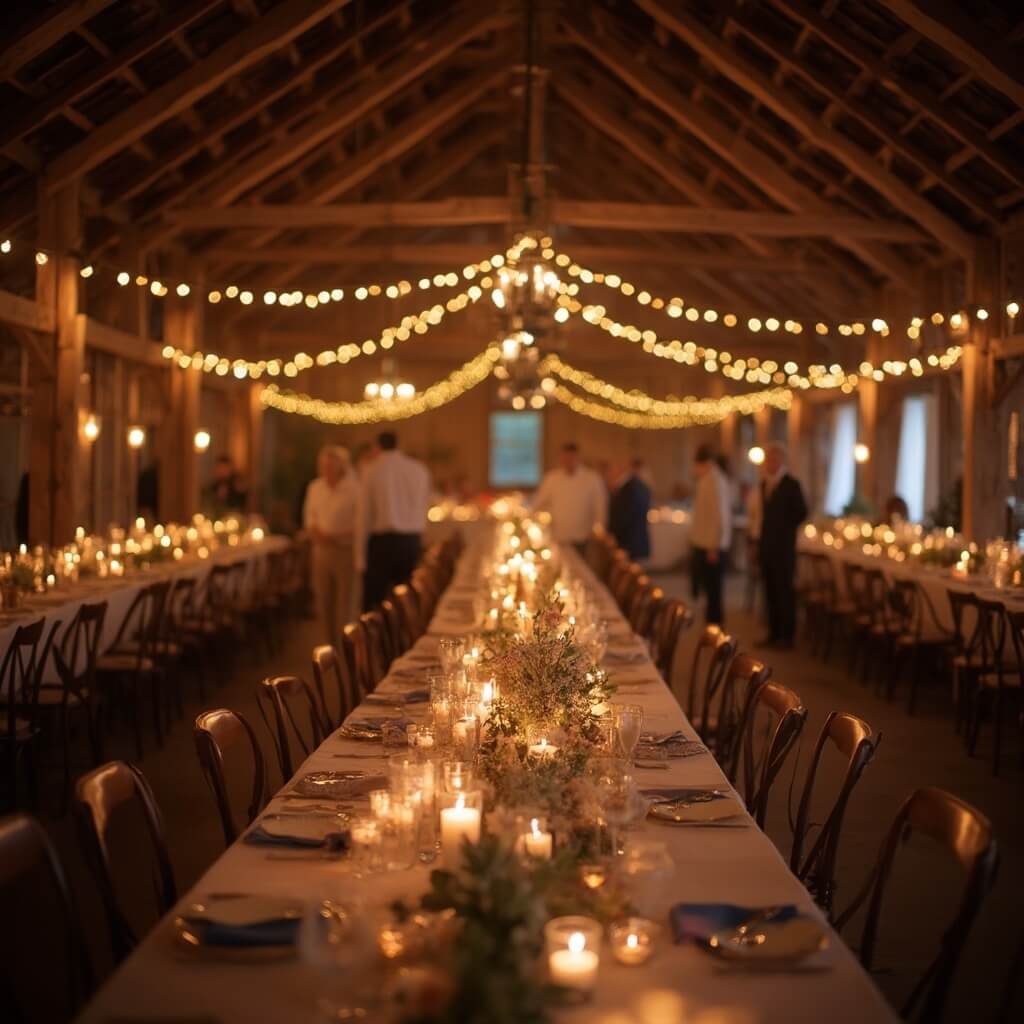
Start with a mood board, if that’s your thing — Pinterest, a shared folder, whatever. It’s not about copying a specific colour palette (yours will change eight times before the big day anyway); it’s about noticing whether you keep saving rustic barns or sleek city rooftops, candlelight or bright lighting rigs. That pattern tells you more than any Instagram trend will.
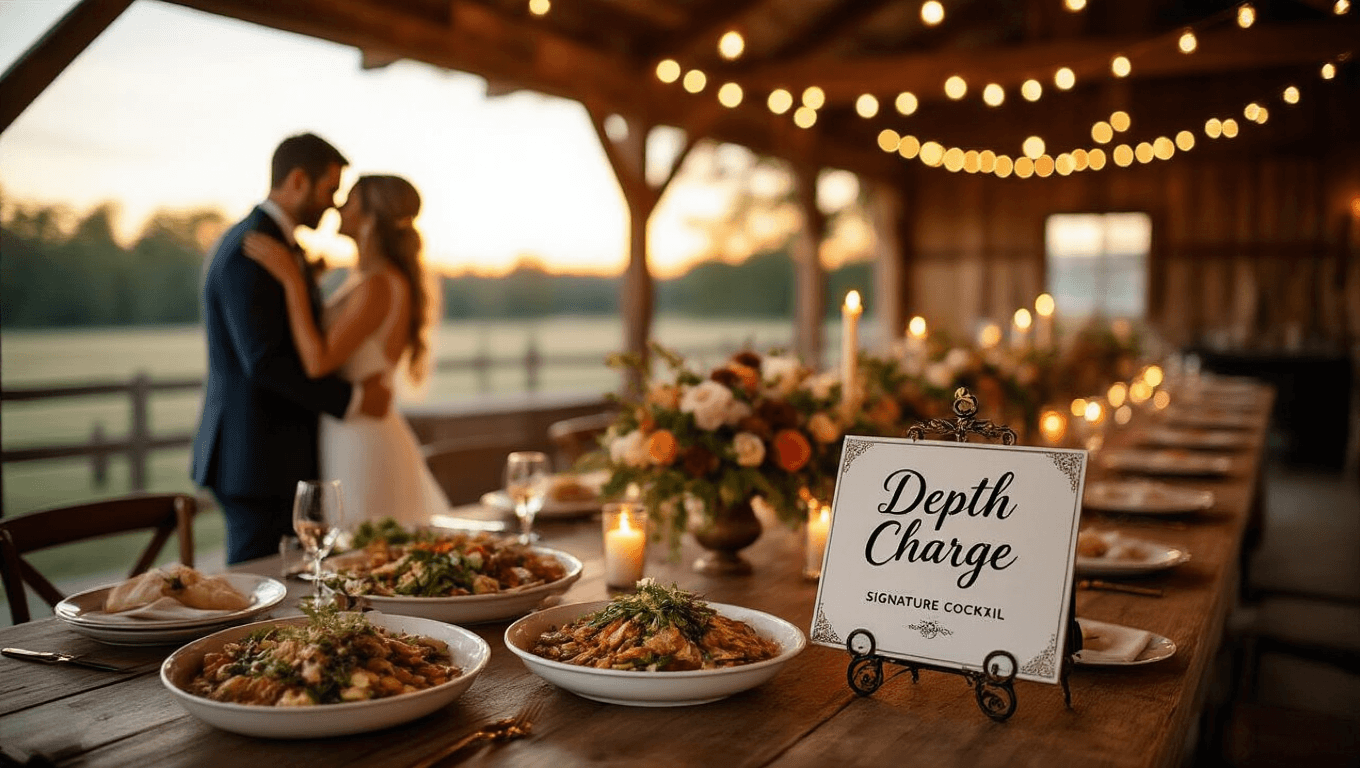
The best receptions I’ve been to were the ones where the couple’s actual personalities showed through — not a generic “romantic” template lifted wholesale from a wedding blog. A couple I know who met on a scuba diving trip had little brass compass place-card holders and a signature cocktail called “The Depth Charge.” Naff on paper, brilliant in person, because it was theirs. Think about your shared hobbies, the trip where you got engaged, the song that was playing the first time you danced badly in a kitchen. Those details cost nothing and mean everything.
Formality matters here too, and it’s worth deciding early because it affects nearly every other decision — the dress code, the music, whether you’re doing a plated dinner or letting people wander between food stations with a paper napkin and no shame.
Getting the Timeline Right
Most receptions follow a fairly predictable shape: cocktail hour, entrance, first dance, dinner, speeches, cake, then the dance floor opens properly. There’s a reason this structure has stuck around — it works, and guests instinctively understand it, so nobody’s confused about when to eat or when to sit down.
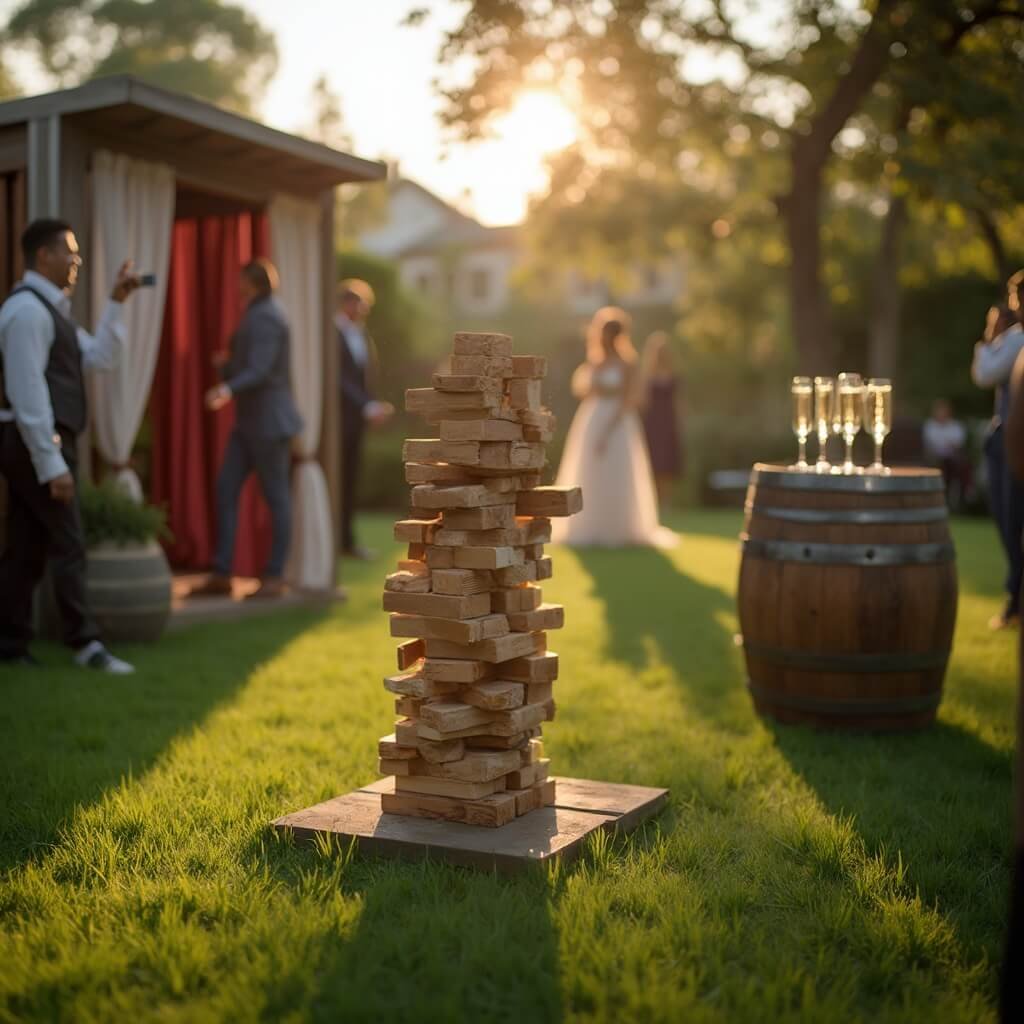
Where couples go wrong is leaving the natural lulls empty. Cocktail hour, in particular, is prime real estate. That’s your moment for a lawn game, a photo booth, a live painter setting up an easel — something that gives people something to do with their hands and their eyes while they wait for you to finish photos. The gap between courses is another good spot for a quiet distraction, though I wouldn’t overload it; nobody wants a magician interrupting their starter.
If your venue allows it, think about an after-party too. Not every guest wants to go home at 11pm just because the band’s stopped, and not every couple wants their reception to end with a whimper. A quieter, more casual continuation — drinks in a side bar, a lounge with a playlist instead of a DJ — lets the night wind down naturally rather than just stopping.
Sorting the Budget Without Losing Your Mind
Budget conversations are nobody’s favourite part of planning, but they get much easier once you accept one thing: you cannot have the best of everything. Something has to give.
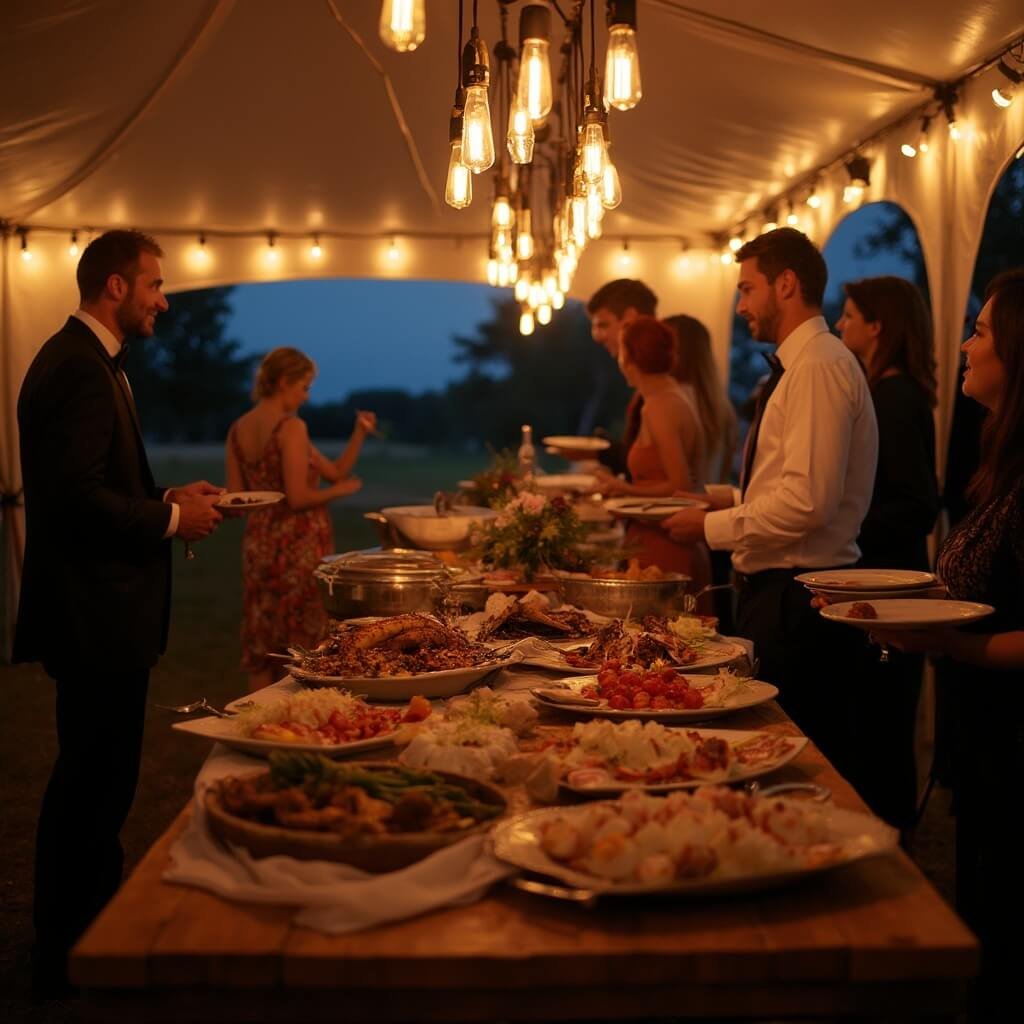
One genuinely useful money-saver is choosing buffet or family-style service over a fully plated dinner. It’s not just about the “elegant” factor — plated service tends to cost noticeably more per head because of the additional staffing and portion control involved, and you often end up with less variety, not more. A buffet lets guests choose what they actually want, which cuts down on waste too.
A few other budget basics worth bearing in mind:
- Talk to vendors early, even before you’ve fully decided on details — availability disappears fast for popular dates, and most vendors are happy to advise on how a slightly unusual idea (a food truck, a silent disco) fits within what they normally offer.
- Treat your vendors properly — feed them, give them a clear brief, and don’t make them chase you for information. A relaxed photographer or caterer does noticeably better work than a stressed one; I’ve seen the difference in the final photos.
- Decide your non-negotiables first, then let everything else flex around them. If photography matters more to you than flowers, say so out loud and budget accordingly.
Once the foundations are sorted — vision, timeline, budget — you can actually start having fun with the details, and that’s where themes and atmosphere come in.
Check out more about Wedding Reception Decor Ideas and Wedding Reception Decor Ideas That Look Expensive for further inspiration.
👇Shop the Look Here👇
### Choosing a Theme (Or Deliberately Not)
**Themes** are where people either go brilliantly right or badly wrong, usually depending on how tightly they cling to the concept. A theme should be a starting point, not a straitjacket.
Some couples build the whole evening around a **story**—how they met, a shared love of travel, a road trip that mattered. The venue moves through a kind of narrative, with lighting, music, and décor shifting slightly as guests move from cocktail hour to dinner to dancing. Done well, it’s genuinely moving. Done badly, it feels like a themed restaurant.
Other themes are simpler and more playful. A **carnival reception** with game booths, popcorn machines, and cotton candy carts brings a nostalgic, slightly chaotic energy that guests of all ages tend to enjoy — I went to one where there was a coconut shy next to the cheese table, and it remains one of the more entertaining receptions I’ve attended. On the opposite end, a **fairy-tale ballroom setup** — chandeliers, string quartet, formal dress code, restrained floral arrangements — leans into elegance rather than fun, and works particularly well if your venue already has the bones for it.
**Seasonal or holiday themes** are worth considering too, especially if your date already falls near one. A Halloween wedding with pumpkins and deep, moody florals doesn’t need much extra styling to feel cohesive; a Christmas reception with holly, evergreen garlands, and warm lighting practically decorates itself.
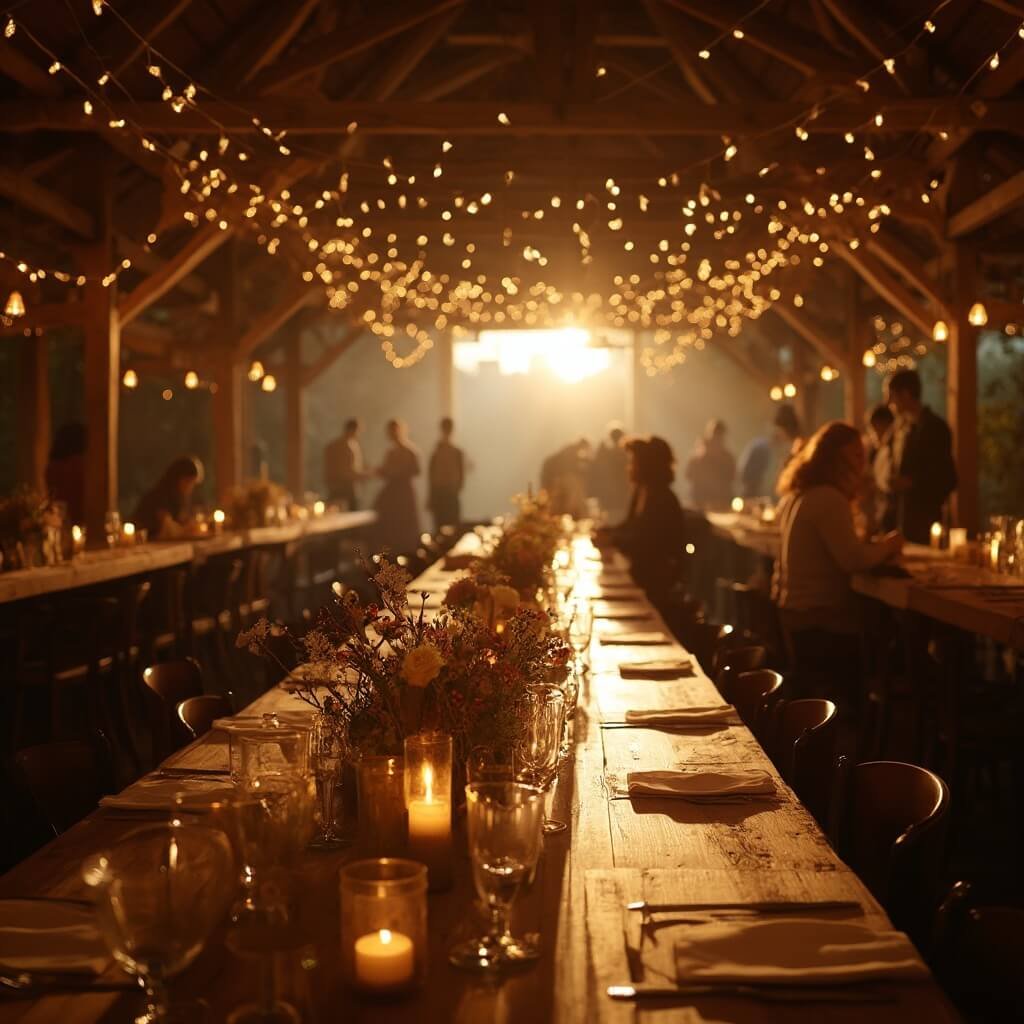
**Lighting** does more heavy lifting than almost anything else in the room. String lights, uplighting, candles dotted along tables, paper lanterns hung at odd heights — none of it is expensive, and all of it transforms a fairly ordinary function room into somewhere that feels considered. If you want one statement piece without much effort, an oversized balloon installation or a dramatic photo backdrop does the job cheaply and photographs far better than you’d expect.
One thing nobody tells you: whatever flowers and greenery you used at the ceremony can usually move straight to the reception. Altar arrangements become table centerpieces, aisle petals get scattered near the bar or cocktail tables. It’s not a new idea, exactly, but it’s one of the few genuinely **free upgrades** available to you, and I’m always slightly baffled when couples pay for two completely separate sets of flowers.
### Not Everyone Wants to Dance, and That’s Fine
This is the part of reception planning that gets overlooked most often. Somewhere between a fifth and a third of your guests, by my rough estimate from every wedding I’ve been to, will not want to be anywhere near the dance floor after 9 pm. That’s not a failure of the party — it’s just how people are.
A proper **lounge area** solves this. Soft seating, a rug, low lighting, side tables for drinks — somewhere that feels intentional rather than like the bit of the room nobody bothered decorating. I’ve seen this done especially well with an “analog lounge”: board games, a small stack of books, maybe a record player humming quietly in the corner, tucked away from the speakers. Older relatives gravitate towards it immediately, as do the quieter friends who’ve spent the whole ceremony dreading the loud bit.
If your venue has any unusual **side spaces** — a converted stable, a walled garden, an upstairs room nobody quite knows what to do with — use them. They make far better lounges than an awkward corner of the main marquee, and guests genuinely enjoy discovering a second little world within the venue.
The trade-off with any strong **theme or zoned layout** is obvious: the more specific you get, the less reusable the décor becomes, and the more planning it demands. A carnival theme needs actual carnival equipment. A story-driven environment needs someone thinking hard about sequencing. None of that is a reason to avoid it, just something to budget time for, not only money.
### Food That People Actually Talk About Afterwards
**Buffets** get a reputation for being the “cheaper option,” which is true, but that undersells them. A good buffet — or better, a handful of food stations — gives guests choice, keeps queues shorter than one long buffet line, and gets people moving and talking rather than sitting rigidly in assigned seats for two hours.
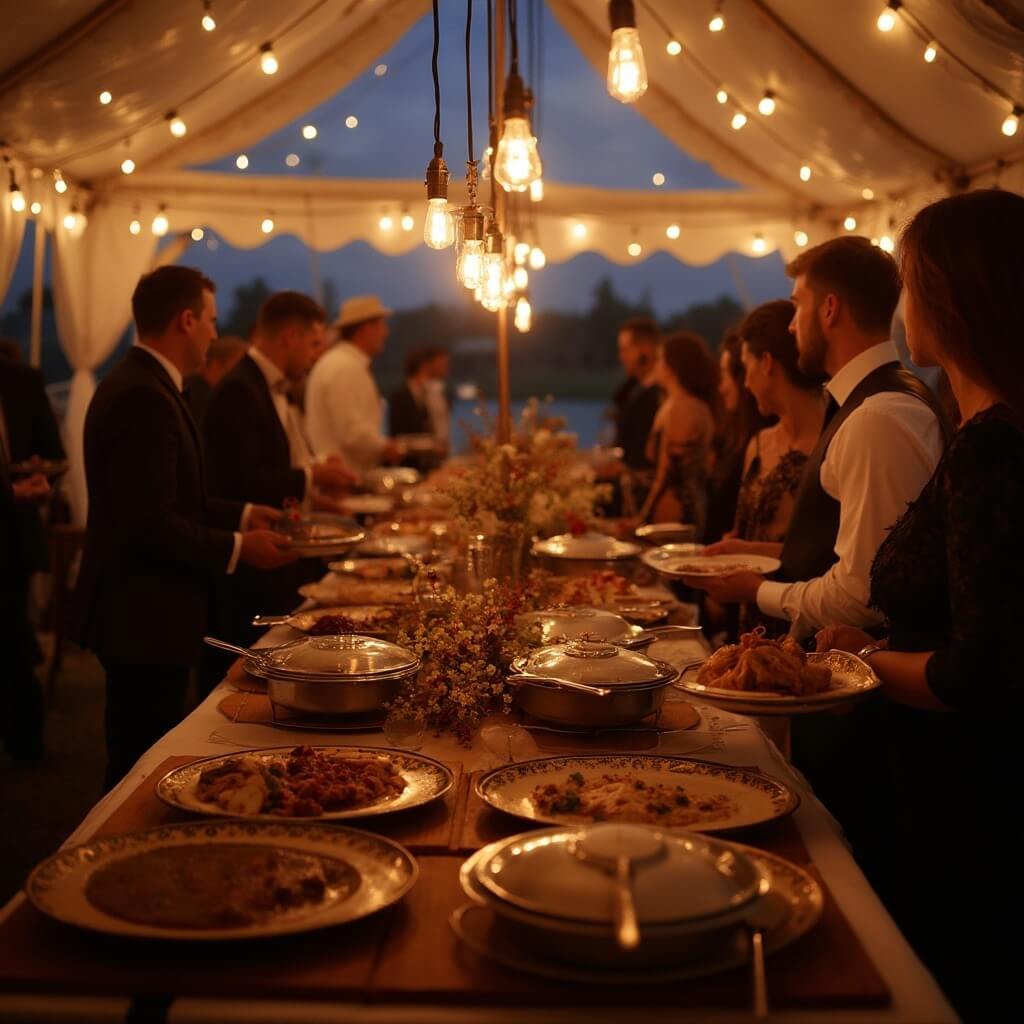
Stations are having a real moment for good reason. A **taco station**, a **sushi station**, a **mac and cheese bar** with ridiculous toppings, a **raw bar** for the seafood lovers — guests can build a plate that actually reflects what they like, rather than eating whatever’s been decided for them months in advance. Family-style service sits somewhere in between: platters land in the middle of the table and people serve themselves, which does wonders for conversation because someone always has to ask someone else to pass the potatoes.
**Dessert** is where I’d encourage couples to relax a bit. Nobody’s going to remember a plain iced sponge cake, but they will remember a wall of donuts, a build-your-own sundae bar, or a proper cupcake decorating station where slightly drunk guests attempt piping bags with mixed success. And if you can manage it, do something around midnight — grilled cheese sliders, mini burgers, a bowl of crisps, and a proper snack table. People always claim they’re “not that hungry” at 11 pm and are always wrong.
On drinks, a **signature cocktail** named after somewhere meaningful to you both is a small, cheap detail that guests remember far longer than you’d expect, especially if the story’s printed on the signage. Tasting stations — whiskey, wine, even coffee — work nicely for a slightly older or more food-focused crowd. And if your venue and weather allow it, a **food truck** parked outside adds a genuinely festival-like energy that a plated dinner just can’t replicate. The obvious caveats apply: they need power, space, and a backup plan if it rains, and if your guest list is large, queues can build up fast.
### Entertainment Beyond “The DJ Plays, Everyone Dances”
A DJ or live band remains the sensible default, and there’s nothing wrong with sensible. But a few additions change the texture of the evening without much extra cost. **Silent discos** are a genuinely good idea for noise-restricted venues — guests wear headphones, choose their channel, and the room looks slightly mad from the outside while everyone inside has a brilliant time. A **confetti drop** timed to the first dance is a cheap, dramatic flourish that photographs beautifully.
If your budget stretches further, **performers** add a different kind of energy: a stilt walker greeting guests at the entrance, a drummer building tension before the couple’s entrance, even a drag performance if that suits your crowd. A live painter working quietly in the corner throughout the evening, capturing the room in real time, gives you a piece of actual art at the end of the night rather than just photographs.
**Games** matter more than people expect, especially for mixed-age crowds:
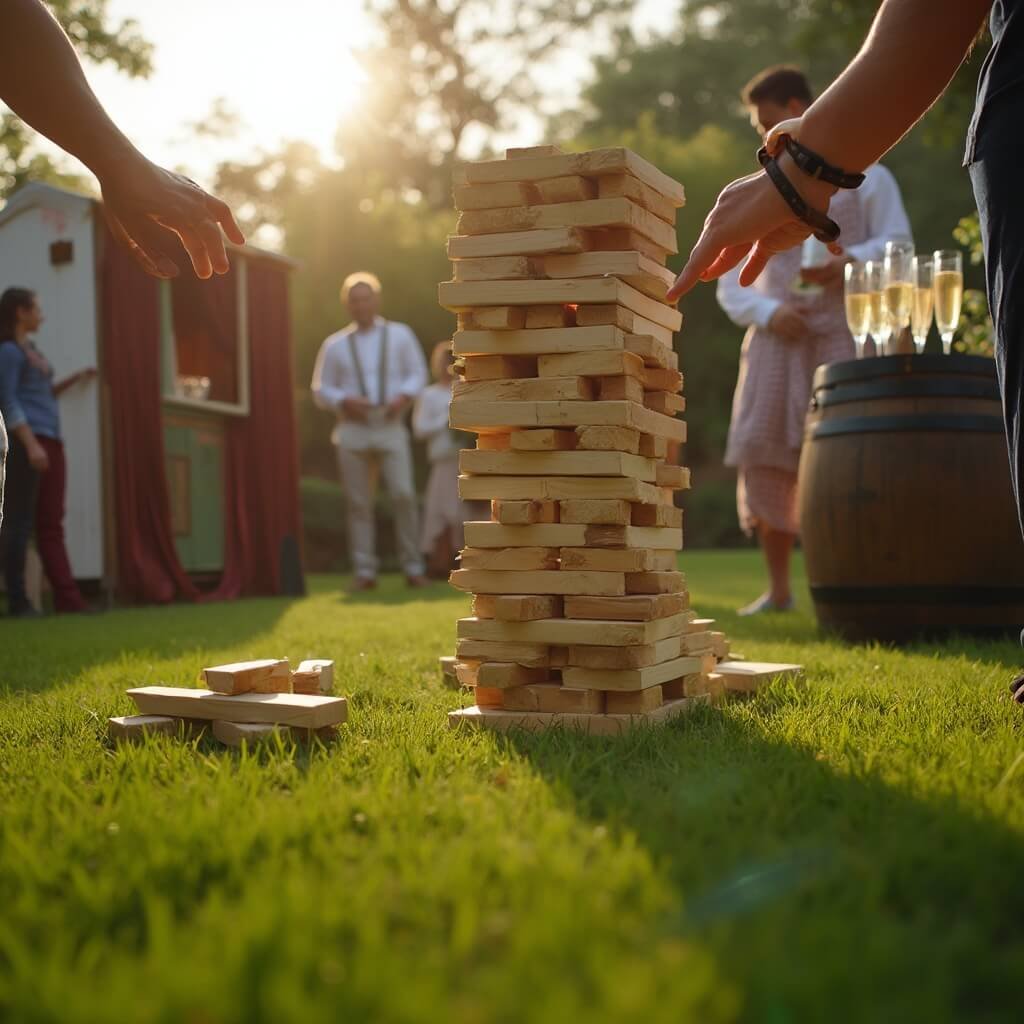
– **Lawn games** during cocktail hour — cornhole, giant Jenga, oversized Connect Four — give people something to do that isn’t standing around holding a warm glass of prosecco.
– A **board game or trivia corner** keeps things going later for guests who’ve had enough dancing.
– Simple **table games** — wedding bingo, a trivia quiz about the couple, a pass-the-parcel with daft forfeits — work brilliantly during the meal itself, when people are seated and slightly captive.
The couple I mentioned earlier, the scuba divers, did a “five-minute photo” game where they raced around every table to grab a group photo before one upbeat song ended. It was chaotic, slightly sweaty, and by far the moment guests still bring up. Not every idea needs to be that elaborate, but it’s proof that a bit of structured silliness beats passive entertainment most of the time.
The only real downside to a heavily activity-driven reception is that it needs someone — a planner, a keen bridesmaid, somebody — actually running it. Left unmanaged, games fizzle out. And you still need somewhere quiet for the guests who’d rather sit this one out, which brings us back to that lounge area.
### Looking After Your Guests, Not Just Entertaining Them
A good **welcome** sets the tone before anyone’s had a drink. A table near the entrance with engagement photos, some flowers, a couple of candles, and a hand-written sign does more for atmosphere than people give it credit for. Clear **signage** throughout — pointing to the bar, the toilets, the kids’ area — sounds like a small thing until you’re at a reception without it, wandering a corridor looking lost during someone’s speech.
**Transport** between ceremony and reception venues, if they’re separate, is worth arranging properly rather than leaving guests to sort taxis. A shuttle or a couple of minibuses costs relatively little and removes a genuine source of stress, particularly for older guests or anyone who’s had a glass of something already.
**Accessibility** gets overlooked constantly. Ramps, seating near the front for anyone who struggles to stand for long periods, and a quiet space away from the speakers for guests who find loud environments overwhelming — these aren’t extras, they’re basic hospitality. If you’ve got children coming, a proper **kids’ zone** with crayons, simple crafts, and maybe some supervised games buys their parents an actual evening off, which they will thank you for indefinitely.
And it’s worth saying again: your **vendors** are working your entire wedding while everyone else enjoys it. Feed them properly, give them breaks, say thank you. It costs nothing and the goodwill shows up in the quality of what they produce.
### Capturing the Night Without Relying Purely on the Photographer
**Photo booths** remain popular for a reason — people like props, and they like having something physical to take home. A DIY version with a fairy-light backdrop or a simple floral garland costs a fraction of a hired booth and looks just as good in photos. Beyond the booth itself, think about where in your venue people will actually want to stand — a nice archway, a greenery wall, anywhere with decent natural light — because guests will find it regardless, so you might as well make it deliberate.
**Guest books** have quietly become far more interesting than a book. **Audio guestbooks**, where guests pick up a phone and record a message, capture tone and laughter in a way handwriting never will. **Polaroid walls**, where instant photos get pinned up with a short note, build a genuinely lovely collage over the evening. I’ve also seen a globe passed around for guests to sign, which ended up on a bookshelf rather than in a drawer, unlike most guest books I’ve ever contributed to.
### A Few Practical Closing Thoughts
**Technology** helps more than it hurts, on the whole. A wedding hashtag costs nothing, gathers every guest’s photos in one searchable place, and can double as a fun printed backdrop. An on-site print station, where tagged photos get printed during the evening, gives guests a physical souvenir before they’ve even left. Just build in at least one “unplugged” stretch — during the ceremony or the speeches, say — because a room full of raised phones ruins more first dances than bad lighting ever has.
If your budget’s tight, don’t panic: **string lights**, greenery, and a considered color scheme will outperform an expensive, mismatched effort every time, and a village hall with great lighting beats a soulless function room with a big price tag. Bake the cake yourselves if you’re capable, or ask the one friend who’s suspiciously good at it — people love being asked.
My honest recommendation, after sitting through more of these than I probably should admit: pick two or three ideas from everything above that genuinely sound like you, execute them properly, and don’t try to cram in every wedding reception idea you’ve ever seen. A reception with one brilliant, personal detail beats one with ten half-finished ones, every single time.
For more insights, check out Secrets to Throwing a Wedding Reception Guests Will Actually Enjoy or Practical Wedding Reception Ideas That Go Beyond Pretty Décor.
👇Shop the Look here 👇