Backyard wedding ideas are usually the first thing people search for once they’ve decided against a traditional venue and started panicking slightly about what that actually means in practice. I get it. There’s a huge gap between “we’ll just get married in the garden, how hard can it be” and standing in your parents’ side yard at 7am on the day, trying to work out where forty folding chairs are going to go without squashing the roses.
A backyard wedding, at its simplest, is a ceremony and/or reception held at a private home or property instead of a hotel, barn, or dedicated wedding venue. That’s it. But the appeal runs deeper than just avoiding a venue fee — there’s something about getting married under the tree you climbed as a kid, or in the garden your mum has spent fifteen years getting exactly right, that a rented function room can’t touch. It’s intimate in a way that’s hard to fake elsewhere, and the photos end up feeling like you rather than like a stock wedding.
Is a Backyard Wedding Actually Right for You?
Here’s where I’ll be honest: backyard weddings suit some couples brilliantly and make life much harder for others, and it’s worth being clear-eyed about which camp you’re in before you commit.
They work best for people who genuinely value a personal setting over a polished one — who’d rather have wonky bunting and a familiar garden than a chandelier and a car park. If your dog is basically a fourth member of the relationship, or you want your gran’s roses in the background of your first dance photos, a backyard delivers something a venue simply can’t.
They also suit people willing to do the unglamorous logistical legwork. A venue coordinator isn’t going to appear and sort your rentals, parking, or cleanup — that’s on you, or whoever you rope in. In exchange, you get total creative control and usually a much lower baseline cost, but only if you’re honest about the labour involved.
Guest numbers matter more than people expect. A garden that feels lovely for 40 people can feel like a squeeze at 90, and once you’re past that point you’re often looking at hired toilets, extra parking arrangements, and possibly a marquee big enough to need planning permission. Small to mid-size guest lists are where backyard weddings really shine.
Getting the Planning and Logistics Right From the Start
Before you fall in love with a Pinterest board full of fairy lights, walk your actual garden with a notebook. I mean properly walk it — work out where guests will enter, where the ceremony will happen, where cocktail hour flows into dinner, and where the dancing will end up. If you can’t answer those questions standing in the space, no amount of styling will fix it later.
Take stock of what’s already there. Mature trees, a decent lawn, a deck, a pond — these can become your best decorative assets, framing the ceremony without you spending a penny on an arch. Equally, sheds, bins, and that pile of garden furniture nobody’s got round to sorting will need hiding, so factor that into your setup time. I once helped a friend plan hers and we completely underestimated how much a “quick tidy” of the shed area would take — it ate an entire Saturday that was meant to be for lighting.
Don’t skip accessibility. Uneven lawn, steps down to a patio, or a long walk to the nearest loo might be fine for you and your friends but genuinely difficult for an older relative or anyone with mobility issues. A couple of well-placed boards over soft ground solves more problems than you’d think.
On guest count and layout, the golden rule is to match your list to your actual square footage, not your optimistic idea of it. You need room for seating, a dance floor, a bar, and — crucially — space for people to move between all of those without forming a queue. Zoning helps enormously: keep ceremony, cocktails, dinner, and dancing in distinct areas so the whole event doesn’t collapse into one crowded muddle by 6pm. Think about traffic flow too — where people check in, where coats and gifts go, where the bar queue will form — because nothing sours a reception faster than a bottleneck at the one bar table.
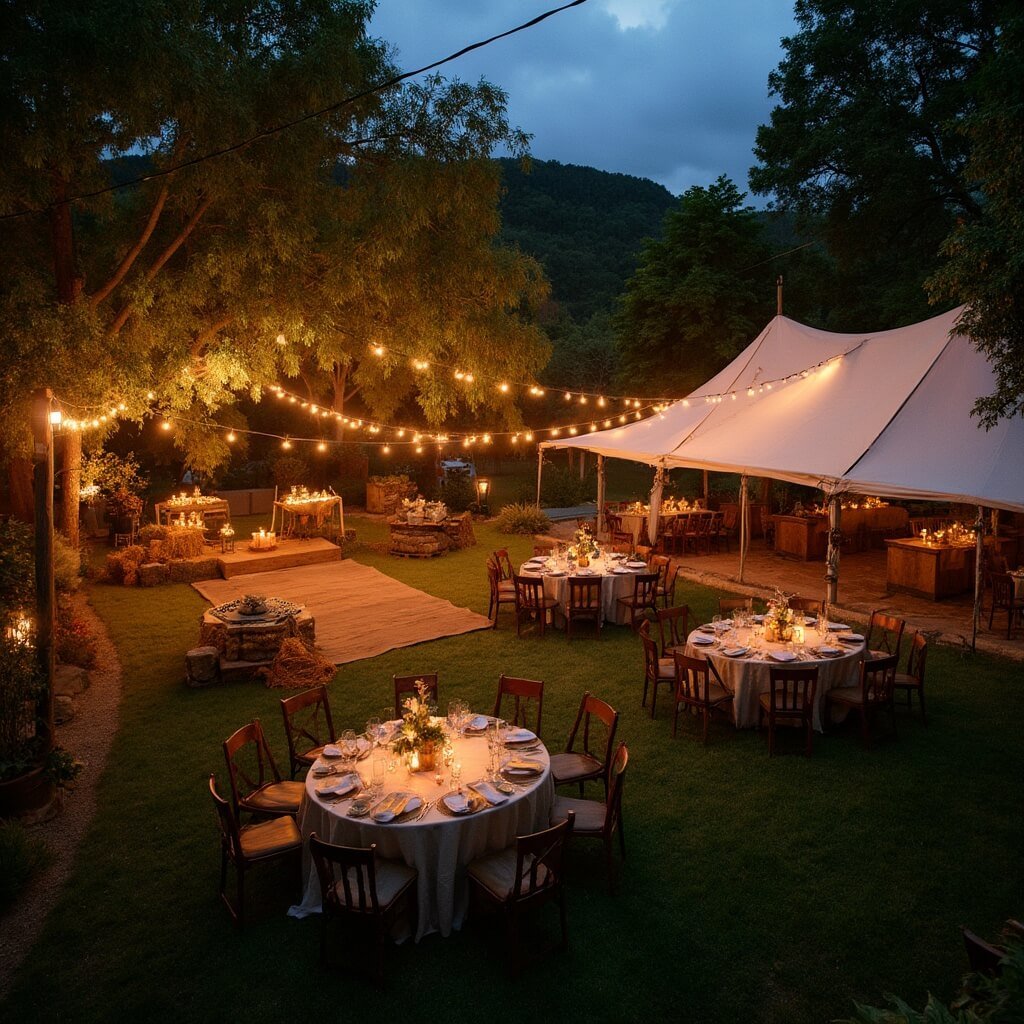
Budgeting for a backyard wedding is a funny business, because you save in one place and spend in another, and the two don’t always balance the way people hope. You’ll skip the venue hire fee, obviously, and you can lean on your own furniture, a potluck-style menu, or DIY décor to cut costs further. But then there’s the other side of the ledger: tents, chairs, tables, linens, a portable dance floor, generators, lighting, and — if your garden doesn’t have one nearby — portable toilets. These add up fast, sometimes to more than a modest venue package would have cost. My advice, for what it’s worth, is to spend first on lighting, shelter, and food and drink — the things that make guests comfortable — and only add decorative extras once those are sorted.
A few practical, slightly less romantic things to check before you get too far into florals:
- Noise and timing rules in your area — some councils have curfews for amplified music at private residences
- Parking — will the street cope with thirty cars, or do you need to arrange a shuttle or off-site parking?
- Insurance — worth considering if you’re serving alcohol, or if there’s a pool or fire pit on site
- Neighbours — tell them the date, roughly what time things will wind down, and where guests will be parking. A bottle of wine dropped round a few weeks beforehand goes a long way toward goodwill on the night
Weather is the other thing you can’t plan your way out of, only around. A tent or marquee is the single best insurance policy you can buy for a backyard wedding — not just for rain, but for shade, wind, and that particular kind of blazing afternoon sun that makes guests wilt by course two. If you’re marrying somewhere with proper seasons, plan for both extremes: fans and hydration stations for heat, patio heaters and blankets for cold, and if at all possible, an indoor fallback space in case the weather does something genuinely uncooperative.
Choosing a Style That Suits Your Garden, Not Someone Else’s
Once the logistics are roughly mapped out, the fun part starts — deciding what the day will actually look and feel like. I’d resist the urge to pick a theme purely because it’s trending; the best backyard weddings I’ve been to worked with the garden rather than trying to override it.
Casual rustic or boho is the natural fit for most gardens, honestly, because it doesn’t fight against slightly imperfect grass or a fence that’s seen better days. Think reclaimed wood, loose greenery, mason jars, burlap runners, simple wildflowers rather than structured florals. It pairs well with a barbecue or taco station, lawn games, and mismatched seating — hay bales, borrowed dining chairs, picnic benches — which also happens to be the cheapest route if you’re watching costs.
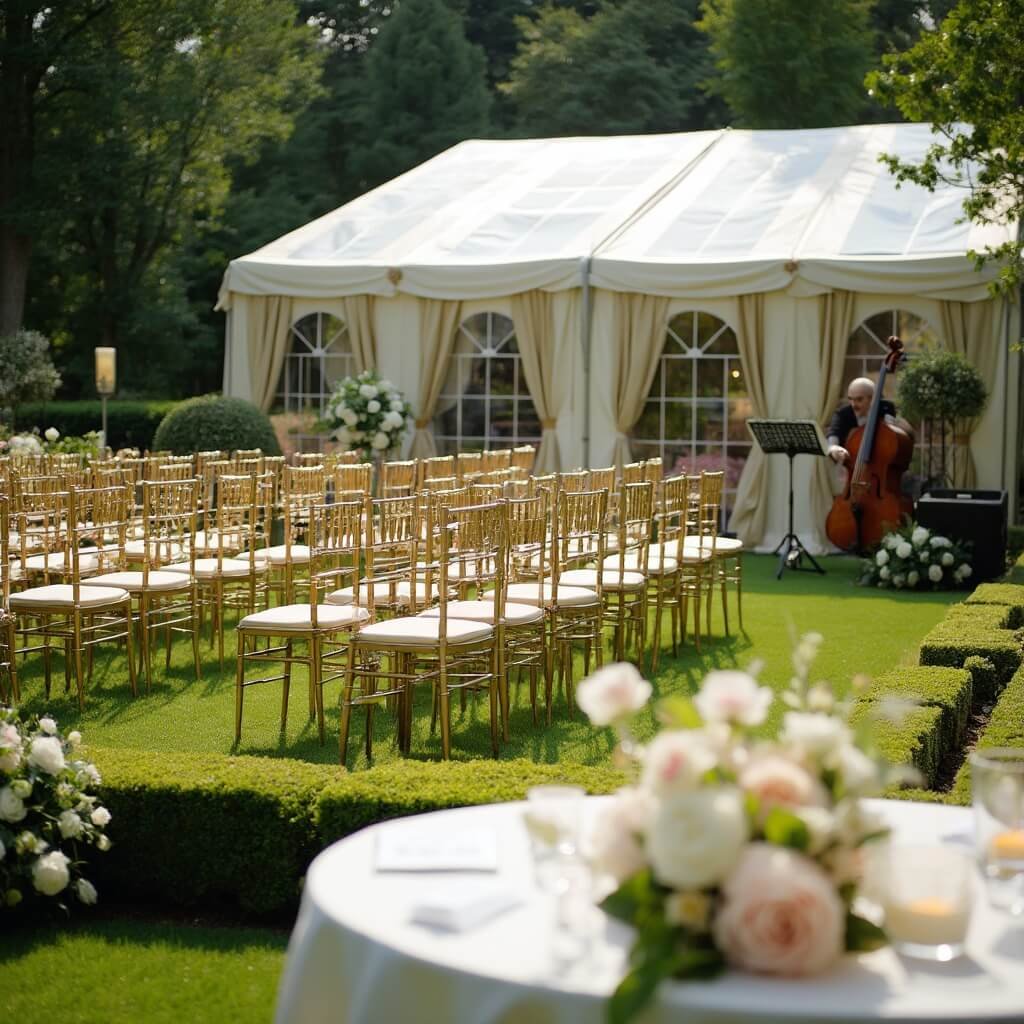
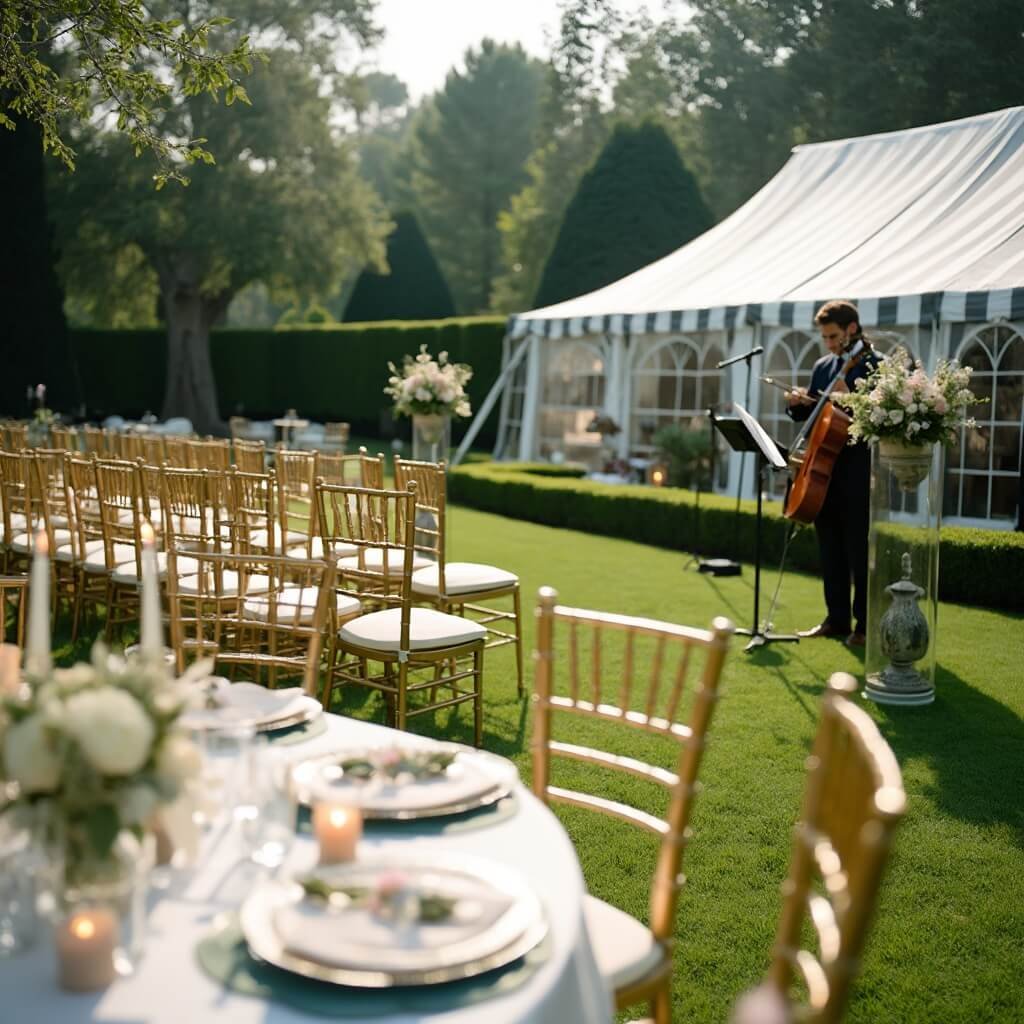
If your garden is more manicured — box hedges, a proper lawn, established borders — a formal garden party direction tends to look more intentional than accidental. Chiavari-style chairs, structured florals in a tight colour palette, a proper sit-down meal or an elevated buffet, maybe a string quartet rather than a Bluetooth speaker. It costs more, unsurprisingly, but it photographs beautifully against the kind of garden that’s clearly had years of attention.
There’s also a middle ground worth knowing about: greenhouse and meadowcore styling, which leans into lush potted greenery, glass details, and soft sage-and-wildflower palettes rather than anything too polished or too rustic. It suits gardens with existing greenery you don’t want to compete with — you’re essentially dressing up what’s already there rather than importing a whole new look.
Seasonal choices matter more outdoors than they do at an indoor venue, since you can’t control the light or temperature the way a function room does. Spring weddings do well with pastel florals and a contingency umbrella stash; summer calls for shaded seating and something cold to drink from the moment guests arrive; autumn leans into jewel tones, a fire pit, and blankets draped over chair backs; and a winter garden wedding, if your climate allows it at all, really only works with a properly heated clear-sided tent and candlelight doing most of the atmospheric work.
For couples who want something a bit different, an eco-chic angle — reclaimed materials, upcycled décor, seed packet favours instead of the usual sugared almonds — tends to feel more considered than a full-blown themed party, and it’s usually cheaper too, since you’re sourcing rather than buying new.
Designing the Ceremony Itself
The ceremony spot is the one decision in a backyard wedding that deserves more thought than people give it, because unlike a venue, you’ve got genuine choice in where exactly the couple stands, and that choice shapes every photo from the day.
Look for a natural backdrop before you build one — a line of trees, a garden border, a fence with character, even a pond if you’ve got one. It’s tempting to erect a huge arch as the automatic default, but sometimes the garden’s already doing the work and all you need is a discreet frame around it. Check the sun’s position at your ceremony time too; nothing ruins vows photos faster than every guest squinting into direct glare, so aim for shade or the softer light of early evening if your timing allows it.
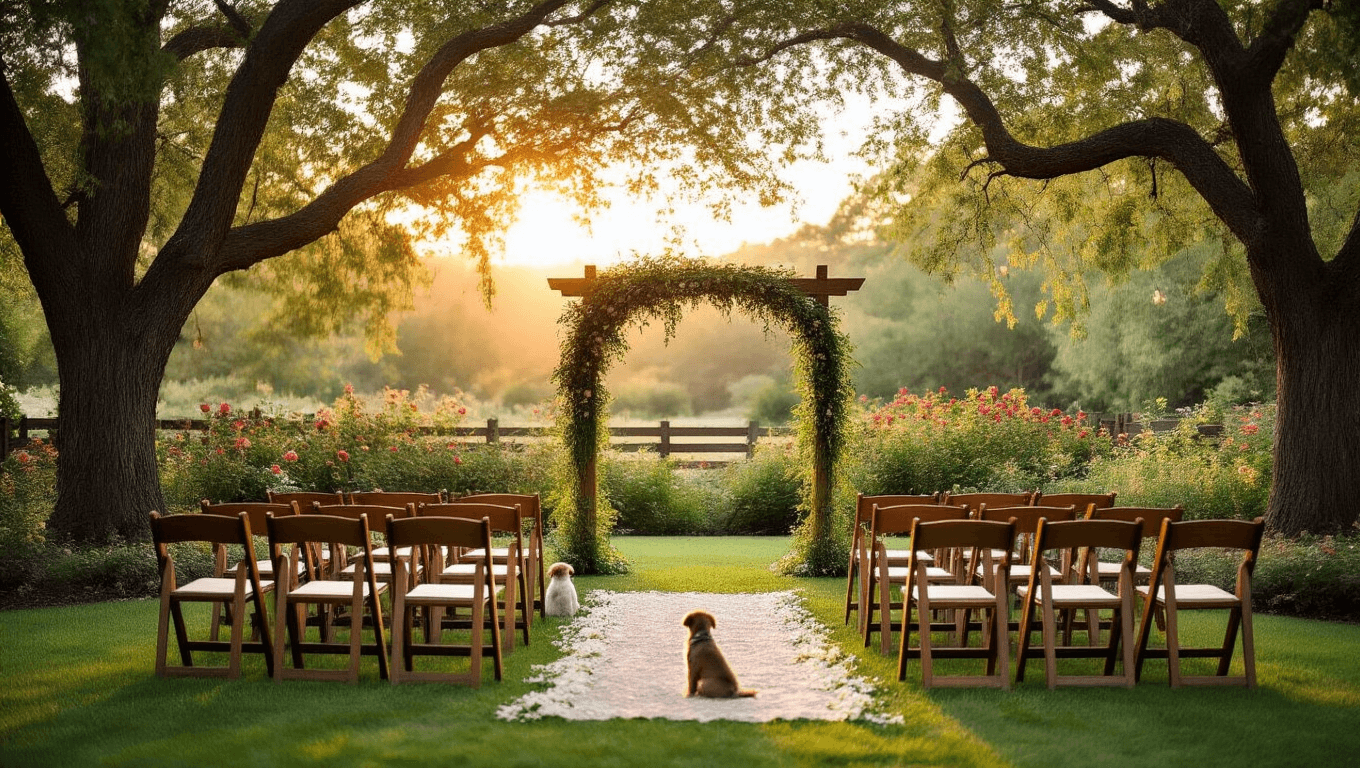
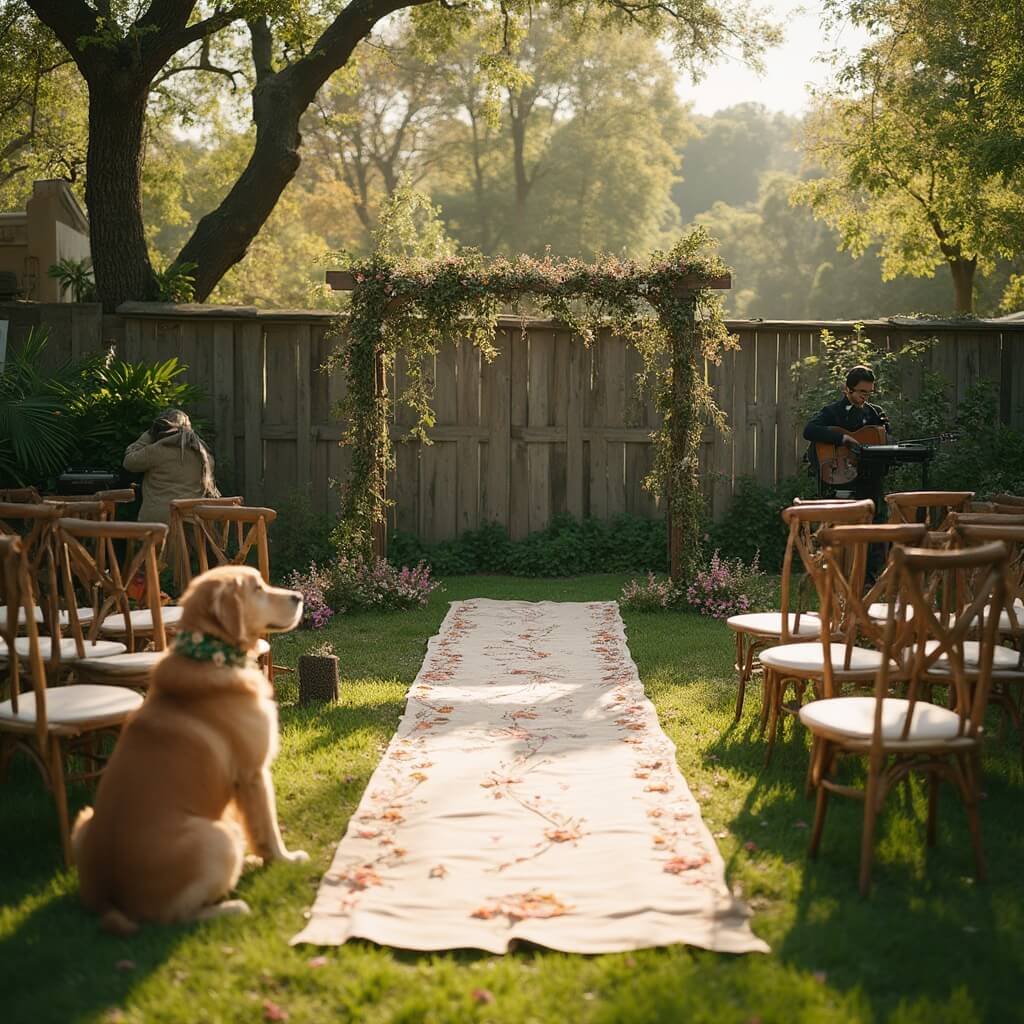
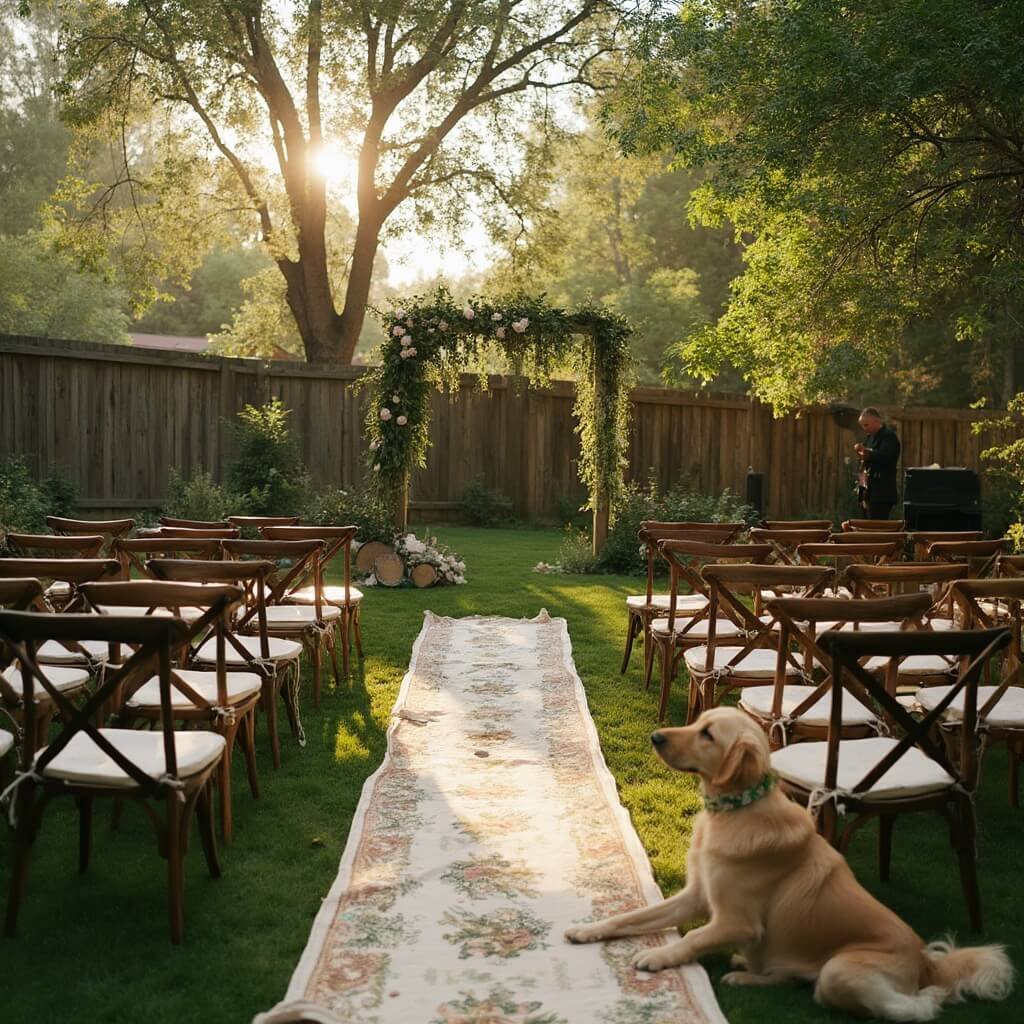
For seating, a decorative aisle runner instantly makes a lawn feel considered rather than accidental, and arranging chairs in a gentle curve rather than strict rows helps with sightlines and makes the whole thing feel more intimate. If you’ve got the numbers, benches are worth considering over individual chairs — they fit more people into less space and make the post-ceremony shuffle into cocktail hour far less chaotic than forty individual chairs being folded and stacked.
If you do want a focal point, a floral or greenery arch remains the classic choice for good reason — it gives photographers something to frame the couple against and gives guests a clear visual cue for where to look. Reclaimed doors, an old pergola, or a simple wooden frame draped in fabric can do the same job for less money and, frankly, more character than a hired generic arch.
And if you’ve got a dog who’s basically part of the relationship, let them be part of the ceremony. Whether that’s walking down the aisle as “pup of honour” or just sitting quietly with a designated handler nearby, it’s the kind of detail that only really works at a home wedding — you can’t easily bring a dog to most traditional venues, and it’s often the detail guests remember most fondly afterwards. Just make sure someone’s actually responsible for water, shade, and getting the dog away from the cake table at the right moment.
For sound, resist the urge to over-amplify. A single acoustic guitarist or a small folk duo tends to suit a garden far better than a full PA system, both because it fits the scale of the space and because your neighbours will thank you for keeping the volume sensible. A small portable speaker is usually all you need to make sure the vows carry to the back row without turning the whole street into an audience.
From the ceremony, the day naturally flows into the reception — and that’s where the real spatial puzzle of a backyard wedding starts.
👇Shop the Look Here👇
Making the Reception Actually Flow
This is the bit people underestimate most, I think. You can nail the ceremony completely and still end up with a reception that feels cramped and awkward because nobody thought about how guests actually move through a garden once the vows are done.
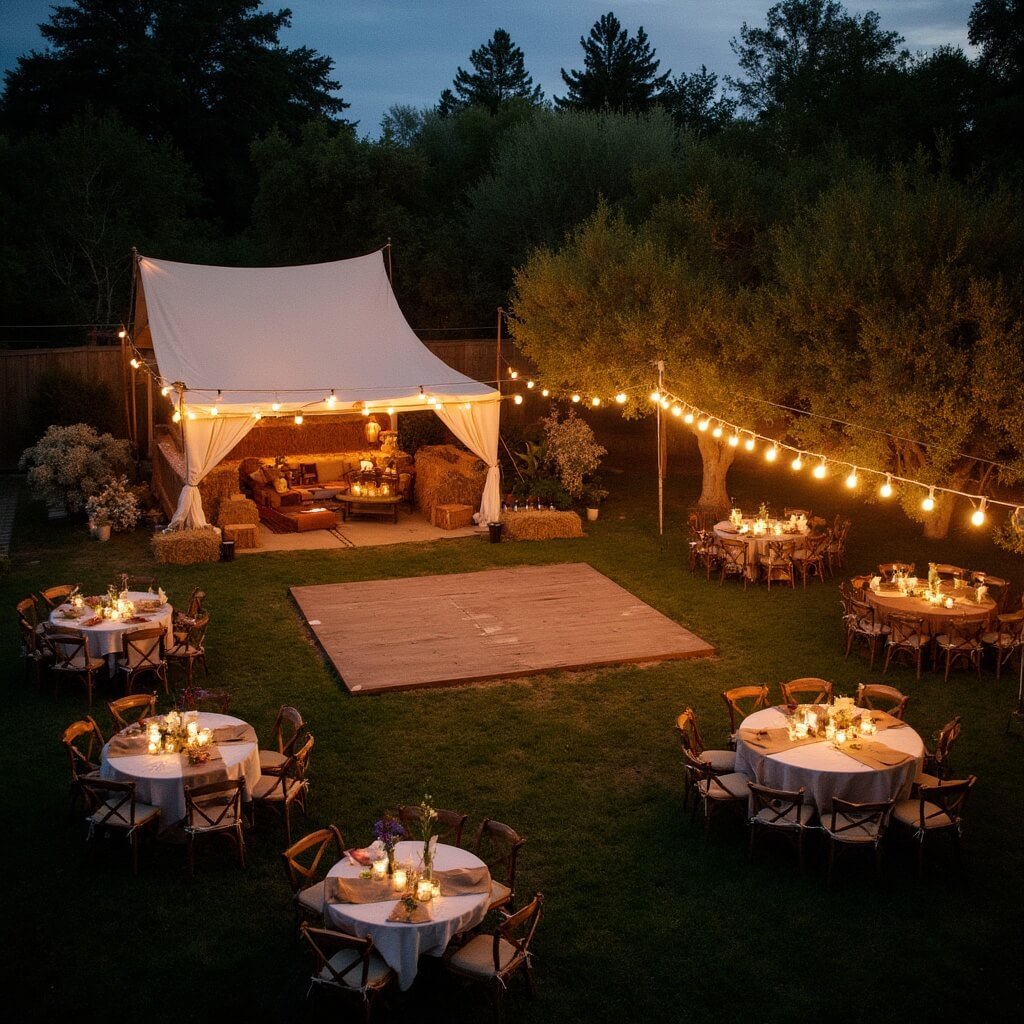
Zoning is the answer, and it’s simpler than it sounds. You want a clear cocktail or lounge area for the gap between ceremony and dinner, a dinner zone with proper tables, a bar that isn’t blocking a thoroughfare, and a dance floor that’s separate enough from the tables that nobody’s got a speaker six inches from their ear during the meal. If your garden has natural divisions already — a hedge, a change in level, a path — use them. They do the zoning work for you without needing extra structure or signage.
The dance floor is where I’ve seen the most improvisation, and honestly, some of it works better than the expensive option. An existing deck or patio is the obvious choice if you’ve got one, since it’s already flat, already there, and saves you a rental cost. If you haven’t, a hired portable dance floor is worth the money — dancing on grass in heels is miserable for about ten minutes before someone gives up and goes barefoot, which is charming exactly once and then just means people are stepping on broken glass near the bar. I’ve also seen a genuinely good DIY version made from pallets and plywood, screwed together and covered with an outdoor rug, at a wedding where the couple were determined not to spend money on rental they’d only use for six hours. It worked fine, though I’ll admit there was a slightly wobbly corner that everyone learned to avoid by 9pm.
Lounge areas are the detail that separates a reception that feels styled from one that just feels like tables in a garden. A few sofas, some armchairs dragged out from inside, a scatter of poufs and cushions round a low table — it doesn’t need to match, and honestly it’s better if it doesn’t. Borrowed and mismatched furniture from friends and family tends to look more considered than a full matching rental set, and it gives guests somewhere to actually sit and talk rather than perching on a folding chair holding a plate on their knees. Picnic blankets and low tables work for the same purpose if you’re going more casual, though it’s worth keeping a handful of proper chairs and tables nearby for anyone who’d rather not sit on the ground for three hours — older guests especially will appreciate not having to fold themselves down onto a blanket in their good outfit.
One thing I’d genuinely flag from experience: whatever seating plan you settle on, walk it the way a guest would, carrying an imaginary plate and drink, and see where you’d naturally get stuck. If the answer is “right by the bar” or “at the top of the garden steps,” move something before the day rather than during it.
A Few Honest Final Thoughts
None of this needs to be complicated, and it definitely doesn’t need to look like every other wedding on your Pinterest board. The gardens I’ve seen work best were the ones where the couple leaned into what was actually there — the wonky apple tree, the patchy bit of lawn, the neighbour’s fence — rather than trying to disguise the whole space into something it wasn’t.
If you’re weighing up backyard wedding ideas right now, my genuinely practical advice is this: sort the tent, the toilets, and the lighting before you spend a single pound on flowers. Everything else is negotiable and fixable on the day. A missing generator at 6pm when the fairy lights won’t turn on is not.
For more inspiration, check out Backyard Wedding Ideas and Fall Outdoor Wedding Ideas for unique setups.
👇Shop the Look here 👇